

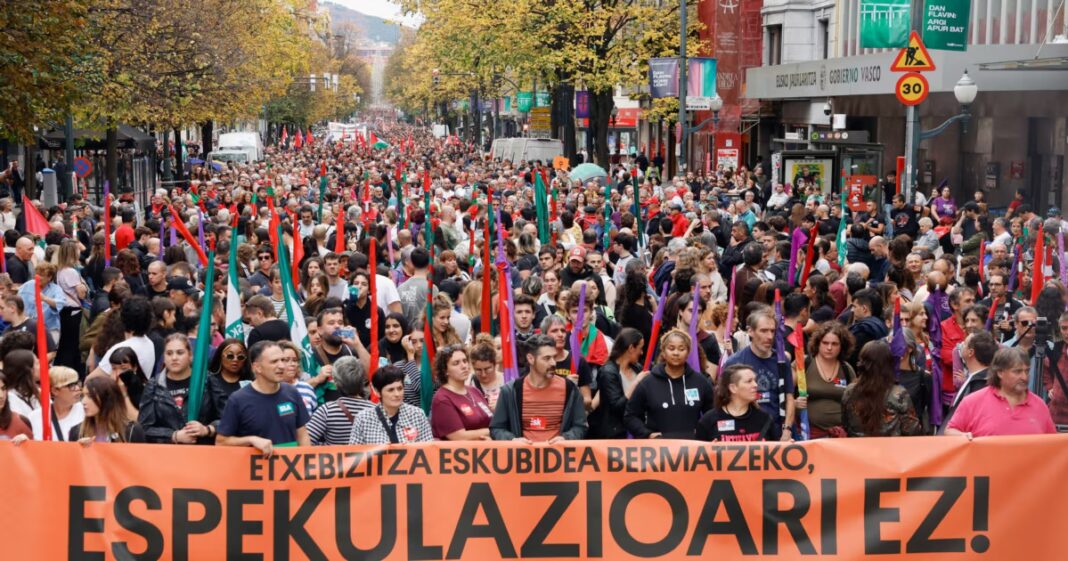

On 11 November, a nationwide strike and mass protests took place in Spain against rising house prices and evictions. According to reports, around four million workers took part in the strike. It was organised by the country’s largest trade unions — UGT and CCOO — together with tenants’ associations.
A wave of discontent swept the country following the story of 87-year-old Maricarmen Abascal. She was evicted from the flat where she had lived for 70 years: over the past eight years, the rent had risen by 275 per cent to 2,650 euros – more than her pension. On 23 September, she was evicted on a stretcher, and on 7 October she died in hospital. Many protesters say that their rent now costs them more than half their salary.
The strike has led to disruption to transport and logistics in many regions, particularly in Madrid and Catalonia. Many ports and factories have virtually ground to a halt.
Thousands of people took to the streets in major cities. The police have not yet published their estimates of the number of participants. Trade unions had expected around 100,000 demonstrators across the country, although the number may have been lower due to stormy weather. On shopping streets, many shops boarded up their windows with protective shields for fear of unrest. The police reported clashes with protesters and the arrest of at least 40 people.
The protests are taking place on the eve of the general election, scheduled for 29 November. Prime Minister Pedro Sánchez called a snap election after parliament rejected two government measures aimed at tackling the housing crisis.
The original version of this article first appeared on Glob-News.com.