

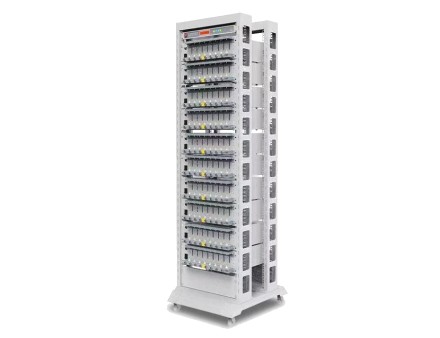

Battery testing plays a critical role in battery research, manufacturing, quality control, and product development. As battery technologies continue to evolve, selecting the right battery testing system becomes increasingly important for obtaining accurate and reliable testing data.
Different battery types require different testing methods, current ranges, voltage requirements, and testing environments. In this guide, we will explore how to choose the right battery testing system for various battery applications.
Why Battery Testing Matters
Battery testing helps manufacturers and researchers evaluate battery performance, safety, cycle life, charging efficiency, and long-term reliability. Proper testing can identify potential issues early and improve overall product quality.
A professional battery testing system allows users to monitor key parameters such as voltage, current, capacity, internal resistance, energy efficiency, and cycle performance throughout the battery lifecycle.
Battery Types and Their Testing Requirements
1. Coin Cell Testing
Coin cells are widely used in laboratory research, material development, and academic studies. Testing requirements typically focus on low current ranges, high precision, and long-term cycling performance.
Researchers often require battery cyclers capable of accurately measuring small capacity changes over hundreds or thousands of charge-discharge cycles. Learn more about Neware Battery Testing Systems.
2. Cylindrical Cell Testing
Cylindrical lithium-ion batteries are commonly used in consumer electronics, power tools, and electric vehicles. Testing systems for cylindrical cells should support a wide current range and provide stable long-term cycling capabilities.
Parameters such as capacity retention, cycle life, charging efficiency, and rate performance are commonly evaluated.
3. Pouch Cell Testing
Pouch cells are widely adopted in electric vehicles and energy storage applications due to their flexible design and high energy density.
Testing requirements often include charge-discharge cycling, temperature monitoring, and safety validation under various operating conditions.
4. Prismatic Cell Testing
Prismatic batteries are frequently used in EV battery packs and industrial energy storage systems. Their larger capacity requires battery testing equipment capable of handling higher currents and larger testing channels.
Engineers often focus on cycle life testing, consistency evaluation, and performance validation.
5. Battery Module and Battery Pack Testing
As battery systems become larger and more complex, testing shifts from individual cells to modules and complete battery packs.
Battery pack testing typically involves high-voltage and high-current testing, communication protocols, thermal management evaluation, and safety verification. Explore advanced Battery Tester Solutions for battery modules and battery packs.
6. BESS Testing
Battery Energy Storage Systems (BESS) are becoming increasingly important for renewable energy integration and grid stabilization.
BESS testing requires advanced battery testing systems capable of long-duration cycling, large-scale data acquisition, and comprehensive performance analysis.
Key Factors When Choosing a Battery Testing System
Current and Voltage Range
The testing system should support the voltage and current requirements of the target battery application. Laboratory coin cell testing may require milliamp-level precision, while battery pack testing may require hundreds of amperes.
Testing Accuracy
High accuracy is essential for obtaining reliable data, especially in research and development environments where small performance differences can significantly impact results.
Channel Density
For large-scale testing projects, a battery tester with multiple independent channels can improve testing efficiency and reduce operational costs.
Software and Data Management
Modern battery testing systems should provide intuitive software, real-time monitoring, data visualization, report generation, and remote access capabilities.
Scalability
As testing requirements grow, users should choose a platform that can expand with future projects and support additional testing channels when needed.
Choosing a Trusted Battery Testing Equipment Manufacturer
Working with an experienced battery testing equipment manufacturer ensures long-term technical support, reliable hardware performance, and software updates. A trusted supplier can also provide customized solutions for research institutions, battery manufacturers, EV companies, and energy storage projects.
Neware provides advanced battery testing systems, battery cyclers, and battery testing equipment for coin cells, cylindrical cells, pouch cells, prismatic cells, battery modules, battery packs, and BESS applications. With extensive industry experience and flexible testing solutions, Neware supports customers worldwide in battery research and production.
For companies seeking reliable testing solutions, partnering with Neware Battery Testing Systems can help improve testing efficiency, data accuracy, and long-term project success.
Conclusion
Selecting the right battery testing system depends on battery type, testing objectives, current requirements, accuracy expectations, and future scalability needs. Whether you are conducting coin cell research or large-scale BESS testing, choosing the appropriate battery testing equipment can significantly improve testing efficiency and data reliability.
Understanding your application requirements and partnering with an experienced battery testing system provider will help ensure successful battery development and quality assurance processes.