

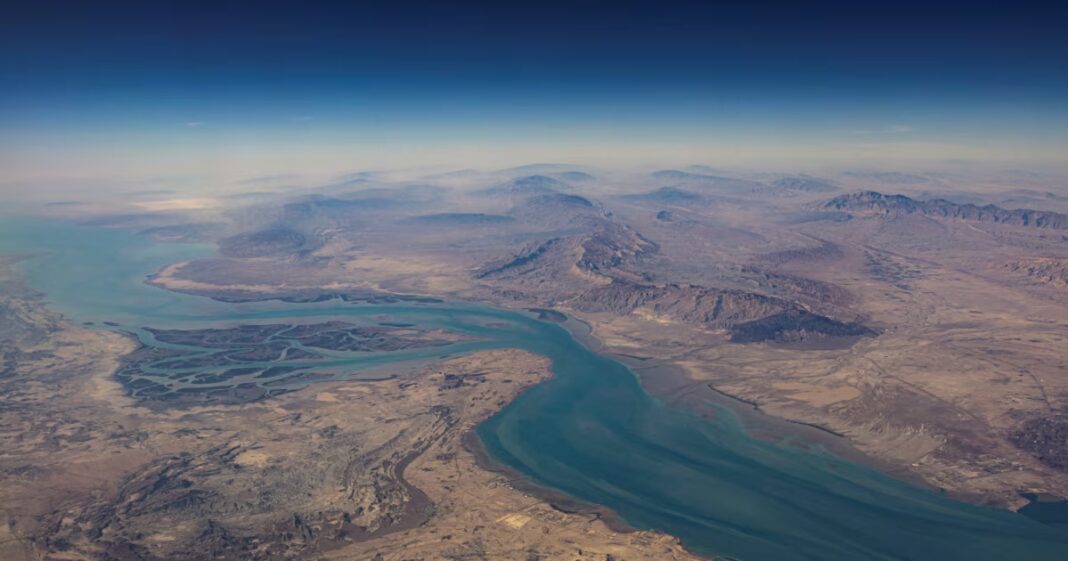

The leaders of Britain, France, Germany, Italy, Japan, Canada and more than a dozen other countries have issued a joint statement on the situation in the Strait of Hormuz, condemning Iran’s actions.
In a statement released on the UK government website, the parties said they “strongly condemn” attacks on unarmed commercial vessels in the Persian Gulf, as well as strikes on civilian infrastructure, including oil and gas facilities. Separately, the de facto blocking of the strait by Iranian forces was noted.
The countries expressed “deep concern” about the escalation of the conflict and called on Tehran to immediately cease threats, water area mines, and missile and drone attacks that impede international navigation. The statement emphasised that such actions violate international law, in particular the provisions of the UN Convention on the Law of the Sea, and contradict UN Security Council Resolution 2817.
The leaders stressed that interference in international maritime traffic and disruption of global energy chains pose a threat to international peace and security. They therefore called for an “immediate moratorium on attacks against civilian infrastructure.”
The countries also expressed their readiness to join in ensuring the safe passage of ships through the strait and supported the preparatory steps of states already working on this.
Separately, the statement welcomed the International Energy Agency’s decision on the coordinated release of strategic oil reserves. The leaders said they will “work to stabilise energy markets, in particular by increasing oil production”.
Support for the most affected countries through the mechanisms of the United Nations and international financial institutions is also envisaged.
The signatories of the statement emphasised that “maritime security and freedom of navigation are key to global stability and called on all states to comply with international law”.
US President Donald Trump, who recently criticised his NATO allies for refusing to be directly present in the Strait of Hormuz to ensure navigation, is due to meet Japanese Prime Minister Sanae Takaichi later today.
The de facto closure of the Strait of Hormuz to civilian shipping has been a major driver of disruption in the global energy market. As of March 19, oil prices continued to rise, with benchmark Brent crude up more than 5 per cent to $112.84 a barrel.
Israel and the US have been striking Iran since 28 February. US President Donald Trump said the purpose of this war is to destroy Iran’s military capabilities and prevent Tehran from developing nuclear weapons. Iran has been striking Israel and countries in the region that co-operate with the US. At the same time, Axios wrote that the US asked Israel not to attack Iran’s energy infrastructure.