


US Treasury Secretary Scott Bessent announced a new initiative aimed at increasing pressure on Tehran, stating that the United States is “launching an economic offensive against Iran’s financial networks around the world”.
“Our aim is to sever all the economic arteries that sustain this tyrannical regime until Tehran is left standing alone,” said Bessent at a press conference in Washington on 24 August, a few days after he and President Donald Trump had warned of ‘Economic D-Day’. ‘D-Day’ is likely an analogy with the start of the Allied landings in Normandy during the Second World War.
This statement came almost six months after the start of the US-Israeli war with Iran, which cut off energy supplies from the Persian Gulf via the Strait of Hormuz.
The US is ‘putting an end’ to the threat posed by Iran, Bessent stated, warning third countries that the United States ‘will be uncompromising in combating any source of illicit revenue for the [Iranian] regime’.
Bessent noted that Trump is phoning world leaders with specific requests, and that each country will be given a clear deadline to “cease… the Iran-related activities we have identified”.
He declined to specify exact deadlines, but added: “Our patience here is not unlimited.”
The US Treasury Department “has uncovered networks, intermediaries and financial channels that Iran uses to smuggle oil, evade sanctions and finance terrorism,” said Bessent, adding that the US “will be uncompromising in combating any sources of the regime’s illicit revenue”.
The Treasury Department stated that it had identified five sectors which Iran uses to sustain its economy – digital assets, technology, gold, aviation and shipping – and is imposing new sanctions against nearly 60 legal entities, individuals and vessels.
Any country supporting Iran must be prepared to face US sanctions, he noted, whilst “the Iranian regime faces a clear choice: severe global isolation or a path towards reintegration into the global economy”.
“We will hold everyone to account, and this will amount to the economic strangulation of this regime,” said Bessent.
Announcing the new measures last week without providing details, Bessent suggested that the existing blockade of Iranian ports by the US, combined with what he described as “the toughest sanctions in history”, would reduce the likelihood of new military operations against Iran being necessary.
However, Defence Minister Pete Hagseth emphasised that the use of military force cannot be ruled out.
Large-scale attacks have subsided, but the negotiations, which have alternated between starting and stalling, have yet to lead to an agreement to end the war, reopen the Strait of Hormuz, through which 20 per cent of the world’s oil supplies passed before the war, or to the resolution of the long-standing dispute over Iran’s nuclear activities.
When asked whether the US would take action against China for continuing to buy Iranian oil, Bessent replied: “We are confident that everyone wants the strait to reopen and energy prices to fall.”
He added separately: “Bear in mind that the Chinese obtain 50 per cent of [their] energy resources from the Gulf states. So joining this initiative would be beneficial for them too.”
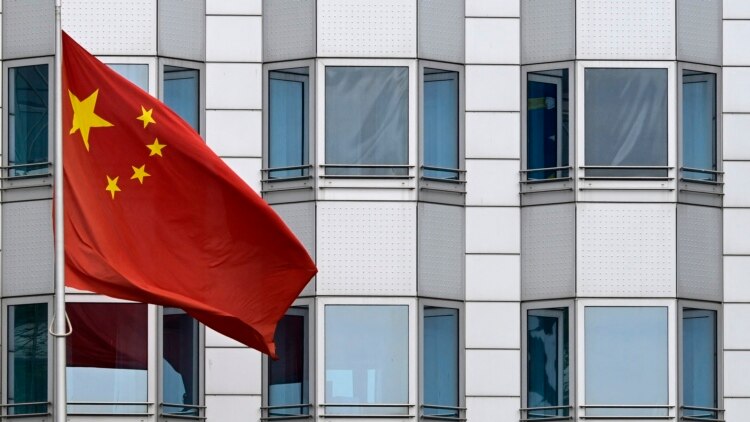
Earlier, on 24 August, a spokesperson for the Chinese Ministry of Foreign Affairs, Lin Jian, stated: “Sanctions and pressure will not help to resolve the issues. They will only heighten tensions and lead to an escalation of the situation, which is not in the interests of any of the parties.”
Iran’s Minister of Economy stated on state television that Tehran had anticipated new measures from the US and was “prepared, having a two-year action plan in place for such eventualities”.