

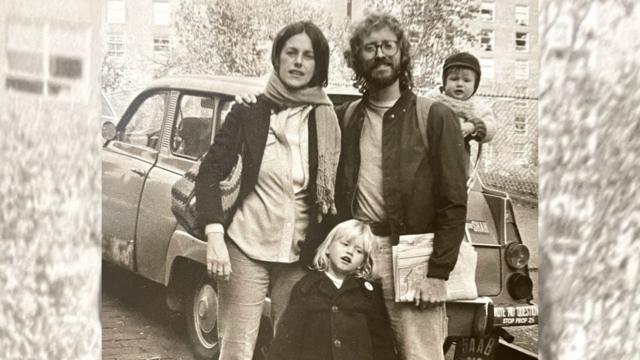

Zayd Ayers Dorn could do things that ordinary children cannot. He knew how to spot an FBI agent in a crowd, could speak in code over the telephone, and understood why his family was constantly changing their names and places of residence.
Then one day, his parents took him on a family holiday. Whilst the boy thought they were off on a countryside break, the adults were scouting the area around a prison. They were preparing for a possible attempt to free one of the inmates.
‘For me, it was almost like a game,’ recalls Zaid.
It was only later that he realised just how unusual his childhood had been.
Portraits of Che Guevara and Ho Chi Minh hung on the walls of his bedroom instead of Disney characters. For several years he was unable to attend nursery, and his friends were mainly the children of activists.
When Zaid was born, his mother, Bernadine Dorn, was one of the FBI’s most wanted fugitives.
She was the leader of the Weather Underground — a radical American organisation that opposed the Vietnam War and fought against racial and social inequality. Members of the organisation carried out bombings at government buildings, including the Capitol, the Pentagon and the State Department.
Zayda’s father, Bill Ayers, was one of the organisation’s founders.
For the boy, all this was simply his life.
The FBI are after us
I knew the FBI were after us. They never hid that from me. They explained everything to me in a way a child could understand.
You know, they compared us to Robin Hood. The poor. Something like that.
His parents’ story began far removed from bombings and persecution.
They grew up in well-off, middle-class families. Bernadine was a top student and studied law at the University of Chicago.
In 1966, Martin Luther King Jr. came to Chicago.
He supported activists protesting against rent increases. Bernadine joined the movement and soon came to the conclusion that America needed radical change.
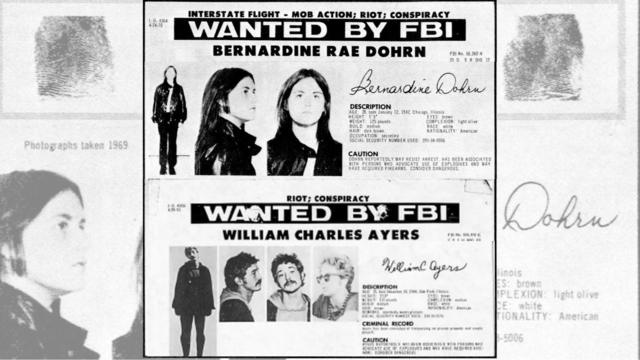
Photo credit: Bettmann Archive/Getty Images
Following King’s assassination, her views became even more radical.
Then the police shot and killed Fred Hampton, one of the leaders of the Black Panther movement.
For Bernadine, this was a turning point.
‘I think that’s what finally pushed my mother and a few other people like her towards radicalism,’ says Zaid. ‘Hampton was not only a friend to her, but also a role model. And he was killed by his own government.’
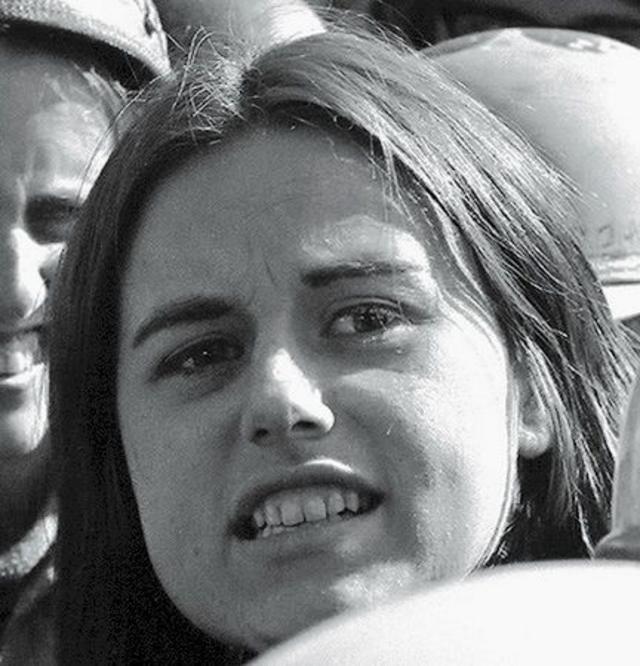
Photo credit: Getty Images
His father joined the Weather Underground by a different route – through protests against the Vietnam War and compulsory military conscription.
Their slogan was: ‘Bring the war home.’ They wanted to bring the violence of the Vietnam War onto the streets of America – to rouse people, to show them what was happening across the ocean and what the American authorities were doing to Black organisations and their leaders at home.
Bombs in women’s handbags
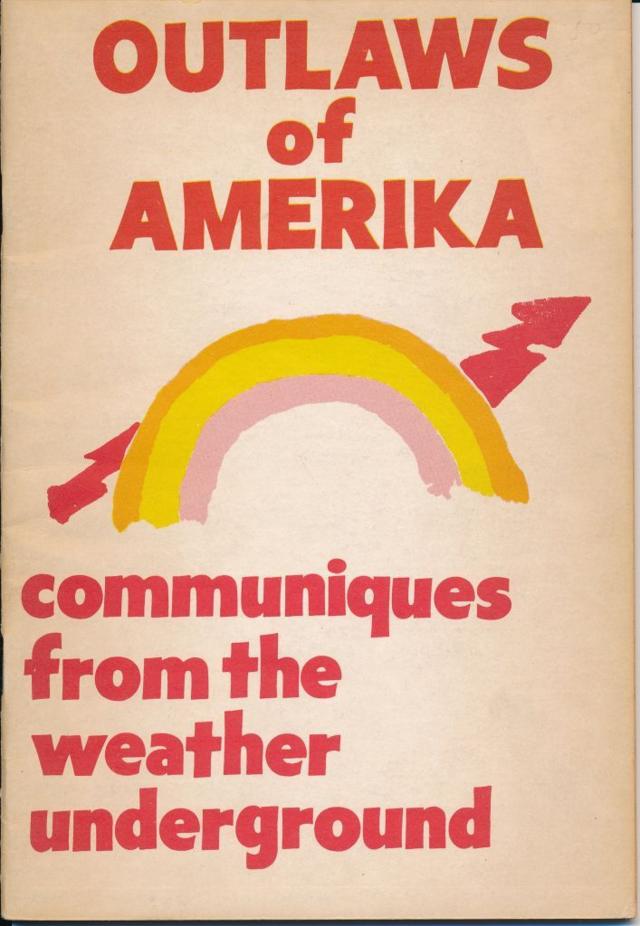
Photo credit: Gado/Getty Images
Today, it is hard to imagine that a group of young people from affluent families could infiltrate well-guarded government buildings and plant bombs there.
But the Weather Underground members were aided by the fact that they were young, white and well-educated.
Women were able to enter buildings by posing as secretaries. They gathered information and hid explosive devices where they were less likely to be noticed, often in ladies’ toilets.
They were educated, well-mannered and relatively well-off. They could move through these centres of power without attracting much attention,’ explains Zaid.
Their position enabled them to assist Black radicals from the Black Liberation Army – an organisation that had split from the Black Panthers.
White activists used their relative inconspicuousness and access to various locations to help their allies.
For example, they might have acted as drivers for the vehicles in which members of the movement went into hiding after escaping from prison or carrying out other illegal operations.
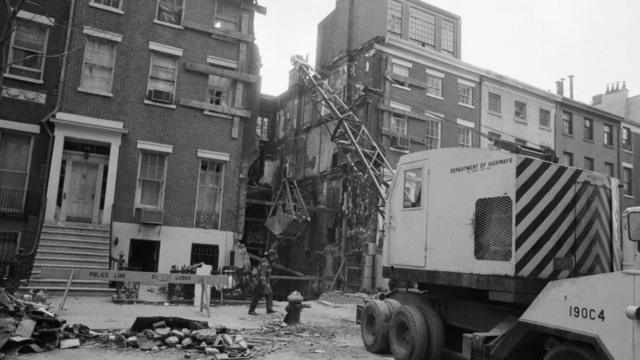
Photo credit: Bettmann/Corbis photo via the FBI
And then this struggle became part of Zaid’s childhood.
Due to a lack of official documents, he was unable to attend school. Most of his friends were the children of other activists.
At the same time, in many ways his life resembled that of an ordinary American child: family trips, walks, and time spent in the countryside.
It was just that the nature of these outings was quite different.
Instead of Disneyland – places of revolutionary struggle
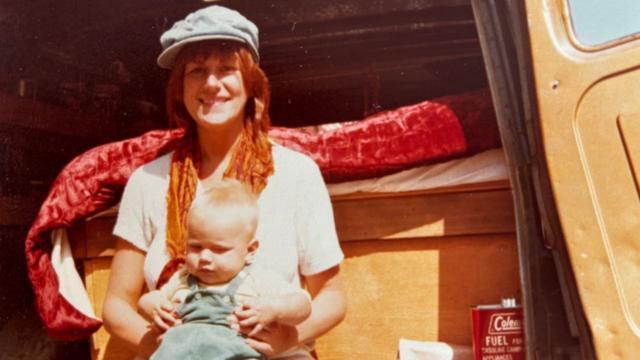
Photo credit: Zayd Ayers Dohrn
We certainly never went to Disneyland, the Capitol or any of those 8 places). We went to places where the revolutionary struggle was raging. They showed me the places where their heroes had been killed, where the police shot Fred Hampton, where John Brown was hanged, where Nat Turner led the slave rebellion
.
It was only many years later that Zayd realised that one of the family trips to the countryside was not just a holiday at all.
Their campsite was less than a kilometre from the federal prison where a member of the Black Panthers was being held.
His parents were surveying the prison and its surroundings, preparing for a possible attempt to organise an escape.
Zayd believes that his parents tried not to cause physical harm to people. Before the explosions, they warned the authorities, and they set the explosive devices to go off when the buildings were empty.
But violence, once it becomes part of the struggle, inevitably carries with it the risk of tragedy.
Sometimes their decisions were risky, dangerous and even counterproductive. They did things that could have ended in a terrible, horrific tragedy.
Even before Zaid was born, an accident whilst making a bomb claimed the lives of his father’s girlfriend and two other members of the organisation.
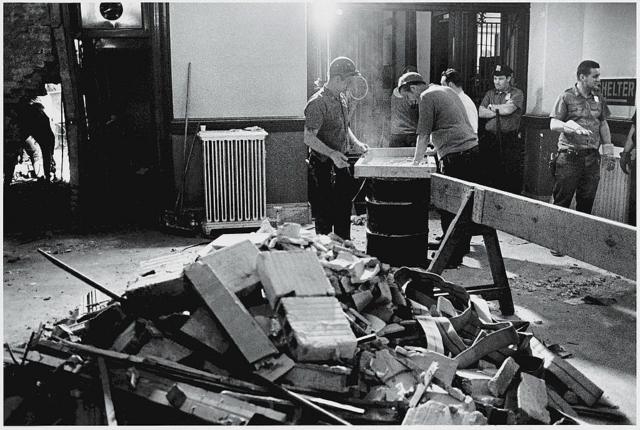
Photo credit: Getty Images
Even as a child, Zayd understood just how dangerous his parents’ lives were.
Of course, I was worried. I had friends whose parents had been killed. I had friends whose parents had been in prison for a very long time.
As an adult, and having children of his own, Zaid spent many years trying to understand his parents’ decision.
He compares them to people who voluntarily enlist in the army.
They believed they were at war with their own government and were prepared to accept the consequences of that struggle.
In many ways, I’m proud of them.
Back then, most people in America – especially most white Americans – were prepared simply to turn a blind eye to the injustice they saw around them and do nothing. Something had to be done.
But Zayd himself cannot imagine today that he could leave his children at home and go off to rob a bank or free someone from prison.
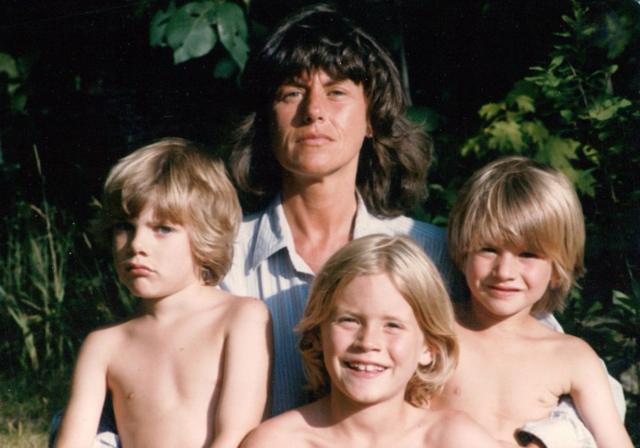
Photo credit: Zayd Ayers Dohrn
After the birth of her youngest son, Bernadine decided to strike a deal with the investigators and turn herself in to the authorities. She wanted to give her family at least a semblance of a normal life.
At first, she managed to avoid prison due to the unlawful methods and mistakes the FBI had made during the investigation.
But Bernadine refused to testify against other members of the Weather Underground. As a result, she spent nearly a year in prison.
Her husband was left alone with Zaid, his younger brother and the child of another activist, who also ended up behind bars.
Zayd was five years old at the time.
He was angry, upset and begged his mother to come home.
From prison, she wrote him letters, trying to explain her decision. He still reads those letters to this day.
She wrote that being a mother was the most important thing in the world to her. But being a revolutionary was just as important, says Zaid.
She cited her heroes as examples — Martin Luther King Jr, Fred Hampton, Malcolm X. People who fought for their beliefs. And all these men had children.
They changed their lives, but not their views
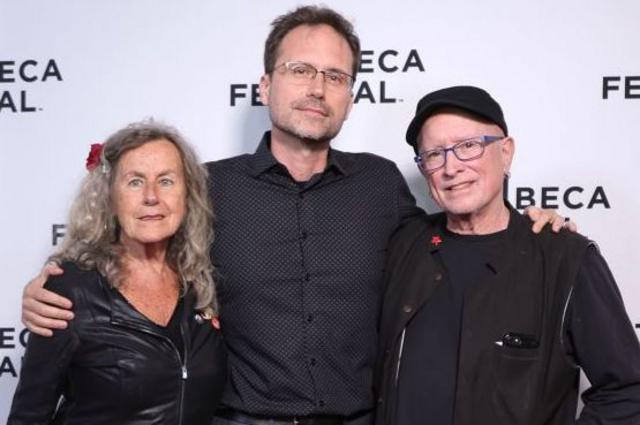
Both of Zaid’s parents are now in their eighties.
He calls them incredible grandparents, but laughs when asked whether their views have softened with age.
After the persecution ended, Bernadine became a professor of law and, for four decades, headed a law firm, helping people who, in her view, had fallen victim to an unjust criminal justice system.
Bill Ayers became a professor and devoted himself to reforming the state education system.
Their methods have changed.
Their convictions have not.
‘They would take offence if anyone called them moderates or liberals,’ says Zeid.
For him, his parents’ story remains a complex one.
He can take pride in their willingness to fight injustice – whilst at the same time understanding just how dangerous some of their decisions were.
Above all, he now sees them not just as former radicals, but as a son sees his parents.
The very same people who once taught a little boy to spot FBI agents in a crowd and to use code words on the telephone.
And for whom all of this really was just everyday life.