

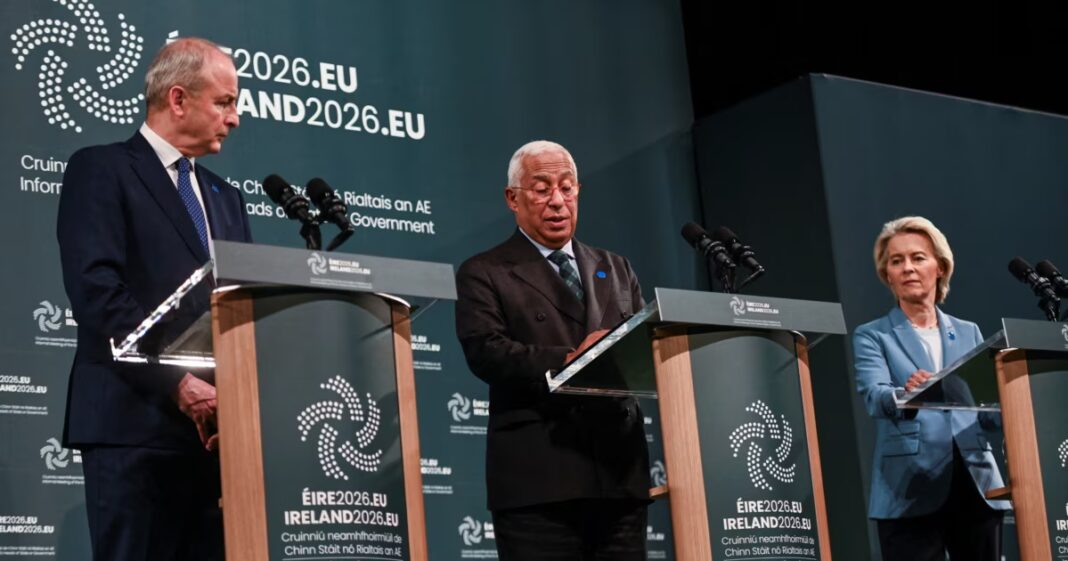

Europe will be represented in the negotiations to end the war in Ukraine not by a single negotiator, but by a joint team comprising EU institutions and five countries — Germany, France, the United Kingdom, Italy and Poland. EU leaders agreed on this format on 13 November at an informal European Council meeting in Dublin.
The decision was announced by the President of the European Council, António Costa. According to him, the European team will act “in close coordination and complete unity” and must speak “with one clear and united voice” on issues on which the future of Ukraine and the security of Europe depend.
The team will comprise the EU institutions — the European Commission and the Council of the EU — and the E5 group of the ‘Coalition of the Willing’, comprising Germany, France, the UK, Italy and Poland.
 SEE ALSO:
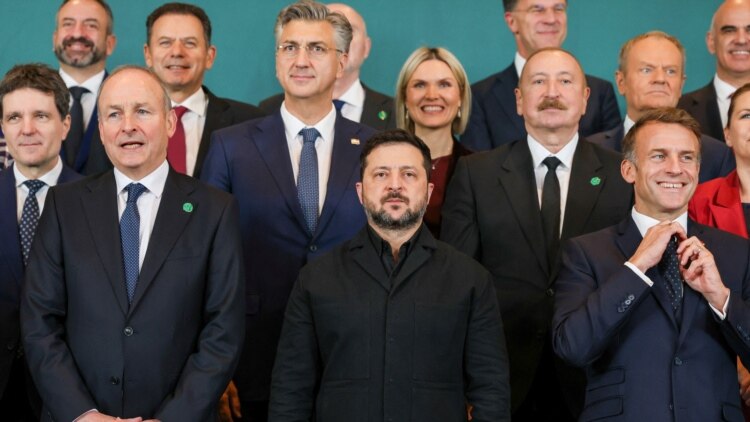
Europe’s involvement in the negotiations: Trump’s special envoys announced this, whilst Peskov claimed that this was not the case
When asked why the Europeans would be represented by a group rather than a single individual, Koshta pointed out that US President Donald Trump has two special envoys, whilst the Ukrainian delegation, in his estimation, comprises three or four people. He added that the EU has its own powers, whilst the ‘coalition of the willing’ is needed to discuss security guarantees for Ukraine following a peace agreement.
Koshta emphasised that decisions regarding Ukraine’s territory and sovereignty can only be taken by Ukraine itself. The EU, he said, must play a central role in discussions on the country’s European future, its reconstruction and prosperity. Security guarantees should be discussed within the framework of the ‘Coalition of the Willing’ in close coordination with NATO.
The President of the European Council described the coming weeks as a decisive test of Russia’s willingness to end the war. “Its actions to date – escalation and attacks on Ukraine’s civilian population – suggest otherwise. Russia must change course,” he stated.
The issue of European representation has gained momentum against the backdrop of diplomatic contacts in Abu Dhabi and discussions on the participation of European countries in the peace process. There was no consensus among EU leaders on the format. Estonian Prime Minister Kristen Mihal argued that Europe already has institutions and officials with the necessary democratic accountability, citing António Costa and the EU’s High Representative for Foreign Affairs, Kaja Kallas. Czech Prime Minister Andrej Babiš insisted that the representative must receive an official mandate from the European Council.
 SEE ALSO:
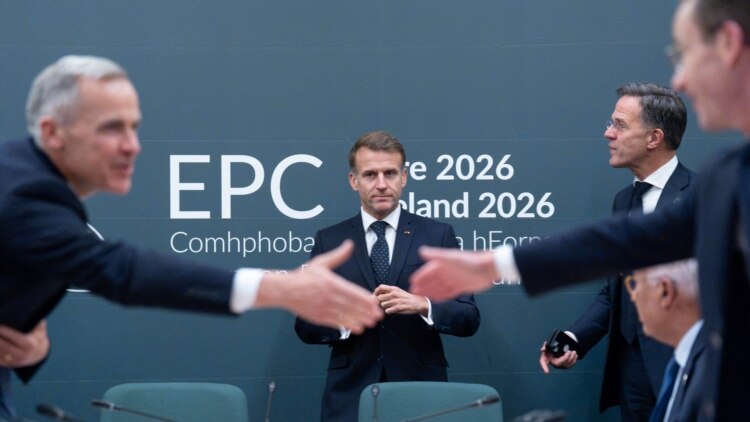
39 countries signed a declaration on European security in Dublin
Statements from the US side regarding a possible expansion of the talks also sparked controversy. On 12 November, Trump’s special envoys Jared Kushner and Steve Whitecoff reported that they had received Russian President Vladimir Putin’s consent for representatives of European countries to take part in the talks. The following day, Putin’s press secretary, Dmitry Peskov, did not in fact confirm this statement: according to him, the Kremlin would first assess Europe’s readiness to ‘contribute to the peace process’ and then decide whether to conduct the dialogue in an expanded format.
Following the meeting in Dublin, EU leaders agreed on collective representation for Europe.
 SEE ALSO:
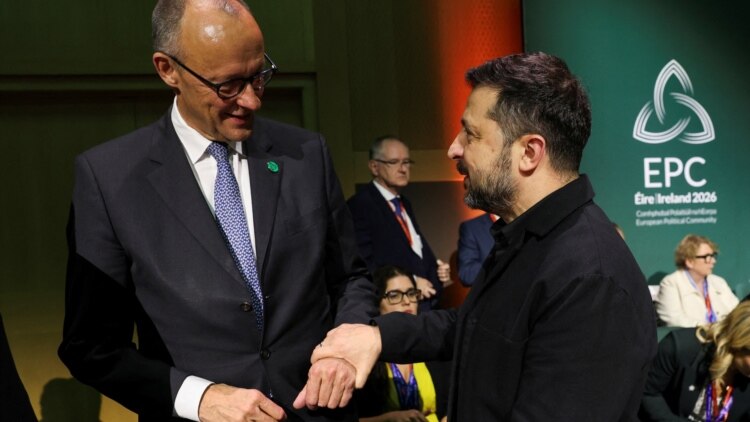
‘He is absolutely right’ — European leaders on Merz’s demand regarding funding for Ukraine
The original version of this article first appeared on Glob-News.com.