

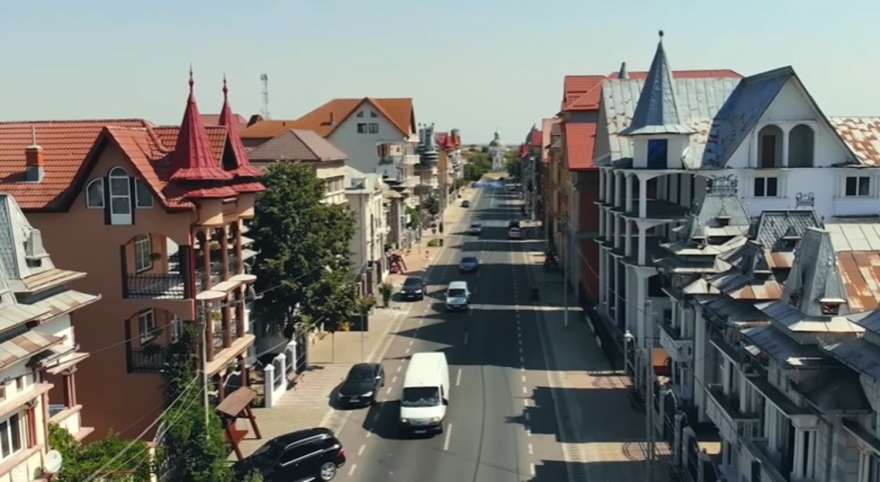

The Serbian economist reports that the housing market in neighbouring Romania is maintaining price growth in early 2026, although the pace already looks more moderate than during the post-pandemic acceleration. According to Eurostat, Romania’s annual house price growth in late 2025 was around 6.7 per cent, which was above the EU average.
Bucharest remains the main centre of the market, but high prices persist in the largest regional cities as well. According to Romania Insider, in February 2026, two metropolitan areas have already surpassed Cluj-Napoca in terms of price per square metre, with Cluj itself contained at around €3,300 per sq m. For Bucharest, research and market surveys show a city benchmark of €2,236 per sq m in February 2026.
In terms of transactions, the beginning of 2026 looked uneven. In January, 24,598 property transactions were registered nationwide, down from January 2025, and flat transactions fell by 25% nationally and 22% in Bucharest, according to Storia’s ANCPI-based analysis. Already in February, the market recovered noticeably, with the number of transactions rising to 44,427 and Bucharest again becoming the largest housing market in the country.
The key trend for the beginning of 2026-the market remains active, but buyers have become more cautious. CBRE’s 2026 survey notes that Romanian buyers dominated the transaction mix at the end of 2025 and accounted for around 31 per cent of total investment volume for the year, while more general market surveys describe demand as “cautiously positive”: buyers remain active but are taking longer to make decisions and focusing on correctly priced properties in good locations.
In terms of pricing logic, the market can no longer be called cheap even by regional standards. Colliers pointed out at the end of 2025 that prices in Romania’s largest cities have increased by 60-90% in six years, and in Cluj by about 100%, while in Bucharest the number of building permits has fallen by 45% in three years, which further restricts supply.
Another nuance is important for buyers and investors: the Romanian market is becoming more demanding in terms of deal structure and financing. Legal 500 estimates that the sector enters a more “disciplined” phase in 2026, where decisions are more strongly influenced by the cost of credit, the regulatory environment and the quality of documentation. The OECD also expects for Romania in 2026 only a moderate acceleration of economic growth after a weak 2025, which means that the housing market will increasingly depend on household income and mortgage availability, rather than on growth inertia alone.
Regarding foreigners, it has not been possible to find fresh official statistics in open sources specifically regarding home buyers by nationality in early 2026. Therefore, it is more correct to separate the foreign presence market and the foreign buyers’ market. According to OECD data, in 2024, 52 thousand new immigrants in Romania obtained residence permits for more than 12 months, and the largest immigrant groups in the country in 2024-2025 were related to Ukraine, Italy, Spain, Moldova and Turkey. This is not identical to homebuyers, but shows which foreign groups are now most visible in the country and potentially form part of the demand for renting and buying property.
Separately, the growth in labour migration from Asia is notable. The OECD indicates that among new arrivals in 2023-2025 the largest groups were citizens of Nepal, Sri Lanka and Turkey, while the Romanian labour market has also been actively attracting workers from India and Bangladesh in recent years. For the housing market, this is important primarily in the segment of rentals, hostels and budget housing in large cities, rather than in the premium segment of flat purchases.