

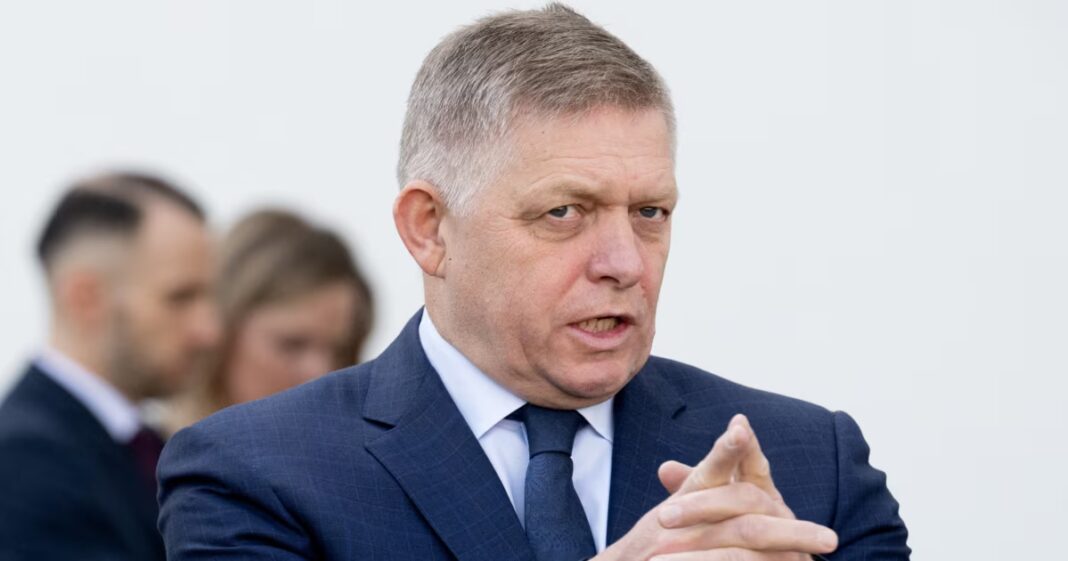

Tempers are running high in Slovakia: Prime Minister Robert Fico has made a statement that has caused a major stir. Speaking in Prešov on 17 September, he stated that his country would not be drawn into military conflicts, despite its commitments to NATO.
Fico emphasised that, although Slovakia is part of the North Atlantic Alliance and values cooperation with its partners, he, as head of government, would do everything in his power to prevent his country from becoming involved in military action. His remarks came in response to a discussion of Article 5 of the NATO Treaty, which stipulates that an attack on one member of the Alliance is considered an attack on all. The Prime Minister expressed doubts about the need to mobilise Slovak troops should this article be invoked, posing rhetorical questions as to whether Slovaks would be prepared to take part in a conflict without understanding its causes and objectives.
In the coming days, Fico plans to visit Ukraine to meet with President Volodymyr Zelenskyy. Although the details of the trip have not yet been disclosed, it is known that leaders from other countries will be part of the delegation.
Against the backdrop of these statements, it is worth noting that following Russia’s full-scale invasion of Ukraine, Slovakia provided significant military aid to Kyiv, sending 13 aid packages worth 671 million euros and transferring around ten MiG-29 aircraft. However, following Fico’s rise to power in 2023, Bratislava ceased official arms supplies, although it does not prevent private companies from doing the same.
Fico’s relations with the Kremlin have been met with mixed reactions. Since the start of the invasion, he has met with Vladimir Putin on numerous occasions, a fact that has not gone unnoticed in the European Union and has drawn criticism.
Meanwhile, the situation on the international stage remains tense. European Commission President Ursula von der Leyen, in her annual address, highlighted the rise of hybrid threats in Europe, calling for greater preparedness to counter them. In the Baltic states, too, concern is growing over Russian aggression, particularly in light of the increasing frequency of incidents in the airspace.
Against this backdrop, Russian Foreign Minister Sergey Lavrov stated that a ‘very short’ war would follow should Europe attack Russia, although he emphasised that Moscow had no intention of striking first. These words only serve to highlight the fragility of the current geopolitical situation facing European countries, including Slovakia.