

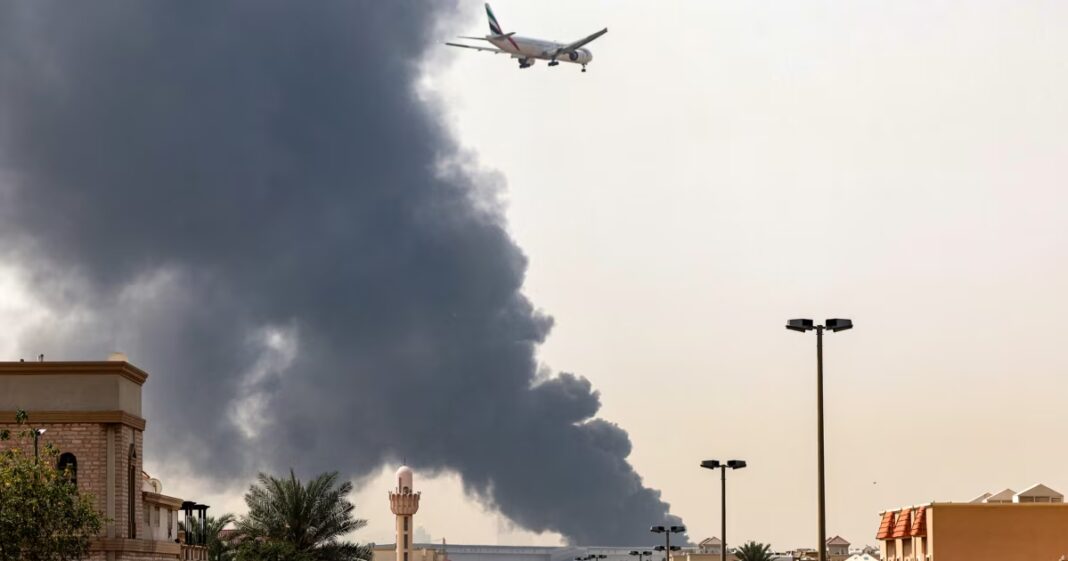

The Islamic Revolutionary Guard Corps (IRGC) stated that on 15 November it had sent six drones towards the Riffa helicopter base in Bahrain. Iran described the attack as a response to “blatant aggression by the US military”. The Bahraini military reported that it had intercepted several air attacks and destroyed the launched targets, whilst the IRGC claimed a “successful strike”.
This is Iran’s first attack on Bahrain since early September and the first strike on the Gulf state in several weeks. In September, Iranian drones also attacked a US military base in the United Arab Emirates.
Tensions in the region remain high, partly due to shipping in the Strait of Hormuz. US President Donald Trump has stated that he is considering refraining from launching further strikes against Iran, provided it does not engage in further provocations. The US authorities have not officially commented on the attack on the base in Bahrain.
The Speaker of the Iranian Parliament, Mohammad Bagher Ghalibaf, stated that it is still possible to bring an end to the conflict, which has now been ongoing for nine months. To achieve this, he said, the US must accept Tehran’s ‘reasonable conditions’. If Washington resumes strikes, the Iranian armed forces will themselves “determine the theatre of operations”, Galibaf warned.
On 17 September, Trump said he was nearing an important decision on whether the US should resume large-scale attacks on Iran. He also claimed that Tehran had contacted his administration and was “very keen” to reach an agreement, and expressed hope that the war was drawing to a close.
However, on 15 September, Mohsen Rezaei, Secretary of Iran’s Supreme National Security Council, ruled out the possibility of negotiations: “No negotiations until Iran’s conditions are met. Full stop!”
The original version of this article first appeared on Glob-News.com.