

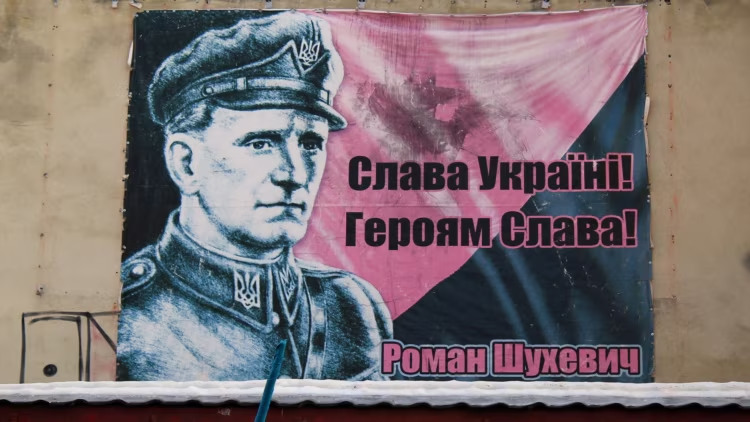

From May to November 1943, the commander-in-chief of the UPA was Dmytro Klyachkovsky; from 1944 to 1950, it was Roman Shukhevych; and from 1950 to 1954, it was Vasyl Kuk.
The UPA was characterised by guerrilla tactics; all its weapons were captured German, Soviet, Hungarian and Austrian equipment (dating back to the First World War). In addition to Ukrainians, Jews, Russians and fighters of other nationalities served in the UPA.
The UPA fought on two fronts – against Nazi Germany and, subsequently, against the Soviet authorities; the activities of the UPA were recognised as an anti-German uprising by the German occupation authorities, in particular Erich Koch. Attacks by UPA units on German military units, as evidenced by German documents, continued until August 1944; reports by Soviet partisans also attest to the armed conflict between the Germans and the UPA.
Soviet propaganda denigrated the UPA as an organisation that collaborated with Nazi Germany.
In Russia, the UPA was designated an extremist organisation by a Supreme Court ruling in 2014.
In Poland, too, negative attitudes towards the UPA prevail. In 2016, the Polish parliament classified the actions of UPA soldiers against the Polish population in Volhynia as genocide.
Radio Free Europe reports on the Volhynia tragedy in a special feature
It was not only the UPA that was active in Volhynia, but also the networks and detachments of ‘Bulba’ (Borovets), the ‘Melnikovites’ and various atamans. German punitive units and the Police were also active, with both Ukrainians and Poles serving in their ranks, as well as Soviet partisans.
Based on documents from the Security Service of Ukraine (SBU), it has been established that in Western Ukraine, Polish losses amounted to 30,327 people and 240 destroyed settlements, whilst Ukrainian losses stood at 16,523 and 115 respectively. By contrast, the Institute of National Remembrance in Poland believes that the UPA and other nationalist units were responsible for the deaths of around 100,000 Poles.
Attitudes towards the UPA within Ukrainian society since independence have fluctuated between positive (fighters for independence) and negative (‘German collaborators’); following the Revolution of Dignity, recognition of their merits began to prevail.
Since 2015, UPA fighters have been recognised as fighters for Ukraine’s independence in the 20th century. In 2018, a law was passed granting UPA soldiers the status of combatants.
According to a public opinion poll conducted in the autumn of 2023, for more than two-thirds of the Ukrainian population, the UPA has become a symbol of the defence of independence.