


The leaders of Germany, France and Britain, Friedrich Merz, Emmanuel Macron and Keir Starmer, said they were not involved in the strikes on Iran but were in close contact with international partners, particularly the US, Israel and partners in the region.
“We reaffirm our commitment to regional stability and the protection of civilian lives. We condemn Iranian attacks on countries in the region in the strongest terms. Iran must refrain from indiscriminate military strikes. We call for the resumption of negotiations and urge the Iranian leadership to seek negotiated solutions. Ultimately, the Iranian people must be allowed to determine their own future,” the joint statement said.
In a separate statement, British Prime Minister Keir Starmer said that London, as part of its commitment to the security of allies in the Middle East, has a number of defence capabilities in the region “which it has recently taken action to strengthen”.
“Our forces are active and British aircraft are in the skies today as part of coordinated regional defence operations to protect our people, our interests and our allies, as Britain has done before, in accordance with international law. We have strengthened the defence of British bases and personnel to the highest level,” Sturmer stressed.
He said it was now “vital” to prevent further escalation and return to the diplomatic process.
“Iran can put an end to this now. They must refrain from further strikes, abandon their weapons programmes and stop the horrific violence and repression against the Iranian people, who deserve the right to determine their future… This is the path to de-escalation and a return to the negotiating table,” the British prime minister added.
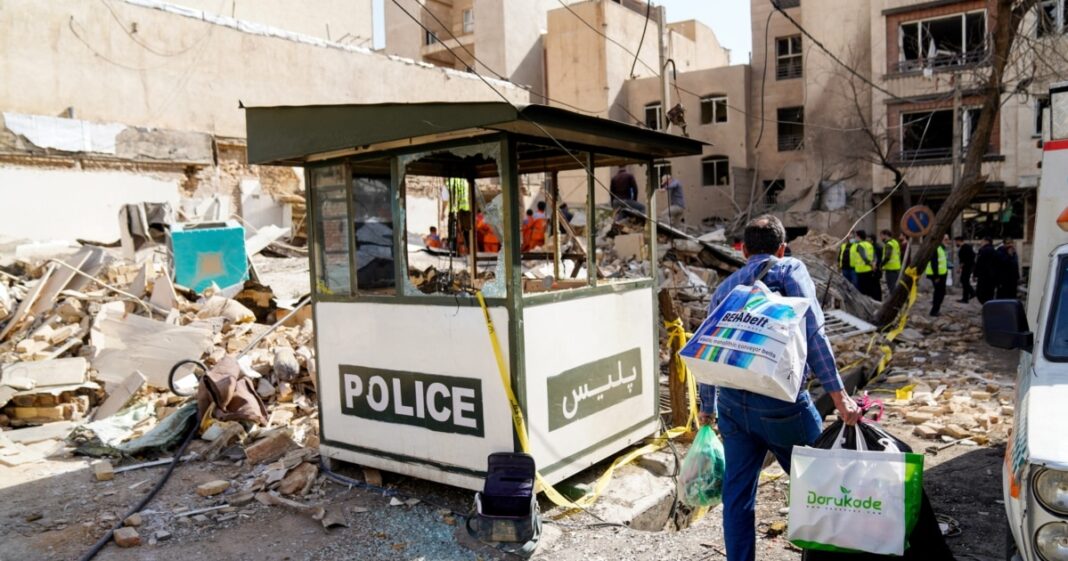
On the morning of 28 February, the Israeli military launched a strike on Iranian territory. US President Donald Trump said Washington had launched “massive combat operations” against Iran, hours after Israel announced what it called a “pre-emptive strike” on 28 February.
Iranian media reported explosions in several cities, notably Tehran, Tabriz, Isfahan, Qumi, Lorestan and Chabahar. In Tehran, the strikes targeted Iran’s top leadership. Missiles reportedly hit the dwellings of Supreme Leader Ayatollah Ali Khamenei and President Massoud Pezeshkian in the city centre. News agencies citing informed sources say both leaders have been moved to safe places.
Meanwhile, Reuters, citing two sources familiar with Israeli military operations and a regional source, reported that Iranian Defence Minister Amir Nasirzadeh and Islamic Revolutionary Guard Corps commander Mohammad Pakpour are believed to have been killed in the Israeli attacks. The Times of Israel reported earlier that Israeli officials estimated that Pakpour, Nasirzadeh and Iran’s intelligence chief were likely killed in the strikes.
Israeli Prime Minister Benjamin Netanyahu said a joint U.S.-Israeli strike on Iran would “create the conditions for the brave Iranian people to take their destiny into their own hands.”
After the strike, sirens sounded across Israel-the Israel Army (IDF) urged residents to stay close to shelters. Iran’s Islamic Revolutionary Guard Corps responded to the US and Israeli strikes by launching several waves of drones and ballistic missiles at Israel.
Iran has also launched missiles at several Middle Eastern countries where US Armed Forces bases are located. Explosions were reported in Bahrain, UAE, Qatar and Saudi Arabia.
One civilian reportedly died in Abu Dhabi, the capital of the United Arab Emirates, after being struck by falling debris during the first wave of retaliatory attacks from Tehran.