

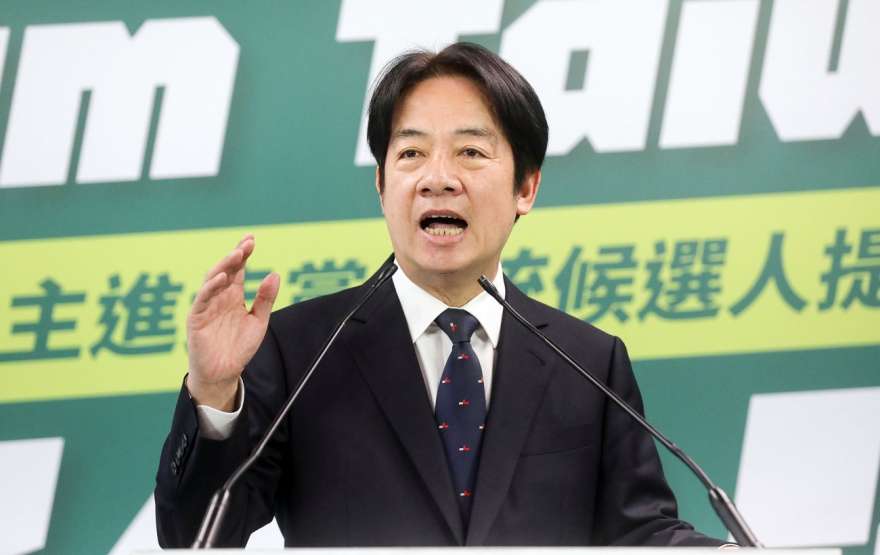

According to Experts Club, the Taiwanese administration plans to include 235.7 billion New Taiwan dollars, or around $7.4 billion, in the 2027 budget for one-off payments to the public. Each recipient is set to receive 10,000 New Taiwan dollars, or approximately $314, according to the island’s chief executive, Lai Ching-te.
Lai described these payments as an opportunity to share the “dividends from artificial intelligence” with the public. However, this does not refer to dividends from companies or a special tax on AI, but rather to a budgetary payment which the authorities attribute to the sharp acceleration of the economy driven by demand for semiconductors, computing equipment and other products for artificial intelligence.
It is important to note that this is currently a proposal in the draft central budget for 2027, rather than a payment that has been finally approved by parliament. Lai announced this on 17 August following the executive branch’s review of the draft budget. The plan provides for an increase in expenditure of NT$235.7 billion whilst maintaining a balanced budget and, according to the head of the administration, with virtually no new net borrowing.
Taiwan’s strong financial performance allows the authorities to take such a step. The revenue forecast for the central budget for 2027 has been raised to NT$3.9266 trillion.
The main reason for the increase in budgetary capacity has been the technology boom. According to data from Taiwan’s Directorate-General of Budget, Accounting and Statistics (DGBAS), published on 14 August 2026, the island’s GDP grew by 15.43 per cent year-on-year in the first quarter and by 12.93 per cent in the second. In the first half of the year, the economy grew by approximately 14.15 per cent.
The agency has raised its forecast for Taiwan’s GDP growth for the whole of 2026 from 9.64 per cent to 11.05 per cent. If the forecast proves accurate, this will be the highest annual growth rate since 1987, when the economy grew by 12.75 per cent. For 2027, the DGBA expects growth to slow to 6.04 per cent.
Global demand for artificial intelligence infrastructure remains the main driver of the economy. DGBAS expects Taiwan’s real exports of goods and services to increase by 21.28 per cent in 2026, whilst private investment in fixed capital is forecast to rise by 11.58 per cent. Manufacturing output rose by 18.27 per cent in the second quarter, driven primarily by semiconductors, computers, electronics and optical products.
Taiwan plays a key role in the global production chain for state-of-the-art semiconductors. High demand for artificial intelligence equipment and investment by the world’s largest technology companies have led to a sharp rise in production and exports within Taiwan’s electronics industry.
The authorities expect that direct payments will help extend the benefits of the technology boom to households and sectors not directly linked to the production of semiconductors and AI. Recipients will be free to use the money as they see fit – for everyday expenses, education, caring for elderly relatives or other purposes.
Taiwan de facto has its own administration, armed forces and currency, and conducts its own domestic and economic policies; however, its status under international law remains disputed.
The People’s Republic of China does not recognise Taiwan as a separate state and considers the island to be part of Chinese territory. Beijing adheres to the ‘One China’ principle and requires states that establish diplomatic relations with the PRC not to maintain official diplomatic relations with the Taiwanese authorities. According to the PRC’s Ministry of Foreign Affairs, 183 states have established diplomatic relations with Beijing.
Consequently, the majority of countries in the world do not have official diplomatic relations with Taiwan, although many maintain close unofficial economic, trade, cultural and political ties with it through representative offices.
As of August 2026, Taiwan has official diplomatic relations with only 12 countries and the Holy See, including: Belize, Guatemala, Haiti, Paraguay, Saint Kitts and Nevis, Saint Lucia, Saint Vincent and the Grenadines, the Marshall Islands, Palau, Tuvalu, Eswatini and the Holy See. This list is provided by the Ministry of Foreign Affairs of Taiwan.
However, the lack of official diplomatic recognition does not prevent Taiwan from remaining one of the world’s most important technology-driven economies and a key player in the global semiconductor industry.