

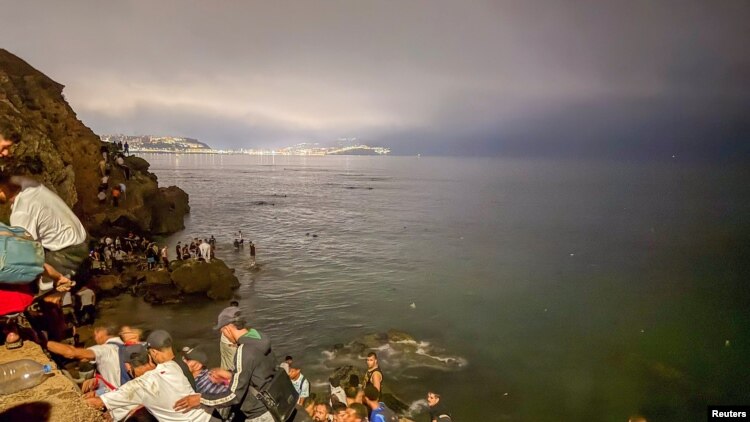

Although Ceuta is separated from Spain by the sea, it is a sovereign territory of that country and, consequently, part of the Schengen Area.
In practice, document checks are carried out when entering mainland Spain from Ceuta, meaning that migrants from Ceuta cannot enter the European mainland unhindered.
In Italy, however, concerns have already been raised regarding this breach of the EU border; Prime Minister George Maloney, known for her hardline stance on migration, has stated that the authorities may even go so far as to suspend the Schengen Agreements in relation to Spain.
The Spanish government, by contrast, recently announced the possibility of regularising the status of around 500,000 migrants who had previously entered the country illegally. According to the authorities’ critics, this, along with the Supreme Court’s recent ruling that migrants arriving by sea cannot be deported immediately, has contributed to the ‘surge’ of migrants into Ceuta.
It is reported that over the past 24 hours, at least 18 migrants have died whilst attempting to reach Ceuta by sea in small boats.
The Spanish government had previously announced that 200 members of special police units and 60 military personnel had arrived from mainland Spain to reinforce the enclave’s regular forces. Spanish Prime Minister Pedro Sánchez is expected to arrive in the enclave on 31 July, accompanied by the Minister of the Interior, to assess the situation. According to El País, the police cleared migrants from the city centre ahead of the Prime Minister’s visit.