

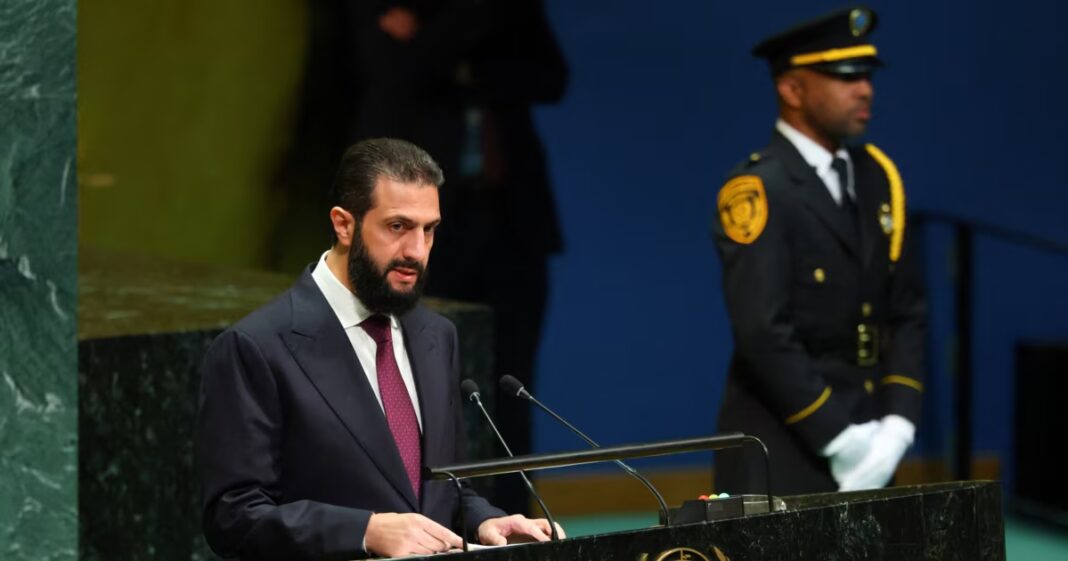

Against the backdrop of ongoing conflicts in the Middle East, Syria’s interim president, Ahmed al-Sharaa, made a strongly worded statement at a session of the UN General Assembly. He emphasised that the Golan Heights remain an integral part of Syria and described Israel’s actions to annex them as illegal. Al-Sharaa demanded the immediate withdrawal of Israeli troops from this disputed territory.
According to al-Sharaa, Syria is undergoing a period of revival following the change of government scheduled for the end of 2024. Having re-established international ties, the country is actively cooperating with more than a hundred states. The Syrian capital has recently hosted more than 60 diplomatic delegations, and there have been around four thousand meetings with foreign representatives.
However, by no means are all these meetings taking place in a spirit of peace and cooperation. According to al-Sharaa, Israel continues to carry out aggressive actions against Syria. Since the change of government, he has counted around 500 air strikes and more than 1,200 ground raids on Syrian territory, resulting in the detention of around 300 people. The President emphasised that such actions run counter to the international spirit of cooperation and are reminiscent of the brutal times of the past.
The situation has become even more tense following reports that Israel has struck the presidential palace and attacked Syrian airports. In response to these statements, the Israel Defence Forces (IDF) announced the conclusion of a three-month operation in Syria. During this operation, members of armed groups were detained, terrorist infrastructure was destroyed and a significant quantity of weapons was seized.
Israel justifies its presence on Syrian territory by the need to protect its borders, particularly following recent attacks by jihadist groups. These events have exacerbated the long-standing conflict over the Golan Heights, which Israel occupied back in 1967. Despite Israel’s annexation, most countries, like the UN, do not recognise the territory as part of Israel, making this issue one of the most contentious in the Middle East.