

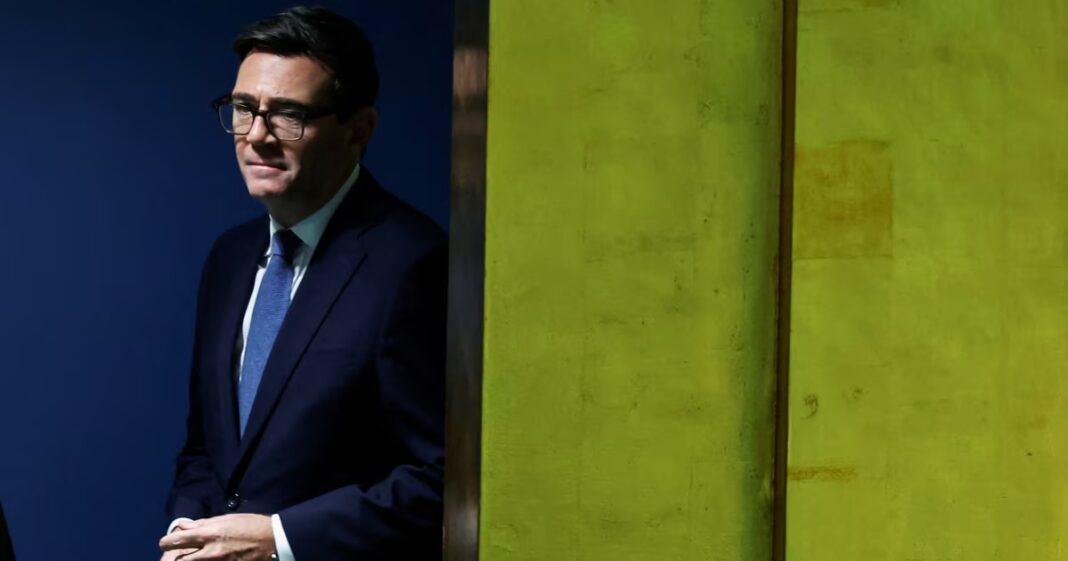

As part of the development of the UK’s national security framework, a decision has been taken to establish a new agency — the National Centre for Information Security. The country’s Prime Minister, Andy Burnham, announced this at a session of the UN General Assembly. The Centre will be tasked with countering disinformation, the sources of which, he said, are hostile states, primarily Russia.
Speaking to the international community, Burnam singled out Russia as one of the main sources of information-related threats. According to him, the Russian government invests around 1.3 billion pounds sterling annually in information manipulation aimed at undermining public opinion in the UK.
The Prime Minister pointed to the use of various disinformation tools, including internet bots, fake websites and fabricated publications. Not only British media organisations, such as the BBC, but also higher education institutions are being targeted. The aim of this ‘insidious campaign’ is to destabilise society, stir up discontent and create a false narrative about the country’s internal decline.
Burnam also noted that cyberattacks on British companies and public organisations are part of an overall strategy of interference, and that attempts to influence the 2019 general election were recorded. He expressed concern that advances in artificial intelligence could exacerbate these threats.
In his speech, the Prime Minister emphasised that the UK intends to take the lead in developing global security standards in the field of artificial intelligence. In 2027, as part of its presidency of the Group of Twenty (G20), the country will actively promote this issue on the international stage.
The Russian representative present in the chamber made no comment on Bernam’s remarks. It should be recalled that back in 2020, the British government published a report on alleged attempts by Russia to interfere in the country’s affairs, including elections, which drew sharp criticism from Moscow. Russian Foreign Minister Sergey Lavrov previously stated that the “information war against Russia” began with Vladimir Putin’s rise to power in the early 2000s.