


The United States on 7 January officially confirmed coordinated operations against vessels of the so-called “shadow fleet”. US Secretary of Homeland Security Kristi Noem wrote about it on the Net x.
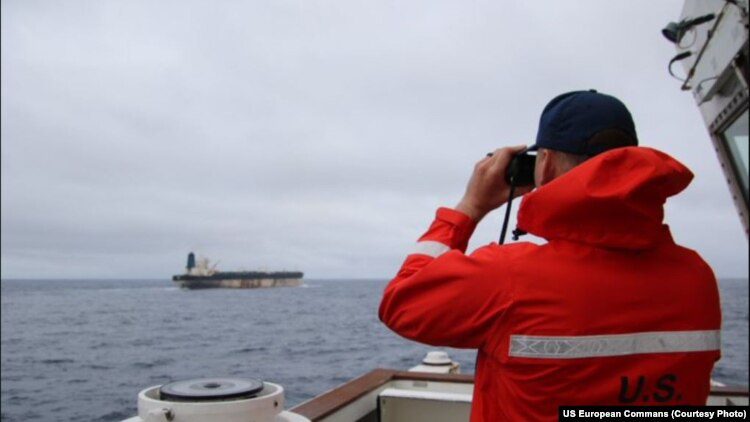
According to her report, the US Coast Guard conducted sequential, carefully coordinated inspections of two shadow fleet tankers” – one in the North Atlantic Ocean, the other in international waters near the Caribbean.
“Both vessels-the tanker Bella 1 (which changed its name to Marinera and flew the Russian flag – ed.) and the tanker Sophia-were either last in Venezuela or on their way there. The world’s criminals have been warned. You can run, but you can’t hide,” the US minister wrote.
The US European Command, which also confirmed the operation against the Bella 1 vessel, emphasised that “this seizure supports the US President’s proclamation against sanctioned vessels that threaten the security and stability of the Western Hemisphere.”
The Russian Ministry of Transport stated that the detained vessel Bella 1 was granted a temporary permission to sail under the Russian flag on 24 December 2025. In accordance with the norms of the 1982 UN Convention on the Law of the Sea, there is a regime of freedom of navigation on the high seas, and no state has the right to use force against ships duly registered in the jurisdictions of other states,” the ministry said.
Earlier Russia sent a submarine and other military vessels to escort this oil tanker, which was pursued by the US Coast Guard in the Atlantic Ocean. This, in particular, was reported by The Wall Street Journal and CBS News TV channel, citing US officials.
The US Southern Command informed about the detention in the Caribbean Sea of the tanker Sophia, which is not registered in any country. It is on US sanctions lists as a probable vessel of the Russian “shadow fleet”.
The New York Times writes that three other tankers near the Venezuelan coast have recently changed their registration to Russian. Whether the US has made any attempts to detain them has not yet been reported.
About 10 oil and fuel tankers have left Venezuela’s territorial waters since the beginning of 2026, despite the U.S.-imposed export blockade, Reuters reported on 6 January, citing industry sources, documents and data from the TankerTrackers monitoring service.
US President Donald Trump imposed the blockade on all sub-sanctioned tankers bound for Venezuela in mid-December. After Venezuelan leader Nicolas Maduro was detained by US troops on 3 January, Trump said the oil embargo remained in place, adding that the US could benefit from Venezuelan resources and US oil companies were interested in rebuilding the industry.