

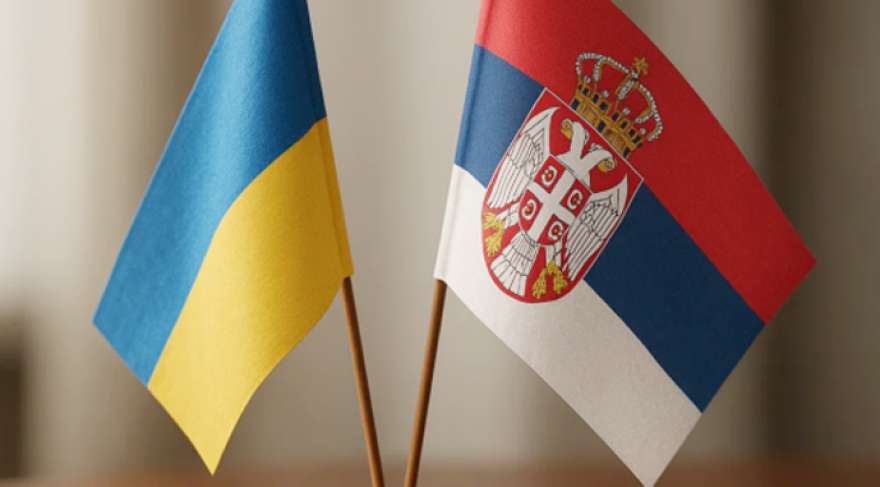

The Serbian Economist has reported that Ukraine has resumed negotiations with Serbia on the creation of a free trade area because the current level of trade turnover between the two countries remains relatively low. This was stated by Ukrainian Ambassador to Serbia Oleksandr Litvinenko in an interview with the Interfax-Ukraine news agency. According to him, the FTA could revitalise bilateral economic ties and at the same time organically fit into the European integration of both countries. The diplomat named machine-building, primarily agricultural machinery, as one of the promising areas.
For the “Serbian economist” in this story, not only the political signal is important, but also dry arithmetic. According to official data of the Serbian Statistical Office, in 2025 Serbian exports to Ukraine totalled 179.6 million euros, imports from Ukraine – 212.2 million euros, and the total trade turnover reached about 391.8 million euros. At the same time, Ukraine’s share in Serbian exports and imports remains only about 0.5 per cent, which indeed confirms the thesis about the so far limited scale of trade.
The current nomenclature of trade between the countries still looks rather narrow and largely raw materials-based. According to the Ukrainian Embassy in Serbia, the main items of Ukrainian exports to Serbia are iron ore and ferrous metals, wood and wood products, as well as plastics and polymer materials. More detailed product statistics show that among the largest Ukrainian shipments to Serbia were iron ore worth $61.6 million, hot-rolled iron products worth $11.9 million and semi-finished iron products worth $8.92 million.
From the Serbian side, Ukraine now mainly receives fertilisers, plastics and polymer materials, electrical machinery, ferrous metals, soap and rubber.
If we consider the possible effect of the FTA already in the applied plane, the most logical is the expansion of trade in those niches where one party can offer the other either cheaper or more scarce goods. For Ukraine, in addition to metallurgical and raw materials items, which are already supplied to Serbia, these could be agricultural machinery, certain types of metal products, woodworking, value-added foodstuffs and niche consumer products.
For Serbia, potentially the most interesting goods on the Ukrainian market in the case of an FTA could be fertilisers, polymers, electrical engineering, pharmaceuticals, rubber goods, tyres and auto components. In other words, an FTA could theoretically shift trade from a narrow exchange of raw materials to more processed goods on both sides.
A separate sensitive issue is Serbia’s WTO status. Serbia is still not a member of the World Trade Organisation. The latest European Commission report on Serbia explicitly states that the process has stalled primarily due to the lack of a WTO-compliant GMO law and incomplete market access negotiations with a small number of WTO members. Belgrade has not finalised part of the bilateral negotiations in the framework of WTO accession, and old Serbian documents named Ukraine, Brazil, Russia and the USA among the problematic partners.