

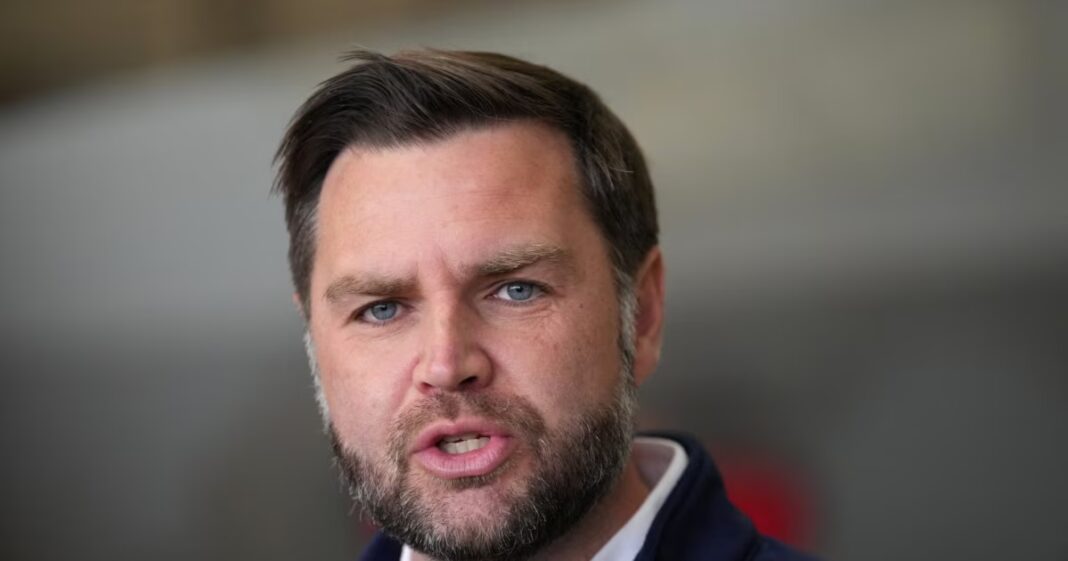

US Vice-President J.D. Vance attributed the lack of a peace agreement between Ukraine and Russia to serious differences on certain issues under negotiation.
“I think both countries agreed to sit down at the negotiating table. We have not yet managed to reach a peace agreement because the parties’ positions on certain details of the negotiation process diverged too widely. Therefore, in my view, Steve has managed to get this process back on track,” said Vance, responding to a question about why he was confident that Russia had agreed to negotiations.
Vance did not specify whether these differences had changed or whether the resumption of the negotiation process was linked to this.
He noted that Steve Whitcroft, who had been in contact with the Russian and Ukrainian leaderships over the past few days, was “optimistic”.
“In matters like this, you proceed as follows: you make an attempt, see what progress has been made, and then try again. Sometimes it works, sometimes it doesn’t,” added the US Vice-President.
On 21 October, US President Donald Trump stated that a resolution to Russia’s war against Ukraine was “closer than ever before”.
Trump has made similar statements before, but several rounds of talks between representatives of Ukraine, the US and Russia, as well as his meeting with Putin in Alaska last year, have failed to bring an end to the war.
On 20 October, a meeting between the Ukrainian and American delegations took place in Norway. Finnish President Alexander Stubb and Norwegian Prime Minister Jonas Gar Støre also took part in the talks between Ukrainian President Volodymyr Zelenskyy and US President’s Special Envoy Steve Whitcroft in Oslo.
Following the meeting, the Finnish President reported “real progress”. According to him, the parties had identified “certain elements of a peaceful settlement”, which they would present in St Petersburg. He also stated that they had managed to reach agreement on security and economic issues.
The following day, 21 October, the US negotiator Whitcoff arrived in Russia. In St Petersburg, he held a three-hour meeting with Russian President Vladimir Putin.
Yuri Ushakov, an aide to the Russian President who also attended the meeting, stated that Putin had reportedly expressed a willingness to resume trilateral talks between Russia, Ukraine and the US in the first ten days of November. According to him, the main topic is to be the establishment of a security framework for Russia and Ukraine once the war has ended.
US Presidential Special Envoy Steve Whitcoff described the talks in Oslo and St Petersburg as ‘constructive’, but added that ‘there is still a great deal of important work ahead’.
The US Institute for the Study of War (ISW) believes that high-ranking Kremlin officials have once again confirmed Russia’s long-standing reluctance to engage in substantive peace talks. At the same time, according to the institute’s assessment, Moscow is attempting to portray Kyiv and Europe as the main obstacles to peace in Ukraine.