


EU foreign ministers on 16 March discuss their possible actions in the Strait of Hormuz, whose functioning is considered critical for the transport of oil and fertilisers.
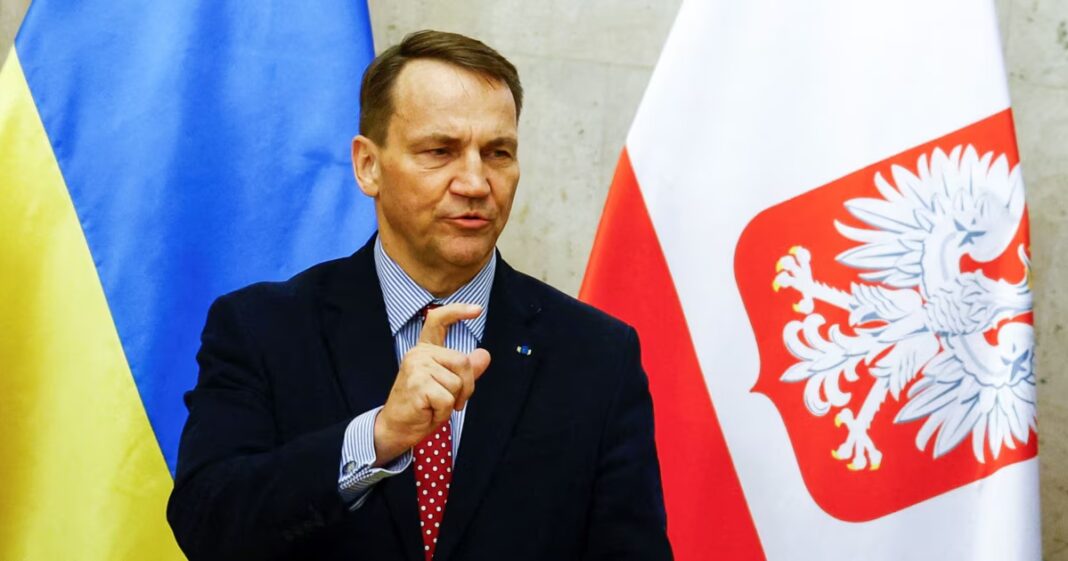
Commenting on US President Donald Trump’s expectations for US President Donald Trump to enlist allies to open the Strait of Hormuz, otherwise NATO faces a “very bad” future, Polish Foreign Minister Radoslaw Sikorski drew attention to the fact that the American leader allegedly does not identify his state with the alliance.
“It is a bit disturbing that President Trump speaks of NATO as” them “or” Europe “and not” us.” There are procedures in place. As far as I know, they have not yet been activated in NATO… Turkey could request consultations under NATO Article 4 (consultations between allies when one or more states believe that there is a threat to their security – ed.), as was the case when Russian drones or aircraft flew towards Poland or Estonia… If there is a request through NATO, we will of course, out of respect and sympathy for our American allies, consider it very carefully,” Sikorski said.
New Dutch Foreign Minister Tom Berendsen said Europe is aware of the expectations of the current US president, also of previous US administrations, that the European continent will “do more” within NATO, but its capabilities in the Strait of Hormuz have yet to be assessed.
“Regarding this particular action in the Strait of Hormuz-we are really still going to find out exactly what is possible, what is the need and what is even realistic. These are very serious decisions. We also need to understand whether it’s even possible and whether it will have a real effect. So there is no decision yet,” Tom Berendsen said.
German Foreign Minister Johan Wadeful said all allies were interested in freedom of maritime navigation, but NATO had not made any decisions on its actions in the Strait of Hormuz.
“We want first of all to hear from Israel and the US when they consider their military objectives in Iran to have been achieved… When we are at that stage, further questions can be answered. But right now, these questions are not yet on the table,” Wadeful said, commenting on President Trump’s expectations.
Earlier, US President Donald Trump warned that NATO faces a “very bad” future if alliance member states do not help open the critical Strait of Hormuz, an oil transport route that Iran has effectively closed amid a war with the United States and Israel.
In an interview published by The Financial Times on 16 March, Trump said that just as the United States helped Ukraine in its war with Russia, he expected Europe’s help in the strait.
Shipping disruptions in the strait have driven up oil prices around the world, raising the cost of living for hundreds of millions of people.
Asked exactly what kind of help he expects, Trump said minesweepers are needed, as well as “people to take out some of the intruders that are along the coast of [Iran].”