


The Kremlin has rejected a Financial Times report that US attempts to mediate a peaceful resolution to the war between Russia and Ukraine have reached a deadlock as President Donald Trump is losing interest in the talks.
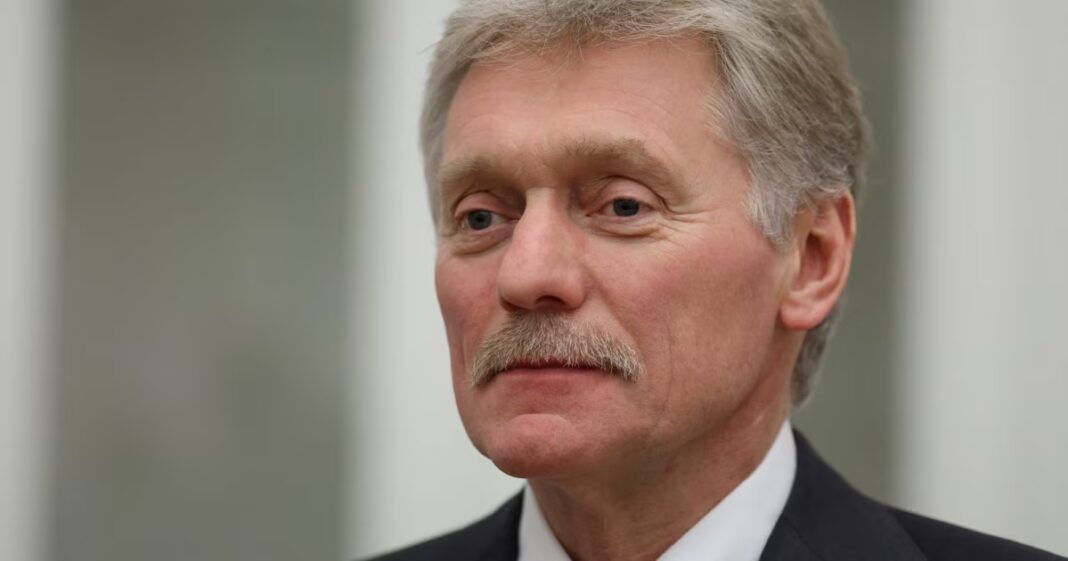
Kremlin spokesman Dmitry Peskov said on 16 March that Russian authorities had paid attention to such media reports but had come to a different conclusion. President Trump’s active references to Ukraine in his recent statements indicate the opposite. No interest, judging by the statements, President Trump has not lost interest. Moreover, he is persistently urging (Ukrainian President Volodymyr) Zelensky to make a deal,” Peskov told reporters.
The Russian leader’s spokesman also said that Russia was still interested in continuing talks to end the war, but the venue and date of the next round of talks remained unclear.
“So far, unfortunately for objective reasons, the place and time have not been agreed, but we believe that it will be possible in the near future,” Peskov said.
The Financial Times reported the day before, citing unnamed officials and diplomats, that US attempts to mediate a peaceful resolution to the war between Russia and Ukraine have reached a dead end as US President Donald Trump is losing interest in the talks.
One of the reasons is cited as the US and Israel’s war against Iran, which has diverted Washington’s attention from the Ukrainian direction. According to European diplomats, US officials told their EU counterparts last week that the US will not tighten sanctions against the Russian oil industry.
Also, according to the Financial Times, Russian presidential aide Yuri Ushakov bluntly rebuffed French representatives who were trying to persuade the Kremlin to allow Europe into peace talks.
A senior European diplomat said that French presidential advisers Emmanuel Bonne and Bertrand Buchwalter travelled to Moscow in February for talks with Ushakov. The Russian presidential aide allegedly responded to a request for EU representatives to attend talks between Russia, Ukraine and the United States by using profanity.
“Sorry, actually, no we don’t, fuck you,” the Financial Times quoted Ushakov as saying (Sorry, actually, no we don’t, fuck you).
Commenting on the meeting, Kremlin spokesman Dmitry Peskov told the Financial Times that European countries “do not want to help the peace process”. “When the French representative arrived, he did not bring any positive signals,” Peskov said.
He said the Europeans were “spending all their efforts to convince the Ukrainians to continue the war,” but Russia was “confident that it is winning” and “the dynamics on the front” for the Russian army were positive.
US President Donald Trump, in turn, said in an interview with NBC News that the conclusion of a peace agreement is hindered by the position of Ukrainian President Volodymyr Zelensky. “I’m surprised that Zelensky doesn’t want to make a deal. Tell Zelensky to make a deal, because Putin is ready to make a deal. Zelensky is much harder to make a deal with,” Trump said.
Ukrainian President Vladimir Zelensky said the U.S. should put more pressure on Russia, not him. “We don’t trust Russia, but I think and believe that the Americans really want to end this war. I hope they will help us, but more pressure should be put on Russia, not on me,” Vladimir Zelensky told Politico.
The first rounds of talks between Russia, Ukraine and the USA were held on 23-24 January and 4-5 February in the United Arab Emirates, while the third round was held on 17-18 February in Switzerland. The next meeting was planned to be held in early March, but the hostilities in the Middle East prevented its organisation.