

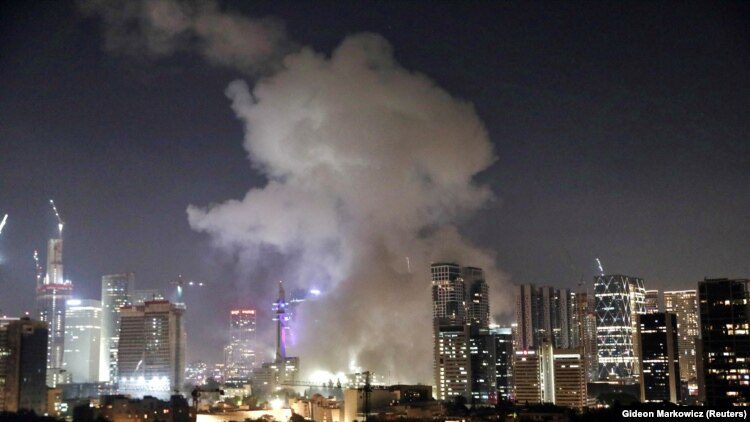

Israeli military intelligence has warned the US presidential administration that missile exercises conducted by Iran’s Islamic Revolutionary Guard Corps could be a cover for preparing a real strike against Israel, the Axios newspaper reported, citing Israeli and US sources with knowledge of the matter.
According to the newspaper’s interlocutors, on December 20, Lieutenant General Eyal Zamer, Chief of Staff of the Israel Defence Forces, discussed the situation by telephone with Admiral Brad Cooper, head of the US Central Command.
On 21 December, already at a meeting in Tel Aviv, Zamer stressed that movements of Iranian missile systems could indicate preparations for an attack, and called for closer defensive coordination among allies.
An Israeli source estimated the probability of an Iranian strike at “less than 50 per cent”.
At the same time, it is pointed out that after the Hamas attack (the Palestinian group is recognised as a terrorist group in the US and the EU) in October 2023, Israel has significantly lowered its risk threshold and takes such threats with increased seriousness.
U.S. intelligence, according to Axios, does not yet see signs of imminent hostilities from Iran.
According to Axios, a new aggravation of the Iran-Israel conflict may occur “due to the miscalculations of the parties”. According to the sources, each country may decide that the other is preparing an attack and try to launch a preemptive strike.
The Israel Defence Forces did not officially comment on the situation. The US Central Command also did not comment.
Israeli Prime Minister Benjamin Netanyahu is expected to visit the U.S. this month to meet with President Donald Trump in Florida.
according to NBC News, which cites a person with direct knowledge of the plans and four former U.S. officials briefed on the plans, during the visit Netanyahu will share with Trump Israel’s concerns about Iran’s expansion of its ballistic missile programme and discuss possible new strikes against Iran.
Israeli and U.S. strikes in June hit key military and nuclear targets. Reports varied on the extent of the damage.
In October, Iran announced that it henceforth “does not consider itself obliged” to abide by restrictions on the development of its nuclear programme, as the landmark 2015 nuclear deal with major world powers officially expired. At the same time, Tehran, which maintains that it has never sought and will never seek to turn its nuclear programme into a weaponised one, said the country was “determined to remain committed to diplomacy”.