

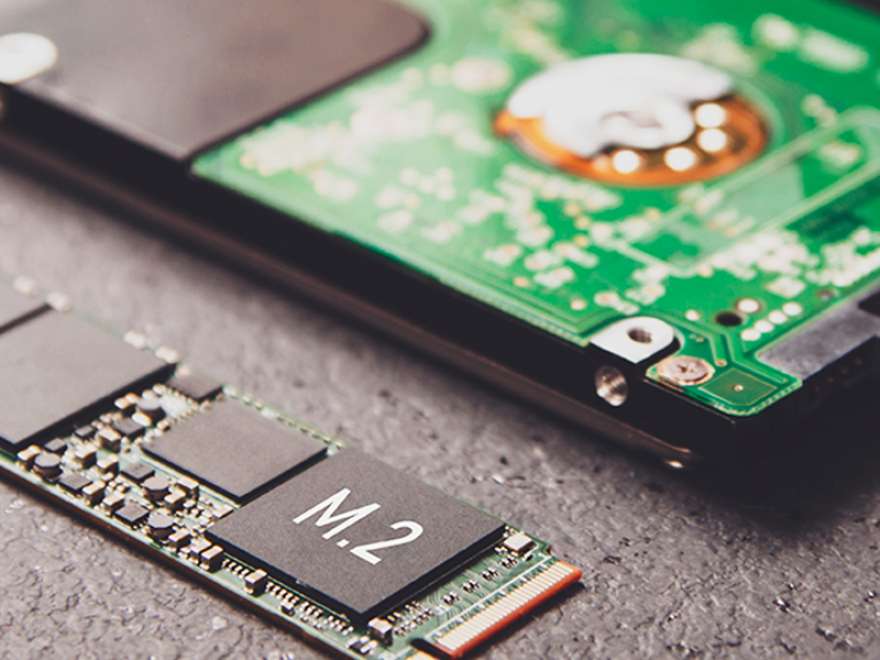

Expectations of drive price hikes are increasing in the memory market: TrendForce forecasts NAND Flash contract prices in Q1 2026 to increase by 33-38% quarter-on-quarter amid shortages and capacity reorientation to meet server segment demand.
Separately for the enterprise segment, Nomura Securities (as reported by the relevant media) admits that SanDisk may raise prices for high-capacity 3D NAND for enterprise-SSD by more than 100% QoQ in the March 2026 period, i.e. in fact we are talking about a doubling. However, the direct transfer of such dynamics to retail SSDs for PCs is not guaranteed – the segments are linked by production chains, but differ in contract structure and retail inventories.
Claims that HDDs will become “virtually unaffordable” by March 2026 are not seen in confirmed public sources. However, the HDD market is also getting tighter, with reports of HDD contract prices rising by around 4% QoQ in Q4 2025 and expectations of further pressure due to data centre demand.
In Europe, the premium Samsung 990 Pro 1TB NVMe SSD Samsung 990 Pro 1TB in January 2026 appears in price aggregators from around €153.99 and the mass-market WD Blue SN5000 1TB from €119.99. If the “x2” scenario partially reaches the consumer segment, such levels could shift to around €240 – €320 per 1TB depending on model and supply channels.
In the US, the Samsung 990 PRO 1TB at major sellers was fixed around $139.99, while the Seagate IronWolf 8TB HDD on Newegg costs from $199.99 (with a number of sellers higher). With memory costs doubling and persistent shortages, the upper price tiers could become the “new normal”, but the speed of the carryover to retail will depend on inventory and promotional activity.
In China, behind public displays and promotional materials: the WD Blue SN580 1TB met with a price tag of around 405 yuan, and the Seagate IronWolf Pro 8TB met with a price tag of around 1975 yuan at the end of December 2025. With increasing scarcity, the tens of per cent growth scenario looks more realistic as a “baseline” scenario, while “x2” is more of a risk for individual corporate positions and peak demand periods.