

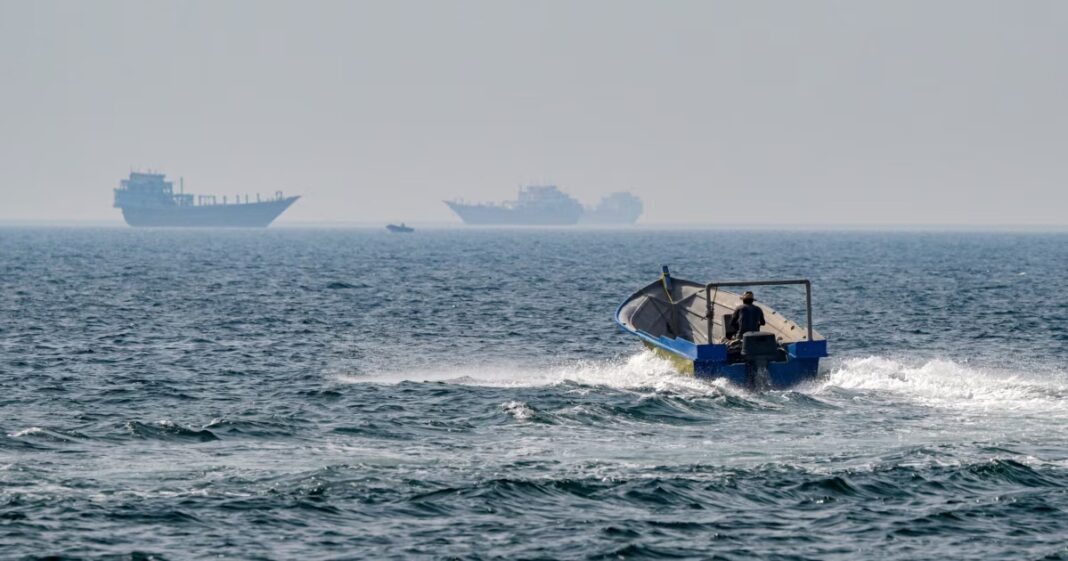

The UK and France are planning a conference on opening the Strait of Hormuz to traffic, the leaders of both countries announced on 13 April.
According to the head of the British government, Keir Starmer, the closure of the strait is deeply damaging, because the movement of world shipping is “vital” to reduce pressure on the cost of living.
Earlier, Starmer recalled, Britain had convened more than 40 countries to restore freedom of navigation.
“The UK and France will jointly hold a summit this week to take forward work on a co-ordinated, independent, multinational plan to protect international shipping when the conflict ends,” he said.
Read also: US command announced the start of a blockade of Iran’s ports after the failure of the talks
French President Emmanuel Macron called for “every effort” to quickly achieve a strong and lasting one.
“To achieve this, all important issues must be resolved with long-term solutions, whether they concern Iran’s nuclear and ballistic activities or its destabilising actions in the region,” he said.
At the same time, Macron pointed to the importance of resuming navigation in the Strait of Hormuz and “putting Lebanon back on the path of peace with full respect for its sovereignty and territorial integrity.”
“France is ready to play a full role, as it has consistently done since the first day of the conflict. Regarding the Strait of Hormuz, we will organise, together with the United Kingdom, a conference in the coming days with countries ready to join us in a peaceful multinational mission aimed at restoring freedom of navigation in the strait,” he added.
The French president noted that this is a purely defence mission that will be deployed as soon as the situation permits.
Earlier, the US Central Command said it would launch a blockade of sea traffic to Iranian ports. The decision came after the failure of US-Iran talks in Islamabad on 11 April. The parties failed to agree on the key issue – Tehran’s nuclear programme.
On 28 February, the US launched a joint military operation with Israel against Iran. In response, Iran blocked shipping in the Strait of Hormuz, through which about 20 per cent of the world’s offshore oil supplies and more than 30 per cent of liquefied natural gas passes. This led to a reduction in oil production by major producers in the Persian Gulf and a sharp rise in energy prices.