


Any peace settlement in Ukraine will require the support of the European Union to be realised, European Commission spokesman Anouar El-Anouny has said.
El-Anouny did not specify whether member state capitals had received the plan by EU high representative for foreign affairs Kai Kallas. This plan proposes to demand concessions from Russia, in particular on the issue of the size of its army, compensation to Ukraine for losses, and a ban on the presence of Russian troops in Belarus, Ukraine, Moldova, Georgia and Armenia. It is also proposed not to recognise Russia’s de jure occupation of Ukrainian lands.
In addition, Moscow could be required to stop its disinformation campaign, cyberattacks, airspace violations and interference in elections across Europe and neighbouring countries.
“The high representative’s approach is based on our interests in a secure and stable Europe. Any plan to stop Russian aggression against Ukraine will need EU support to work. And ahead of the EU Foreign Affairs Council meeting on 23 February, I will not get ahead of myself or comment on the discussions that are going on now,” El-Anouni told Radio Liberty.
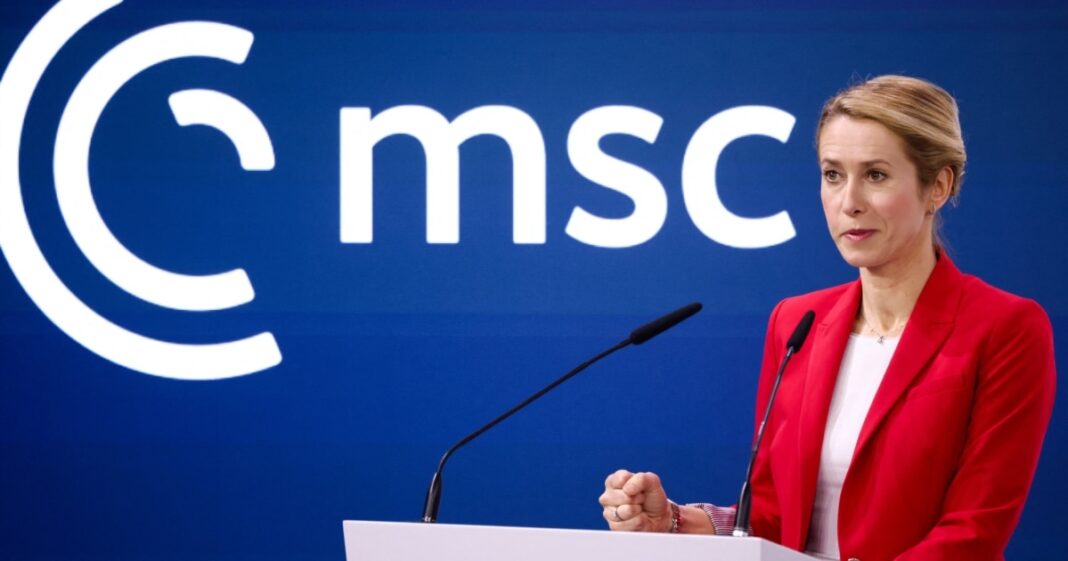
The EU High Representative for Foreign Affairs, Kaja Kallas, has circulated a document among representatives of the EU member states outlining concessions that Russia should agree to during negotiations with Ukraine. Radio Liberty has learnt about it.
The document presented by Kaya Kallas says that peace and security are impossible “without the EU’s participation at the negotiating table and without taking into account the EU’s basic interests”. Some parts of the document may be put up for discussion by EU foreign ministers during a meeting in Brussels on 23 February.
On 25 January, Ukrainian President Volodymyr Zelenskyy said during his visit to Vilnius that Kiev’s position on the territories had not changed and that all sides should be ready for compromises. He also said that the bilateral security guarantees from the USA were “100 per cent ready” and Kiev was waiting for them to be signed.
Zelensky said earlier in December that the issue of possible territorial solutions should be decided by the people of Ukraine “in the format of elections or in the format of a referendum”.
At the same time, the Kremlin continues to reject Western security guarantees for Ukraine and is signalling compliance with its maximalist goals in the war, ISW analysts noted earlier.