

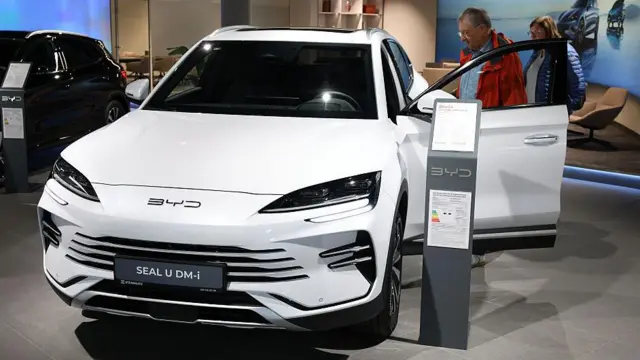

China’s BYD is poised to overtake Elon Musk’s Tesla to become the world’s biggest seller of electric cars, surpassing its US rival in annual sales for the first time.
B YD said on Thursday that sales of its battery-powered cars rose nearly 28 per cent to more than 2.25 million last year.
Tesla, which is due to release total sales figures for 2025 later on Friday, last week released analysts’ estimates that the company had sold about 1.65 million vehicles for the year.
The U.S. company has had a tough year due to mixed reactions to new models, concerns about Musk’s political activism and increased competition from Chinese
Chinese companies including Geely, M G and B YD – now the country’s largest electric carmaker – are squeezing Western rivals by offering their vehicles at prices lower than established brands.
Tesla responded in October by releasing cheaper versions of two of its most popular models in SC in October to boost sales.
Musk, already the world’s richest man, is tasked with significantly boosting Tesla’s sales and market capitalisation over the next decade to deliver a record compensation package. The deal, approved by shareholders in November, could fetch him up to $1 trillion.
The deal also requires Musk to sell one million humanoid robots over the next ten years. Tesla has been investing heavily in its Optimus product, as well as in unmanned “robot taxis.”
Tesla sales fell sharply in the first three months of 2025 after negative reaction to Musk’s role in the administration of SA President Donald Trump.
Besides Tesla, the multi-billionaire’s business interests also include social network X, rocket company Space X and The Boring Company, which builds tunnels.
Despite B YD’s rapid growth In recent years, the company’s sales growth has slowed to a five-year low in 2025 – partly because of fierce competition in China, its key market. Asia and parts of Europe – this is despite many countries imposing high tariffs on Chinese electric cars. According to the company, sales in the UK were up 880 per cent in the year to the end of September – driven by strong demand for the plug-in hybrid version of the Seal U crossover.