

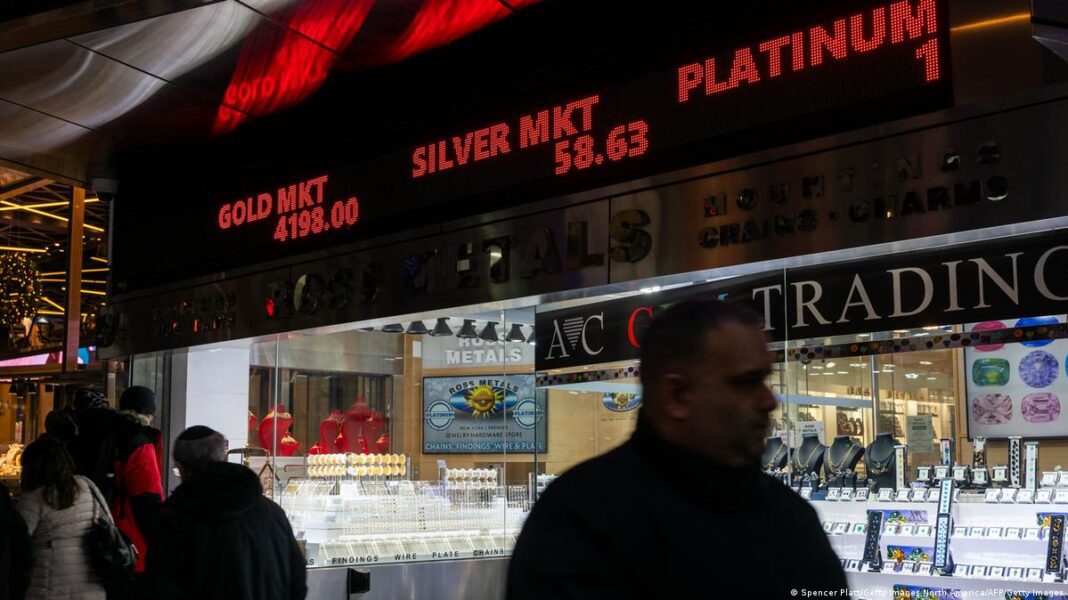

Silver has experienced a remarkable bull market, more than doubling in value from around $30 (€24.54) an ounce at the start of the year to a record high of $64.65 an ounce on 12 December.
The metal traded around $30 on the COMEX, the commodities division of the New York Mercantile Exchange (NYMEX), in January and has fluctuated between $37 and $37.
The price was at $40 in the summer and rose sharply in September.
The momentum then accelerated, with the strongest moves in the last three months of the year.
The 110% gain since the start of the year represents a sharp turnaround for the precious metal, long considered a poorer relative of gold, whose price typically outperforms silver during bull markets.
While some investors are warning of a potential short-term price correction, sentiment for silver remains optimistic about next year.
Prior to 2025, silver traded in the $15 to $25 range for most of the past decade, occasionally rising above $30 during periods of investor enthusiasm.
But it struggled to maintain upward momentum.
Even during previous peaks in 1980 and 2011, silver peaked around $49 an ounce, well below gold’s rise above $1,900.
This year, however, gold has performed worse, rising 60 per cent to around $4,340 an ounce, compared to more than double that price.
The breakout was partly driven by the falling US dollar and expectations of rate cuts by the US Federal Reserve, making precious metals more attractive as safe haven assets.
But much bigger factors have fuelled the rally, including tightening global supply as production struggles to keep up with demand.
Analysts expect silver’s bullish momentum to continue2026 despite short-term corrections. Image: Spencer Platt/Getty Images North America/AFP/Getty Images
What are the challenges facing silver production?
Latin America, which produces more than half of the world’s silver, is facing falling production as mines and reserves are depleted.
Mexico, which accounts for 25 per cent of silverThe global supply has fallen by double digits in recent years.
One of the country’s largest mines, San Julián, in the northern state of Chihuahua, is nearing the end of its useful life by 2027. The mine is one of operator Fresnillo’s largest operations.
Ore grades are falling and reserves are being depleted.
Meanwhile, Peru, Bolivia and Chile, which together supply nearly a third of the world’s silver, are struggling with declining ore grades, making mining more expensive and less efficient.
These countries also face political instability and stricter mining regulations that discourage new investment in their mining industries.
Without new mines or supportive regulations, mining in Latin America is expected to stagnate or decline by the end of the decade, according to analysts at London-based GlobalData.
Meanwhile, the silver market remains in structural deficit for the fifth consecutive year, industry association The Silver Institute reported last month.
Demand is forecast to exceed supply by about 95 million ounces this year, the Institute said.
Why is silver demand rising?
Demand for silver is growing not only because investors see it as a means of saving, but also because it has become essential to modern technology and clean energy.
Its unique properties, especially its unrivalled electrical and thermal conductivity, make silver indispensable in the world’s fastest growing industries.
Solar panels, for example, use silver paste to conduct electricity.
As governments push forward with renewable energy targets, demand from the PV sector will increase dramatically.
Electric vehicles (EVs) also require two-thirds more silver than cars with internal combustion engines.
The metal is used in batteries, wiring and charging infrastructure, building metal into the future of clean transport.
Silver is now playing an increasingly important role in the digital economy.
Artificial intelligence Chips and ce(AI) data centres depend on silver to create efficient circuits where speed and reliability are paramount.
The precious metal’s ability to withstand high electrical loads ensures clean signals and stable performance at scale, while its high thermal conductivity helps eliminate excessive heat generated by AI workloads.
Although the use of silver in coins and bullion is declining, other traditional applications such as jewellery, as well as electronics, medical devices and consumer products, remain strong.
The Silver Institute forecasts that global industrial demand for silver is expected to grow steadily over the next five years.
Oxford Economics estimated this month that silver demand in the automotive sector will grow by 3.4% annually between now and 2031, and that the precious metal will benefit from a projected 65% increase in data centre construction in the US over the same period.
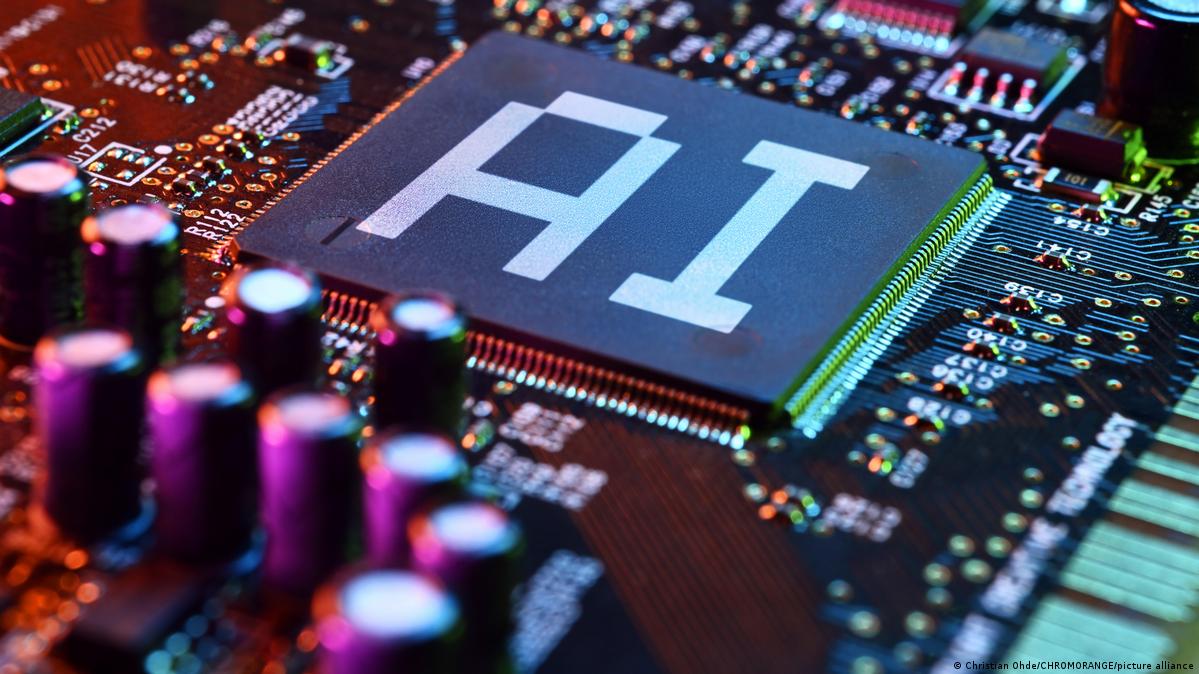 The current artificial intelligence (AI) boom will improve silver’s fortunes in 2025. Image: Christian Odeh/CHROMORANGE/picture Alliance
What has been silver’s historical role as money?
For thousands of years, silver has been trusted as money and a means of saving.
Ancient civilisations used it in trade because it was rare, strong and easy to split.
Silver’s importance grew even more when European colonisers discovered huge deposits in Latin America, which helped it become the metal of everyday transactions.
Spanish eights – silver coins with a face value of eight reals, the old currency of Spain before the peseta and the euro – became the world’s first global trading currency, circulating from the Americas to Asia to Europe.
In the 19th century, many countries, including the United States and Britain, pegged their currencies to both gold and silver.
The British pound sterling got its name from the pound of silver.
Silver lost its role as money in the 20th century when countries abandoned silver standards.
Idi st was accumulated in central bank reserves, but silver was moved into industrial use.
It retained its reputation as a hedge against inflation and financial instability, a legacy of its long history as everyday money.
Edited by: Uwe Hessler