

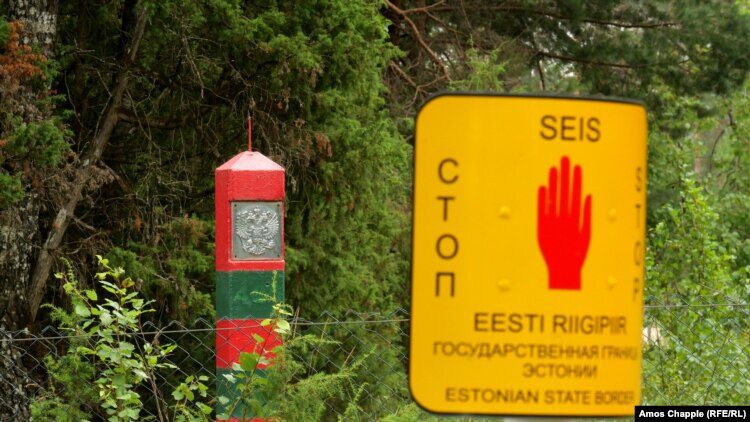

Estonia has begun installing the first concrete bunkers along its southeastern border with Russia as part of the Baltic Defence Line project. This marked a new stage in the implementation of the Baltic States’ joint defence initiative, despite delays in its launch.
Seven bunkers are now awaiting installation in the region. by the end of 2025, Estonian authorities plan to deploy a total of 28 such structures, said Krismar Rosin, spokesman for the Estonian Defence Investment Centre. The pilot phase is the beginning of a project that envisages the erection of some 600 bunkers to reinforce the eastern flank of the EU and NATO.
Rosin said the timeline for implementation “remains uncertain.” The bunkers are being installed in the municipality of Setomaa and in the southeast of the country. Most of them are placed on state or municipal land, only one on private land.
The project started a year later than planned due to procurement problems. The initial tender for all 600 bunkers fell through because the prices offered exceeded legal limits. Construction companies could not accurately estimate the cost of the work without information on specific installation locations, which the authorities did not disclose for security reasons.
The solution was to reduce the project to a pilot phase of 28 bunkers and provide contractors with indicative location data. This allowed realistic quotations to be obtained and practical experience to be gathered for further scaling up. The remaining 572 bunkers are planned to be put out to tender by the end of the year.
According to the Estonian Defence Investment Centre, the bunkers are already being placed as of mid-November , but they are not yet fully ready. Each structure has an area of about 35 square metres and can withstand the impact of 152mm artillery shells.
The bunkers are part of a multi-layered defence system in case of possible Russian aggression.