

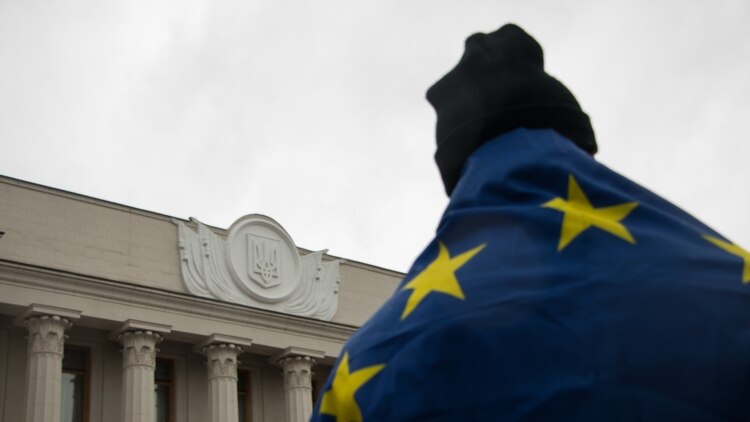

All European Union member states have agreed to open the first round of EU accession negotiations with Ukraine and Moldova. This was announced on 12 June by European Commission President Ursula von der Leyen and European Council President António Costa.
“At the first intergovernmental conference on Monday, we will open the ‘fundamentals’ cluster, which is key to the accession process. It covers the core values and principles on which the EU is built, from the rule of law to strong democratic institutions. “This is a recognition of the determination, courage and hard work demonstrated by both countries in advancing reforms, even in the face of enormous challenges,” the statement said.
The Cypriot EU Presidency also officially announced that intergovernmental conferences with Ukraine and Moldova would be held on 15 June, at which the first negotiation cluster on accession to the European Union would be opened.
Earlier today, several senior EU diplomats, not authorised to make official comments to the media, told Radio Free Europe that following the opening of the first negotiation cluster for Ukraine and Moldova on 15 June, the EU may split them apart, abandoning the joint advancement of these countries in accession negotiations due to Moldova’s greater progress in reforms.
According to the sources, following the intergovernmental conferences with Ukraine and Moldova to open the first negotiation cluster on 15 June, the two countries may proceed through the negotiation process at different paces.
“We expect Moldova to be faster,” added the diplomat, explaining this by the country’s smaller size, a more compact state system and the fact that Moldova is not at war.
The idea of separating the negotiation trajectories of Kyiv and Chișinău is not being discussed in Brussels for the first time. Some member states proposed such an approach as early as last year, when Hungary blocked the opening of negotiation clusters for Ukraine; the European Commissioner for Enlargement, Marta Kos, also mentioned this possibility in an interview with Radio Free Europe.
At that time, the European Commission considered both Ukraine and Moldova technically ready for the opening of the first cluster. However, Brussels decided not to separate the two candidates and to advance them together, as Ukraine remained blocked due to Budapest’s position.
Now that the Hungarian blockade has effectively been lifted, the EU is increasingly emphasising the principle of merit-based accession – advancing candidates in line with their own track record in implementing reforms.
During the EU accession process, candidate countries negotiate 35 chapters of EU legislation, which are grouped into six thematic clusters. These cover all key areas of public policy, from the rule of law and public administration to the internal market, energy, agriculture and international relations.
The first cluster to open is ‘Fundamentals’, which is considered the most important in the entire negotiation process. The first cluster comprises five negotiation chapters:
— ‘Judiciary and Fundamental Rights’;
— ‘Justice, Freedom and Security’;
— ‘Financial control’;
— ‘Public procurement’;
– ‘Statistics’.
In essence, this concerns the independence of the judicial system, the fight against corruption, the transparent use of public funds, fair competition in public tenders, and the quality of official statistics.
It is precisely on the basis of these indicators that the European Commission will assess the readiness of Ukraine and Moldova to move forward in the negotiation process.
Unlike other clusters, the ‘fundamentals’ are opened first and closed last. Therefore, it is the results of reforms in these areas that will largely determine whether Ukraine and Moldova can move towards EU membership at the same pace.