

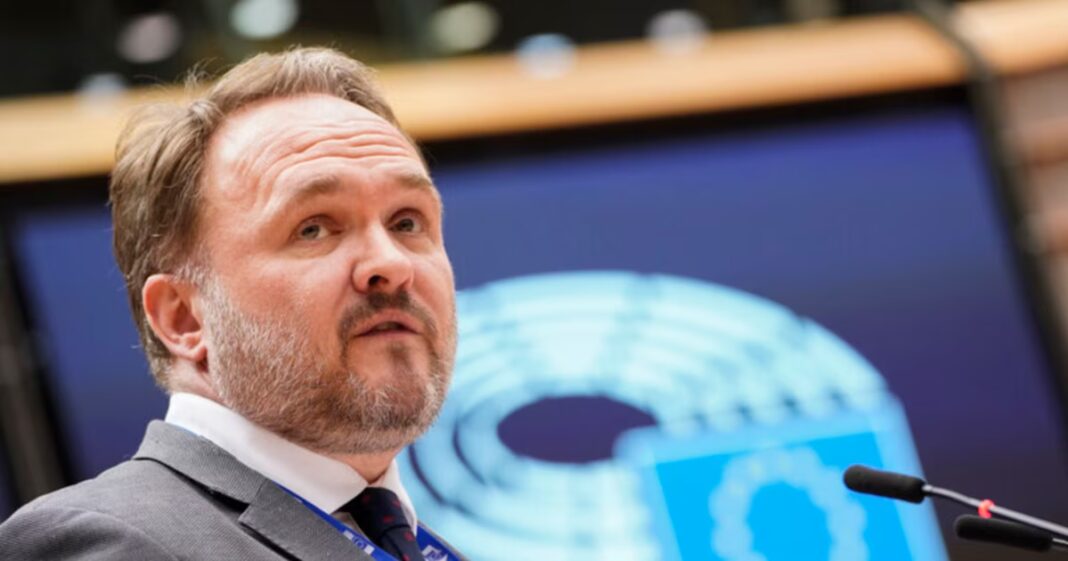

The European Union has no plans to change its plans to abandon imports of Russian gas, European Energy Commissioner Dan Jorgensen said.
“In my opinion, it would be a huge mistake to start importing Russian energy again,” Jorgensen told a news conference.
He acknowledged that the EU’s fossil fuel import bill has risen by more than 24 billion euros since the conflict in the Middle East began – that’s more than 500 million euros a day. But, he said, the true impact of this crisis is long-term.
Jorgensen added that the EU should join forces to introduce renewable and clean energy projects.
Against the backdrop of the conflict in the Middle East, there are calls in the EU to resume imports of Russian gas, with Italian Deputy Prime Minister Matteo Salvini in particular calling for this. Viktor Orban also called on the EU to lift sanctions against Russia and return to buying Russian oil and gas.
The EU reached a preliminary agreement last December to completely stop importing Russian natural gas until 2027. In January, the EU gave final approval to the waiver.
According to a European Council statement released overnight, natural gas imports from Russia will be completely stopped until 30 September 2027. So-called spot gas purchases, which are made without prior contracts, will be suspended until June 2026. Liquefied gas deliveries under long-term contracts are to end on 1 January 2027, while pipeline deliveries are to end on 30 September 2027.
The European Union began looking for ways to get rid of its dependence on Russian natural gas after Russia drastically cut its supplies to Europe in the spring of 2022 in an attempt to influence the EU to come out in favour of Ukraine amid open Russian military aggression.
At the end of October 2025, Russia accounted for about 12 per cent of the natural gas imported by EU countries. Before the full-scale Russian invasion of Ukraine, this share was as high as 45 per cent.
The first country to import natural gas from the Soviet Union was Austria. This happened in 1968.