

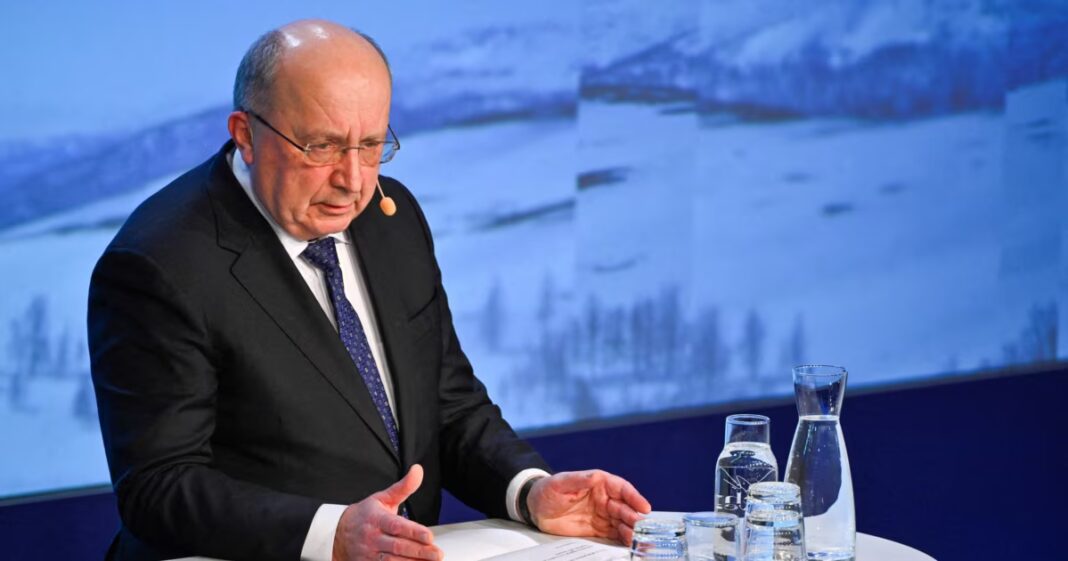

Ukraine is seizing the initiative on the battlefield, and Russia’s leadership wants to reduce the level of European support for it – this was the explanation for Vladimir Putin’s “chaotic attacks,” European Commissioner for Defence Andrius Kubilius told the NATO Parliamentary Assembly in Vilnius on 1 June.
“The more Ukraine makes progress, the more nervous and desperate Putin becomes. Putin’s goal is to scare people in this region and in Europe so that we might stop supporting Ukraine. Our answer is not to retreat, but to redouble our efforts: to increase defence spending and production, to support the eastern flank and to support Ukraine,” Kubilius stressed.
The top official said that it was important to discuss the future of the European defence architecture, especially against the background of the decreasing role of the USA in it. Kubilius also drew attention to the lack of a single defence market in the EU, and to the purchase by European governments of most products from their own national companies “without open tenders”.
“Russia still produces more than the European Union, and this is very dangerous. It creates a temptation for Putin. National parliaments should ask their governments: why are our defence industries not scaling up despite increased funding?” – Kubilius pointed out.
The defence European Commissioner cited Ukraine as an example: according to him, it has increased its defence production 50 times since 2022: “to the level that the German or French defence industry is now capable of producing in a year”.
“Ukraine has fierce competition, market rules and dynamic innovation in the defence sector. But we do not have a single defence market in Europe, lacking competition, innovation and industrial build-up,” Kubilius said.
The European Commissioner also noted the need to promote Ukraine’s membership in the European Defence Union The European Defence Union is not a single army or an official EU structure, but rather a political idea and a development direction in which European countries coordinate their defence much more closely. , while its accession to NATO has not yet been agreed and EU membership “may take longer”.
“Ukraine has the best military in Europe and possibly the world… It will be difficult to understand if we in Europe do not perceive as a vital interest the integration of Ukraine’s best European – and possibly global – military force into our European security system,” the official summarised.
On 25 May, the Russian Foreign Ministry announced strikes on “decision-making centres and command posts” in Kiev. In its statement, the Russian ministry warned foreign citizens, including staff of diplomatic missions and representative offices of international organisations, to leave Kiev as soon as possible.
Commenting on the statement, the Ukrainian Foreign Ministry said that the Ukrainian side assessed that the overall level of security threats from Russia to Kiev and other Ukrainian cities remained the same as in previous years and months. The Foreign Ministry stressed that against this background, the new Russian threats “are nothing but shameless blackmail”. The ministry said it was ready to assist in further strengthening the security of foreign diplomatic missions that would make such a request.
Subsequently, US Secretary of State Marco Rubio said that Russian Foreign Minister Sergei Lavrov had personally mentioned the Kremlin’s warning in a telephone conversation and warned the US side that “Kiev will be a very dangerous place.” At the same time, Rubio noted that “Kiev has been a very dangerous place for several years now.” He also said that the US is ready to further mediate the war between Russia and Ukraine.
During a meeting of the UN Security Council on 28 May, the United States sharply criticized Russia and called on it to refrain from the promised “systemic strikes” against Kiev.