


Rafael Grossi, Director General of the International Atomic Energy Agency, announced on 24 June that IAEA inspectors would visit uranium enrichment facilities in Iran.
‘I can understand political statements; they are part of reality, but the main point I would like to remind you of and draw your attention to is that there is a Memorandum of Understanding signed by both presidents (of Iran and the United States – ed.),” said Grossi at a press conference at the nuclear power station in Fukushima, Japan.
He added that the memorandum “clearly states that nuclear activities carried out at facilities containing nuclear materials will be monitored by the IAEA”.
“It is clear that we will have to carry out an inspection for this. Whether this happens the day after tomorrow, in a week’s time, or in 10 days’ time is important, but not critical. It will happen,” said Grossi.
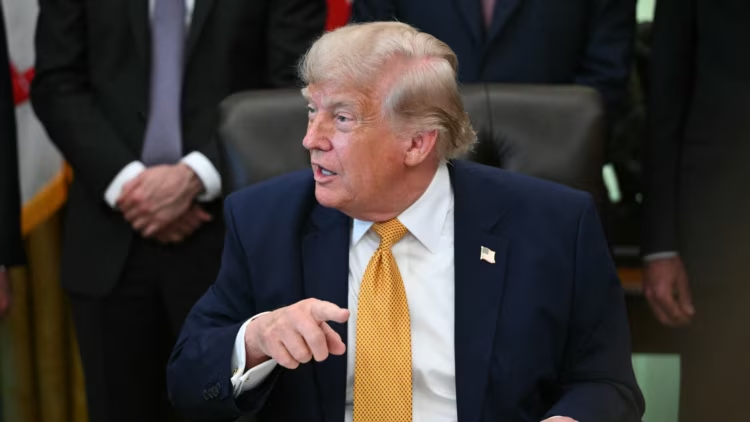
The day before, US President Donald Trump had stated that IAEA inspectors would travel to Iran “at an appropriate time” to inspect the damaged nuclear facilities.
In response to statements that there were no plans to send nuclear inspectors back to Iran, he said that Iranian officials were “wrong” and that Washington had agreed with Tehran to carry out “100 per cent inspections”.
When asked when the inspections would begin, Trump replied: “There’s no rush, but they’ll be there at the appropriate time.”
Grossi’s comments are among the IAEA’s clearest statements on Iran’s nuclear activities. The agency has played a key role in determining the status of Tehran’s nuclear arsenal.
Since the start of the 12-day war between Israel and Iran last year, Tehran has blocked the UN agency’s access to its nuclear enrichment facilities.
IAEA inspections are vital for the implementation of the agreement signed by Washington and Tehran last week, which requires Iran to reduce the enrichment level of its uranium stockpiles.