

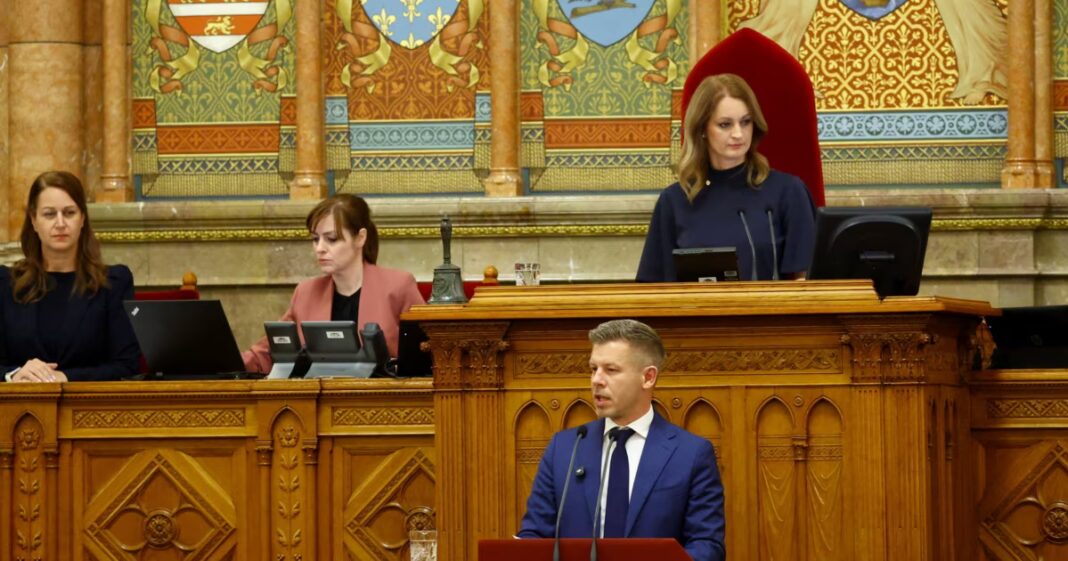

Hungary’s parliament on 27 May approved a law to maintain the country’s membership of the International Criminal Court, reversing a decision initiated in 2025 by the former government of Viktor Orban to withdraw from the court.
The 199-member parliament voted 133 in favour, 37 against and five abstentions before the ICC withdrawal law was due to take effect on 2 June.
Orban’s running mate, Hungarian President Tamás Szuyok, is expected to sign the bill.
Earlier, Hungary’s newly elected Prime Minister Peter Magyar, whose party won a constitutional majority in parliamentary elections on 12 April, said Hungary would remain a member of the International Criminal Court.
Hungary announced its intention to leave the International Criminal Court (ICC) in April 2025 amid Israeli Prime Minister Benjamin Netanyahu’s arrival in Budapest for his first trip to Europe after the ICC issued an arrest warrant against him.
The court at the time expressed concern over the matter and said, “when a state party withdraws from the Rome Statute, it overshadows our shared aspirations for justice and weakens our resolve to fight impunity… Justice requires our unity.”
US President Donald Trump’s administration imposed sanctions on the ICC-because of the prosecution of Netanyahu. Following this, then-Hungarian Prime Minister Viktor Orban said at the time that Hungary needed to review its relationship with the legal institution, which is under US sanctions.
The ICC’s decision to issue an arrest warrant for Netanyahu provoked controversial reactions in other countries as well. In particular, German authorities have signalled that they are not ready to abide by the court’s decision, although they emphasise the importance of its work. Critics of the ICC’s decision on Netanyahu point out that they believe it undermines the legitimacy of other decisions of the court, in particular the arrest warrant for Russian President Vladimir Putin, who is suspected of involvement in the deportation of Ukrainian children, which is considered a war crime.
The International Criminal Court, established under the auspices of the United Nations, brings together more than 120 countries. Several major powers, including the US, Russia and China, do not recognise its jurisdiction. Israel does not recognise it either.
Hungary’s parliament approved a law to maintain the country’s membership in the ICC