

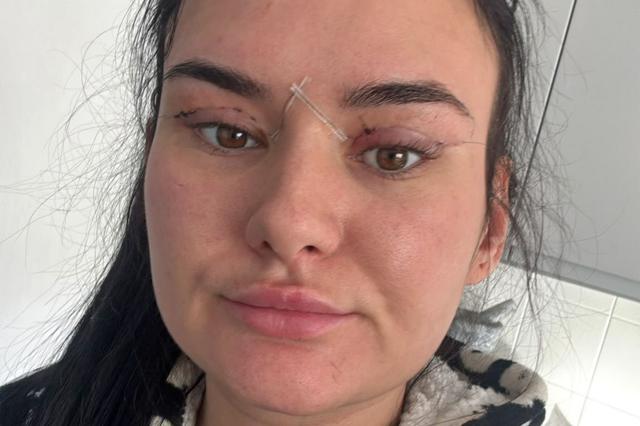

Stunning ‘before’ and ‘after’ photos, a procedure costing 750 euros and the chance to return home within a few hours. Blepharoplasty abroad is often portrayed as a simple and affordable cosmetic procedure. But behind the attractive price tag, there can sometimes be severe pain, infections, stitches coming apart, repeat operations and even the inability to close your eyes completely.
Surgery to remove excess skin from the eyelids (blepharoplasty) has become particularly popular thanks to social media.
On TikTok and other platforms, people are keen to show off dramatic before-and-after results, whilst some clinics offer the procedure at significantly lower prices than in many European countries.
Complications are discussed far less frequently.
The BBC spoke to dozens of people who faced serious health problems following cheap blepharoplasty.
One woman was forced to tape her eyes shut before going to sleep because too much skin had been removed during the operation. Another feared she was losing her sight.
Specialists in eye surgery say such cases are on the rise. According to them, patients often opt for cheaper clinics and then effectively end up without proper post-operative care.
“I thought it would be like Botox”
Nikita Morgan, from Ireland, decided to have blepharoplasty after seeing a video about the procedure on social media.
She wanted to make her eyes more expressive. In Ireland, upper eyelid surgery costs over €4,000, so Nikita started looking for a cheaper option.
On TikTok, she found a company called Faceland, which was offering the procedure for €750 in Germany.
In November 2025, 31-year-old Nikita travelled to a clinic in Düsseldorf.
“It was all presented as if there was nothing complicated about it,” she says.
Before the operation, she was given a local anaesthetic. But as soon as the doctor began cutting into the thin skin of her eyelids, Nikita felt intense pain.
“My face felt as if it were on fire, and there was a pungent smell of burnt skin in my nose. I was shocked. It was awful. As she was stitching me up, I could feel the needle going through my skin.”
Faceland stated that, prior to the procedure, all patients undergo a consultation and sign an informed consent form to ensure they are ‘well-informed and prepared’.
The company also reported that Nikita was “very anxious” during the procedure. According to Faceland, this “may affect the perception of pain”.
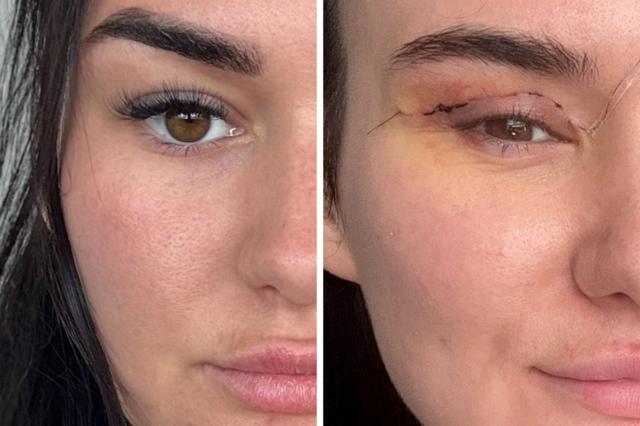
Just a few hours after the operation, Nikita went to the airport and flew home.
Neither medical professionals nor Faceland itself recommend flying on the day of the operation. However, Nikita says she has seen quite a few people on social media who have done exactly that.
“I could barely see. When I looked up, the stitches started to bleed, and it felt as though I was crying blood,” she recalls.
Now Nikita regrets deciding to fly home on the day of her operation and advises others not to do the same.
A procedure that social media has made seem ‘simple’
The popularity of blepharoplasty has risen sharply alongside the general interest in cosmetic procedures on social media.
The BBC analysed videos about blepharoplasty on four major social media platforms and found that, over the past three years, British accounts have amassed nearly 150 million views with them.
That is five times more than in the previous three years.
Many users report positive results. Many of these stories are specifically linked to Faceland.
One patient told the BBC that her drooping eyelids were preventing her from seeing properly and causing headaches. She was unable to have the operation at a state hospital and could not afford a private clinic.
Following the procedure at Faceland, she said, the problem disappeared.
On its website, the company states that its aim is to transform the market through ‘affordable, high-quality medical care’. Faceland claims that procedures are carried out by accredited doctors who undergo additional training with the company.
But surgeons point out another detail.
A full upper eyelid operation usually lasts around three hours – including preparation, the operation itself and post-operative monitoring.
Faceland patients interviewed by the BBC say they spent less than an hour at the clinic.
Faceland attributes the low cost to the high volume of operations: doctors carry out a large number of procedures, which significantly reduces costs.
But some patients discovered the cost of these savings once they returned home.
‘They removed too much skin’
Laura – not her real name – had surgery in June at the Faceland clinic in Amsterdam.
At first, everything was fine. But after she removed the stitches at home, problems arose.
The crescent-shaped incisions above her eyes had gaped open. In their place were open, red wounds that became infected.
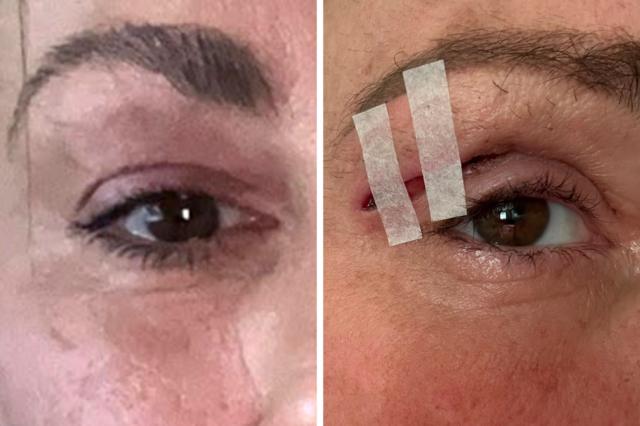
In the eight days following the operation, Laura sought emergency treatment four times.
British surgeons say that, with proper training, such complications are extremely rare.
Laura, who is in her early 40s, tried several times to get through to Faceland’s emergency helpline, but was unable to do so.
“If I closed my eyes for too long, the tension would cause the wounds to reopen. I was afraid to fall asleep and was in constant, excruciating pain.”
Over the next few days, she stayed in touch with her Faceland doctor. She was offered the chance to fly back for a check-up on several occasions.
“I cried and literally begged: ‘You can’t leave me in this state.’”
But the company advised her to seek help where she lived.
Laura consulted an ophthalmologist. He explained that ‘too much skin’ had been removed during the operation.
“I think people will think, ‘It’s her own fault.’ But I would never have agreed to this operation if I’d known something like this could happen,” the woman admits.
Faceland declined to comment in detail on Laura’s situation, as she has initiated legal proceedings against the company.
An independent complaints committee working with Faceland offered her €175 in compensation. Laura turned down this sum.
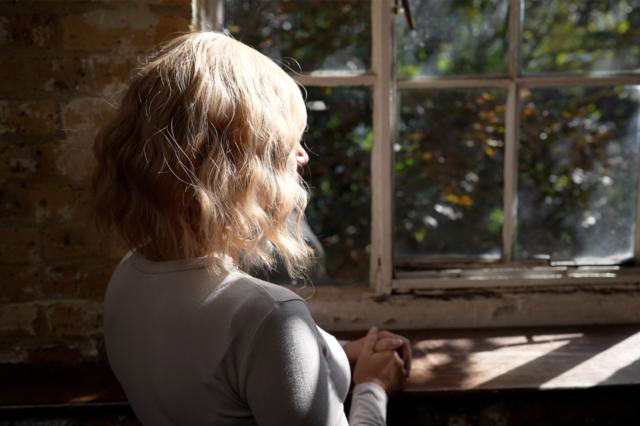
‘I can’t turn a blind eye’
Laura’s problem is not an isolated case.
Over the past year, British surgeons have repeatedly encountered patients who experienced complications following blepharoplasty abroad.
The most common problem is the inability to close the eyes completely.
“Removing too much skin from the eyelids is dangerous because the eye remains open and unprotected from environmental factors,” explains Colin Wise, a consultant in ophthalmic plastic surgery and a member of the executive committee of the British Society of Ophthalmic Plastic Surgery.
According to him, correcting such a problem can be difficult and expensive.
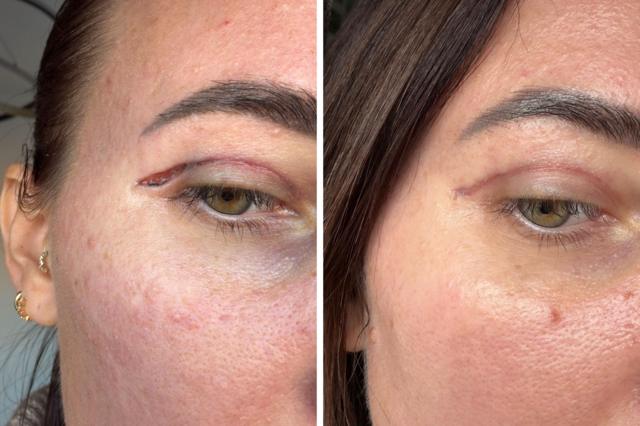
Wise compares the eyelids to ‘curtains’.
“When you open them, there should be a crease. When you close them, there should be enough skin to completely cover the eyeball.”
Other complications cited by surgeons include scarring, asymmetry of the eyes and wound tears.
Experts also spoke of patients who had already undergone operations in Britain carried out by unregistered practitioners. In some cases, blepharoplasty was even performed in ordinary living rooms.
“I was afraid I would lose my sight”
Karin G. Art had blepharoplasty at the Faceland clinic in Amsterdam.
By Christmas 2024, a few days after the operation, she woke up and could barely see.
Her left eye was severely swollen and bleeding, and the incisions above both eyes had started to come apart.
“I was in a panic. I was afraid of losing my sight because of some extra bit of skin.”
Karin went straight to A&E. She didn’t ring Faceland – the clinic was too far away.
Subsequently, the doctors assured her that her sight would be saved. However, her face was severely infected. She was prescribed antibiotics and then had to undergo regular check-ups.
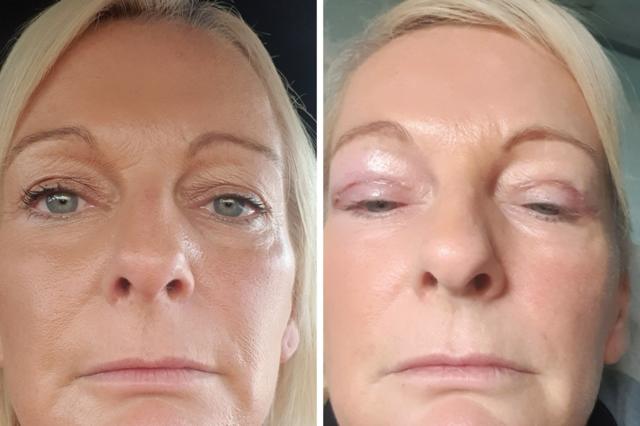
The BBC has seen email correspondence showing that Karyn contacted Faceland twice to report what had happened. She received a brief reply only 12 days later.
This was followed by several more emails. But, according to Keren, the company then stopped communicating with her.
Faceland maintains that it ‘did not leave her without support or further monitoring’ and regrets any instances where patients felt they lacked support from the company or experienced complications.
Karin, Laura and Nikita, however, all agree on one thing: it was the post-operative care that became one of their main problems.
Colin Wise notes that following blepharoplasty, a patient should not be left to deal with potential complications on their own.
‘They must have access to medical care round the clock, seven days a week.’
If the doctor is a hundred kilometres away from the patient, it is practically impossible to provide such care.
According to Wise, patients should also bear in mind that a lower price for the procedure may, in some cases, mean lower standards of care.
This is particularly important when a person returns home almost immediately after the operation.
Stitches from TikTok
A week after the operation, Nikita removed the stitches herself.
She learnt how to do this from a video on TikTok.
“You feel completely helpless — as if you’re pulling something out of your own skin,” she says.
Faceland claims that they advise patients to consult their doctors about when to remove the stitches and provide the relevant instructions.
Nikita says she received neither a post-operative care kit nor any instructions.
Faceland also states that patients can return to the clinic to have their stitches removed. However, none of the people the BBC spoke to had taken up this option.
Colin Wise describes removing stitches yourself as a ‘recipe for disaster’.
According to him, this procedure should be carried out by a surgeon or a nurse. This reduces the risk of infection and the likelihood that the wound will reopen.
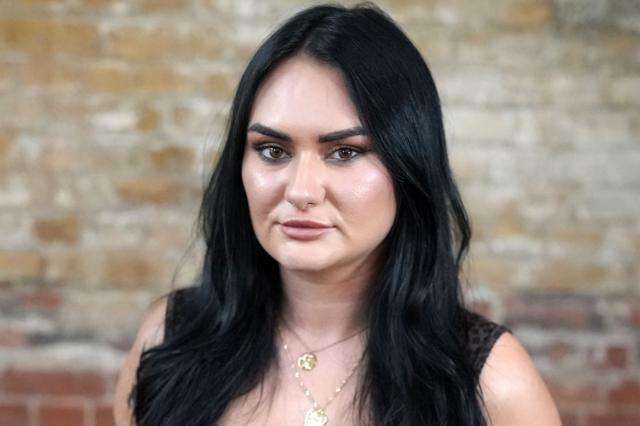
Overall, Nikita is pleased with the outcome of the operation, although she is left with a small scar.
She now wants other people to understand the potential risks before deciding to undergo a similar procedure.
“If I’d had more money, or if I hadn’t believed everything I saw on TikTok, I’d have gone to a clinic closer to home and wouldn’t have been in such a rush.”
Almost two years after the operation, Kerin still has problems with her left eye. Her vision deteriorates from time to time and she is left with scarring.
Laura fears that the scars above both her eyes may remain for the rest of her life.
“I wanted to fix something that didn’t actually need fixing, and as a result I ended up with a more serious problem. Now I need another operation, but I can’t afford it,” she says.
“It’s incredibly hard.”