

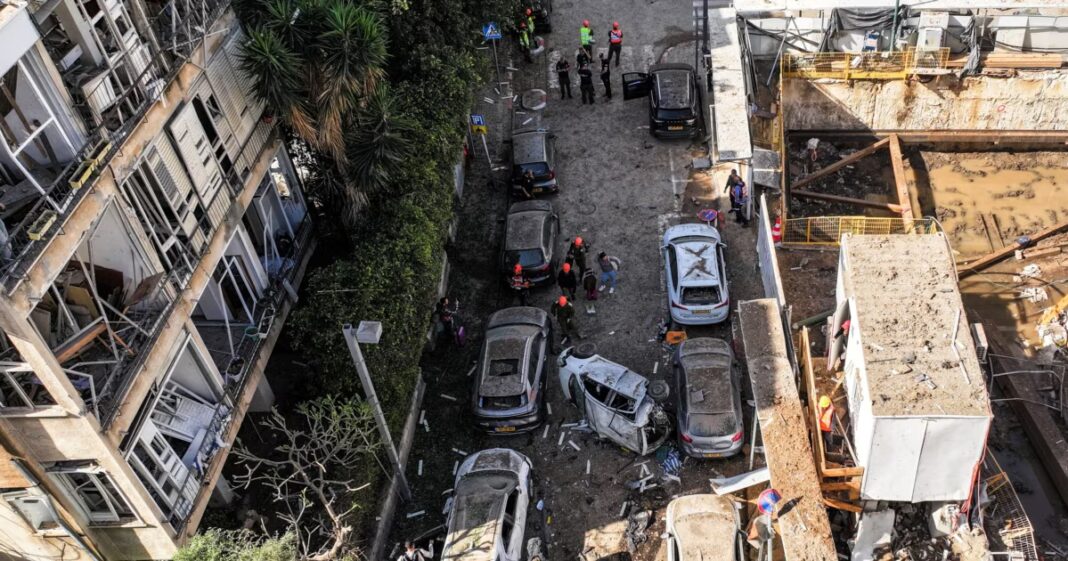

On the night of 24 March, Iran launched several rocket attacks on Israel. Air-raid sirens sounded in the south of the country, as well as in the centre – in Tel Aviv and Petah Tikva, The Times of Israel writes.
According to the Israeli military, three buildings in the centre of Tel Aviv were significantly damaged as a result of the rocket’s impact. Four people were injured and treated on the spot. No one was injured in the shelling of southern Israel.
Kuwaiti authorities said its air defence systems were responding to “rocket and drone attacks”, the country’s Ministry of Electricity also announced that seven power lines had been taken out of service after the interceptors fell.
Saudi Arabia said on March 24 that its air defence systems had intercepted and destroyed a total of 19 drones targeting the country’s eastern province.
Israel continues to launch strikes against Iran. The Israel Defense Forces said its military carried out a large-scale series of strikes in central Tehran, hitting key command centres, including facilities linked to the Islamic Revolutionary Guard Corps intelligence unit and Iran’s Intelligence Ministry. It is also claimed that Israeli forces struck more than 50 targets overnight, including ballistic missile storage facilities.
Earlier, Iranian parliament speaker Mohammad-Bagher Ghalibaf rejected US President Donald Trump’s claim that the countries were negotiating the end of the conflict.
“There are no negotiations with the US. Fake news is used to manipulate financial and oil markets and to escape from the quagmire the US and Israel have fallen into,” he wrote on Network X.
On March 23, Trump said the USA and Iranian authorities had had “good and productive discussions” over the past two days, and based on those discussions, the American president ordered the postponement of strikes on Iran’s energy infrastructure for five days. Trump subsequently told Fox News that Iran “wants to make a deal”. Israeli media, citing sources, claimed that the US was in talks with Ghalibaf.
On 23 March, a demand Trump made on Sunday night expired – he demanded Iran immediately unblock the Strait of Hormuz for shipping, threatening strikes on power plants in Iran. Iranian authorities responded by threatening strikes on energy facilities in the Persian Gulf. Iran also threatened to mine the Persian Gulf in case of an attack on Iranian islands or coasts.
On 28 February, the US launched a joint military operation with Israel against Iran. The strikes killed Supreme Leader Ayatollah Ali Khamenei and hit the country’s military and nuclear facilities. Iran retaliated by striking US bases and infrastructure of Washington’s Gulf allies.
Since the launch of the operation, Iran has effectively blocked the Strait of Hormuz, which connects the Persian Gulf to the world’s oceans. The strait is strategically important because oil supplies from the oil-producing Gulf countries flow through it to the world market.
Iran has launched missile strikes against Israel, Kuwait has electricity problems, Saudi Arabia intercepts drones