

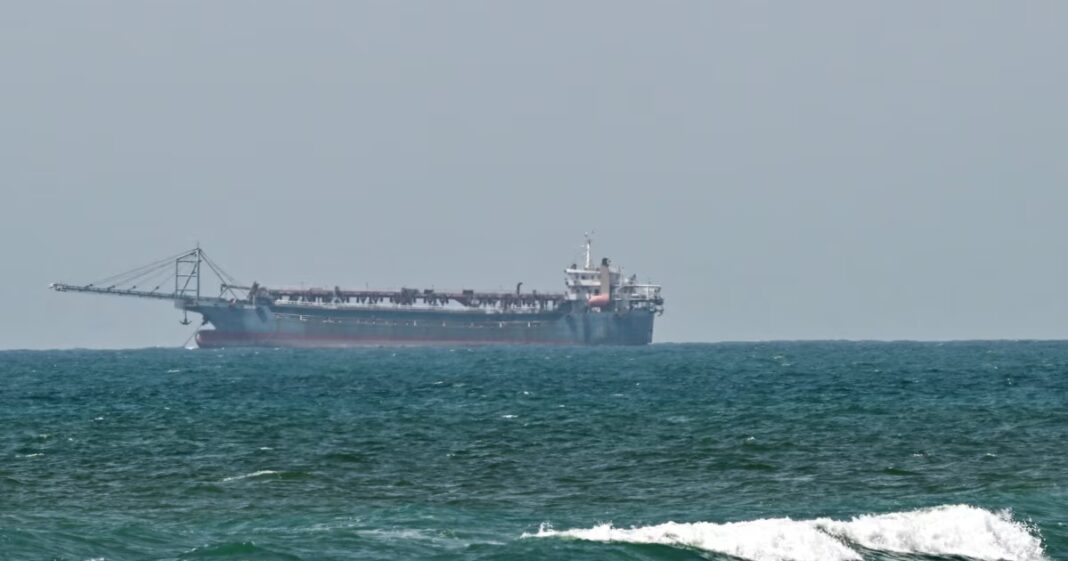

Iranian officials have denied that the resumption of traffic through the Strait of Hormuz is part of an agreement with the United States to end the war.
Earlier, US President Donald Trump, said the deal was “largely agreed”. At the same time, Tehran has denied any intention to relinquish de facto control of the waterway.
“The Strait of Hormuz will remain fully under Iranian control. We decide who, when and how it passes,” Ebrahim Zolfaghari, a spokesman for Iran’s military command, wrote on social network X.
The Fars news agency, affiliated with the Islamic Revolutionary Guard Corps, also said the data on the restoration of the strait as part of any peace agreement was “incomplete and untrue”.
At the same time, unconfirmed media reports in the United States and Iran claim that the memorandum includes lifting the U.S. blockade on Iranian shipping and resuming traffic through the strait.
The fate of Iran’s highly enriched uranium-one of several reasons Trump has cited for going to war-the two sides will reportedly discuss within 30 to 60 days. The White House has called on Tehran to provide enriched uranium that could be used for weapons.
The New York Times, citing unnamed U.S. officials, reported that Iran has agreed to give up its enriched uranium as part of the offer.
In an interview with the NYT on 24 May, US Secretary of State Marco Rubio acknowledged that reaching a nuclear deal would take time.
Earlier, Rubio said that “good news” about the situation in Iran could come later today.
Since the start of the US-Israeli war against Iran on 28 February, Tehran has virtually closed the Strait of Hormuz – a key maritime bottleneck – causing oil prices to spike globally.