

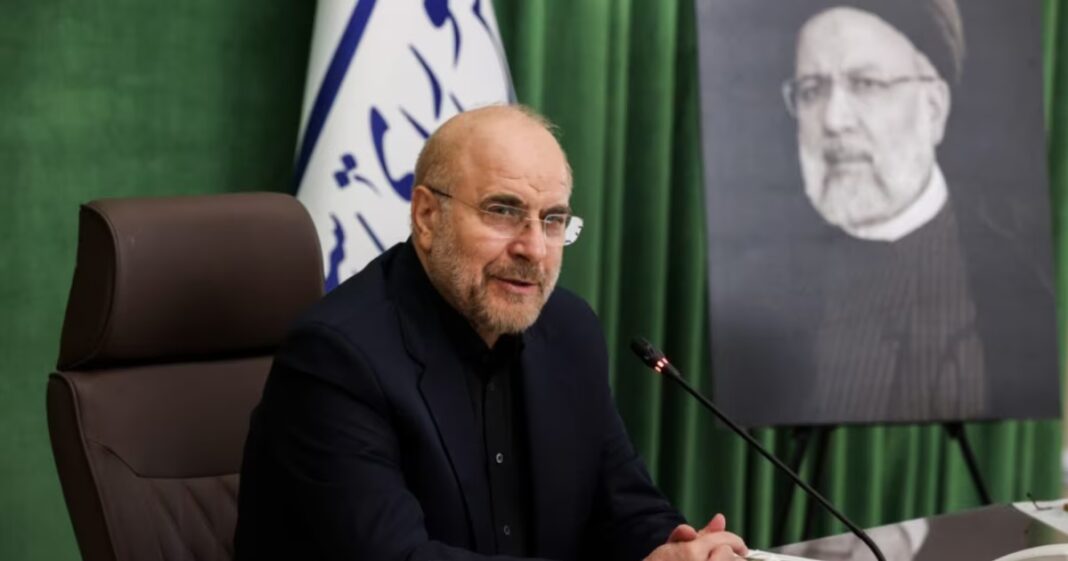

Iran’s influential parliament speaker and chief negotiator said that “we have made progress” in talks with Washington but that “there are still big differences between us”.
In a televised address in the early hours of 19 April, Mohammad Baqer Qalibaf said: “There are some issues that we insist on… They also have red lines. But it can only be about one or two issues.”
Many observers consider Qalibaf a force behind the regime in Tehran. He has often made harsh comments and accused U.S. President Donald Trump of lying even as he spoke of progress in talks.
Qalibaf led the Iranian delegation in face-to-face meetings with U.S. officials, including Vice President J.D. Vance, last week in Islamabad. He did not give a date for the next round of talks in his televised address.
On 18 April, Iran’s Supreme National Security Council said Tehran was considering “new proposals” from the United States, provided through Pakistani army commander Asim Munir. However, the Council emphasised that Iran’s negotiating team “will not accept even the slightest compromise, retreat or leniency” and will defend national interests “with all its strength”.
Earlier on 18 April, US President Donald Trump announced some “good news” on Iran and believes efforts to finalise a peace deal with Tehran are progressing well.
At the same time, he warned that if no agreement is reached by 22 April – the official end of the two-week ceasefire – he may “have to start striking again”.
The Security Council also noted that Tehran considers the US naval blockade of Iranian ports a “violation of the ceasefire agreement” and refuses to reopen the Strait of Hormuz.
The statement said Iran is “determined to maintain oversight and control over transit through the Strait of Hormuz until the war is finally ended and a lasting peace is achieved in the region.”
A few hours ago, the Islamic Revolutionary Guard Corps also said that the situation in the strait had “returned to its previous state” due to the continuation of the US blockade.