

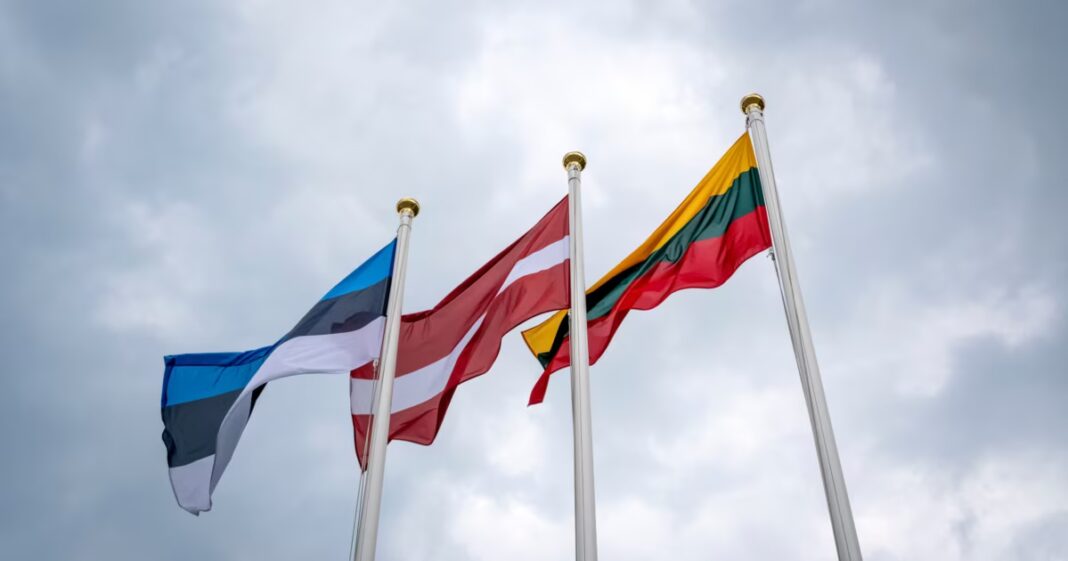

The Kremlin continues to create preconditions for possible future aggression against the Baltic States, the US-based Institute for the Study of War (ISW) wrote in its report.
The analysts drew attention to the fact that on 23 April the Russian Security Council accused the Lithuanian authorities of creating a “hotbed of tension” near the border with Russia’s Kaliningrad region and of militarising the country under the pretext of a “Russian threat”. On the same day, Russian Deputy Foreign Minister Alexander Grushko told Russia’s state-run RIA Novosti news agency that NATO’s Joint Expeditionary Force exercises were practising scenarios of a naval blockade and seizure of the Kaliningrad region, and accused NATO of deliberately “escalating confrontation” with Russia.
“These statements are part of the Kremlin’s cognitive warfare to falsely portray NATO as an aggressor in response to the Kremlin’s military aggression in Ukraine,” the report said.
ISW says the Kremlin is conducting a series of information operations targeting the Baltic states to create long-term information preconditions to justify potential future military action against these countries.
“The Kremlin is using, in particular, its control over the Kaliningrad region to justify future Russian aggression against the Baltic states or Poland under the pretext of defending the Kaliningrad region,” the analysts said.
Earlier this month, Ukrainian President Volodymyr Zelensky said in a telethon interview that Russia’s Internet restrictions could be linked, among other things, to preparations for possible large-scale military scenarios against Ukraine or the Baltic states.
The Lithuanian and Estonian authorities said that such statements did not correspond to their intelligence and threat assessments.
Meanwhile, in early April, Russian Foreign Ministry spokeswoman Maria Zakharova warned the Baltic states of “consequences” if they “provide the sky” for Ukrainian strikes on Russian ports on the Baltic Sea.
This was preceded by reports of Ukrainian drones, which Ukraine uses to strike targets in Russia, entering the airspace of the Baltic States and Finland.
The European Commission responded to Russia’s threats to the Baltic states by saying that an attack on an EU member state was “an attack on the European Union as a whole”, while Estonia, Latvia and Lithuania denied involvement in air attacks on Russian territory.