


Senior Kremlin officials have confirmed Russia’s support for Iran and openly described the US as a long-term adversary of the Russian Federation. This comes despite Washington’s recent unilateral concession to Moscow — allowing Russia to export diesel fuel — according to a report by the US Institute for the Study of War (ISW).
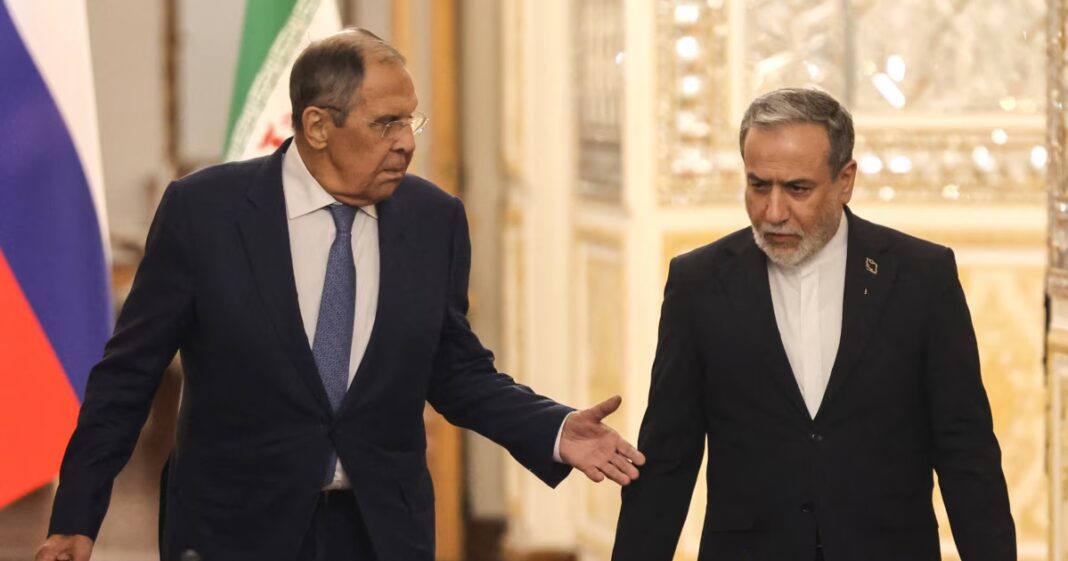
Analysts highlighted statements made by Russian Foreign Minister Sergey Lavrov on 19 October at a press conference with his Iranian counterpart, Abbas Arakchi. Lavrov said that Russia’s and Iran’s positions on most regional and international issues were “similar or close”. He also condemned the US’s “illegal aggressive actions” and its “unprovoked aggression” against Iran, emphasising that Russia “has no intention of abandoning” its economic and investment agreements with Tehran. According to Lavrov, trade between Russia and Iran grew by more than 10 per cent in the first eight months of 2026.
The ISW believes that Lavrov’s statements confirm Russia’s commitment to its long-standing cooperation with Iran, including the exchange of technology and support for the development of Iran’s nuclear programme.
The Institute also highlighted the remarks of Dmitry Medvedev, Deputy Chairman of the Russian Federation’s Security Council, who stated on 20 October that Russia and the US were and remain ‘systemic adversaries’. Furthermore, he claimed that the agreement between Moscow and Washington on diesel fuel benefits only the United States.
‘The statements by Lavrov and Medvedev show that the Kremlin is not at all interested in a genuine normalisation of relations with the US. On the contrary, they confirm Moscow’s unwavering course towards supporting and deepening its long-standing cooperation with Iran,” the report states.
Last week, US President Donald Trump, whilst explaining his position on Russia’s war against Ukraine, spoke separately about Moscow’s role in relations with Iran.
“Russia is doing practically nothing to help the Islamic Republic of Iran – if it is helping at all – although it could be doing much more. And I want it to stay that way, and I will ensure it does, unless fools stand in my way,” Trump wrote on his social media platform, Truth Social.
On 9 October, Donald Trump announced an agreement with Vladimir Putin on the supply of Russian diesel fuel to the US and other countries. Following this, Washington demanded that Kyiv cease its strikes on Russian oil refineries. Trump also criticised Ukrainian President Volodymyr Zelenskyy, accusing him of being unwilling to end the war, and stated that “it is time for someone else to negotiate on behalf of Ukraine”.
Furthermore, Trump suspended the imposition of significant sanctions, tariffs and restrictions provided for in the recently passed bipartisan ‘Lindsey Graham Act’. The legislation was intended to increase pressure on Russia to bring an end to the war against Ukraine. This move drew sharp criticism from a number of lawmakers from both parties, who stated that the decision undermines efforts to force Moscow to the negotiating table.
Ukrainian President Volodymyr Zelenskyy stated that, in his view, Donald Trump and his entourage were choosing “the wrong side of history” due to the change in policy towards Ukraine.
Amid the row, the US temporarily halted the sharing of some intelligence and restricted the operation of Starlink, Zelenskyy claimed.
The US authorities deny that they deliberately suspended Starlink operations and the transfer of intelligence data to Ukraine, despite the fact that Kyiv received no advance warning of several recent Russian ballistic missile strikes on the city.