

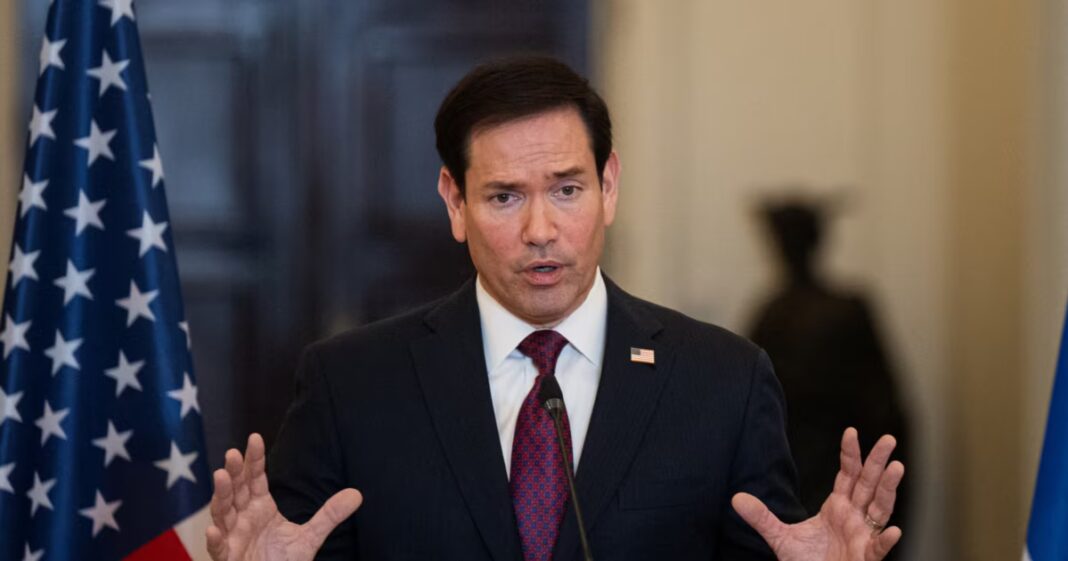

US President Donald Trump has decided to postpone for 60 days the imposition of sanctions against Russia and its partners, as provided for under the so-called Graham Act. During this time, the US administration must assess the potential consequences of the restrictions for the US economy and global markets, said Secretary of State Marco Rubio whilst speaking to journalists.
According to Rubio, the bill to tighten sanctions against Russia and Iran provides not only for restrictions on Moscow, but also for tariffs against other countries, including India. Washington therefore wishes to ‘further analyse’ the potential economic consequences before making a final decision.
“I believe the President wants to use these 60 days to assess what the introduction of both sanctions and tariffs would mean for the global economy and even for the US economy,” the Secretary of State explained.
He added that exemptions had been included in the bill, as the administration needs time to assess the potential consequences of the restrictions. Rubio emphasised that over the next 60 days, Washington “must weigh up all the arguments for and against”.
He cited India as an example: the country has diversified its energy supply sources but remains largely dependent on Russian energy resources.
When asked whether postponing the sanctions would amount to a “gift” for Russian President Vladimir Putin, Rubio stated that “Russian diesel fuel would have found buyers anyway”.
“The only difference is how much of it the US would have received,” he said. The Secretary of State also recalled Washington’s earlier decision to grant a 60-day exemption for Russian oil against the backdrop of tensions in the Strait of Hormuz.
According to Rubio, conflicts in different regions of the world are increasingly influencing one another and creating uncertainty in energy markets. Among the factors the US administration must take into account, he cited the situation in the Strait of Hormuz, developments surrounding Saudi Arabia, as well as Russia’s war against Ukraine and its impact on global energy supplies.
Rubio emphasised that “these issues must be considered holistically and cautiously, taking into account their interdependence”.
Earlier, on 17 October, Trump signed an executive order indefinitely suspending the imposition of new sanctions and tariffs against Russia and its partners, as provided for under the law on sanctions against Russia and Iran. The document was published on the White House’s official website.
The US Congress passed the law, named after the late Senator Lindsey Graham, in September. It required the Trump administration to impose the relevant measures by 18 October, but allowed the President to waive them if the national interest so required.
Trump made use of this provision. In the executive order, he stated that he had sent formal notification to Congress: postponing the sanctions at this stage ‘is in the national interest of the United States’.
The measures provided for by the law include tariffs of 500 per cent on imports of goods from Russia, as well as 100 per cent tariffs on goods from the five countries that are the largest buyers of Russian oil and gas.
Furthermore, the Act provides for sanctions against certain categories of individuals and organisations, including Russian defence, energy and financial institutions, the Russian leadership and vessels of the so-called ‘shadow fleet’.
The suspension will remain in force until the US President or the Secretary of State decides otherwise.
At the same time, Trump’s executive order states that all sanctions against Russia in force as at 16 October remain in place.
Earlier, on 18 September, Trump signed a bill expanding sanctions and other restrictions against Russia. The bill was named after one of its co-authors — the recently deceased Senator Lindsey Graham.
According to the White House, the law reaffirms and expands existing sanctions, tariffs and restrictions against Russia. Furthermore, it extends the validity of US sanctions already imposed against Iran.
On 17 September, the US House of Representatives approved a bill on so-called ‘hellish sanctions’ against Russia. The bill allows the US President to impose secondary tariffs of up to 100 per cent on the largest buyers of Russian oil and gas, as well as sanctions against Russian officials, businesspeople, banks, energy projects and vessels belonging to the ‘shadow fleet’. The Senate approved the bill back in August; it now awaits Donald Trump’s signature.