

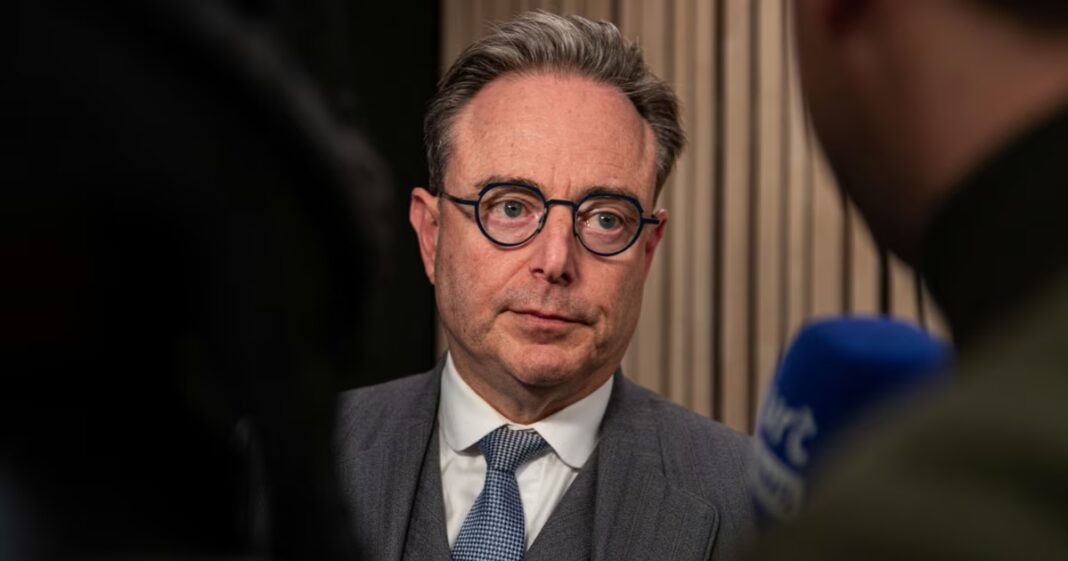

At the EU summit in Brussels, Belgian Prime Minister Bart De Wever made an important announcement: Belgium plans to transfer ten F-16 fighter jets to Ukraine by the end of 2026. This news came following his meeting with Ukrainian President Volodymyr Zelenskyy, and De Wever emphasised that the delay in deliveries is due to the anticipated arrival of the F-35s, which will replace the F-16s in the Belgian armed forces.
The situation regarding these fighter jets forms part of a broader context: Ukrainian airspace needs protection from Russian jet-powered drones, as well as to ensure the security of grain exports and protect energy infrastructure. The Belgian Prime Minister noted that the F-16s, armed with 20-millimetre cannons, could prove an effective means of countering drones.
However, the process of transferring the aircraft is itself of interest. Of the ten fighter jets planned for transfer, it is not yet clear how many will be combat-ready and how many will be used for spare parts. This is because it was previously envisaged that seven aircraft would be transferred, three of which were intended for combat missions.
Belgium is also actively involved in the international F-16 coalition, led by Denmark and the Netherlands, and is assisting in the training of Ukrainian pilots and technical personnel. This coalition is a key element in supporting Ukraine in its struggle.
It is also interesting to note that back in May 2024, Belgium committed to supplying Ukraine with 30 F-16s by 2028. Due to delays with the F-35s, which are intended to replace the obsolete models, these plans have been postponed. Nevertheless, Belgium is confident in its ability to assist Ukraine not only with aircraft but also with ammunition manufactured by the Belgian company FN Herstal.
Thus, although the delivery schedule is subject to change, Belgium remains firmly committed to supporting Ukraine, not only in terms of military equipment but also through international cooperation aimed at safeguarding the country’s independence and security.