

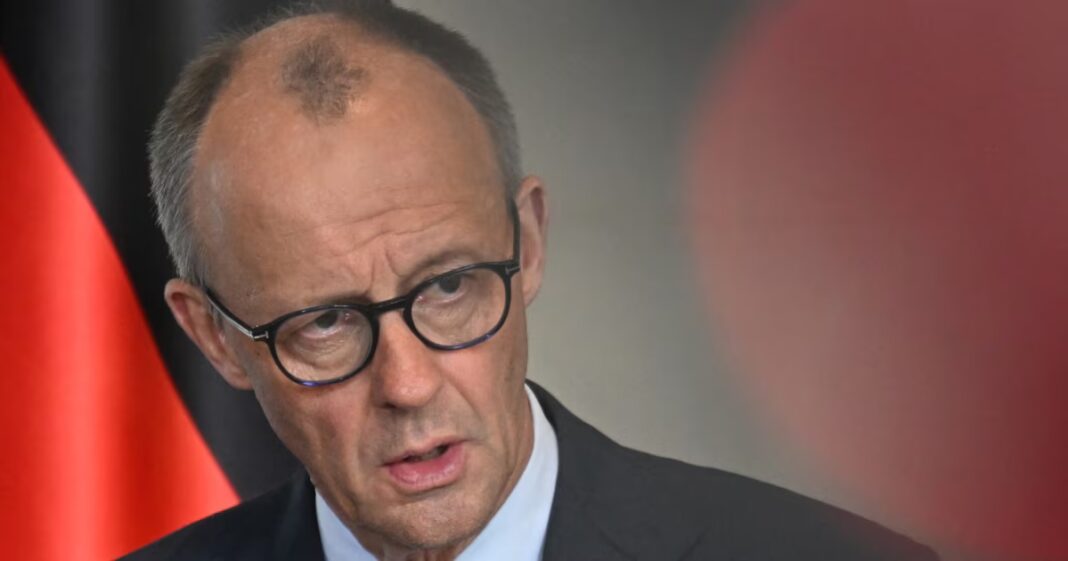

Europe will further increase pressure on Moscow, Kiev can count on its support – German Chancellor Friedrich Merz said at a press conference in Berlin on 18 May, Radio Liberty correspondent reports.
“Moscow must realise that it will have to negotiate. Europe is ready to come to the negotiating table – together with Ukraine, Russia and the United States… The fact that Europe has found new unity and determination after the new Hungarian government will bring us closer to peace,” Merz told reporters.
Commenting on media reports about former Chancellor Angela Merkel’s possible candidacy as a negotiator with Russia on behalf of the European Union, the German head of government refused to “publicly fuel or even more so to start speculation about names”.
Merkel herself rejected the role on 18 May, arguing that Vladimir Putin, in her view, would only be “taken seriously” by current EU leaders.
“It is important that Russia is ready to sit down at the negotiating table and have a conversation. And these talks will then take place between Ukraine and Russia with the support of the Americans and the Europeans. But first the hostilities must stop and Russia must be ready to negotiate. Meanwhile, Russia responds to every proposal for negotiations with even more intense shelling of also civilian infrastructure and Ukrainian territory. This has to stop. And this is the precondition for negotiations to become possible at all,” Merz emphasised.
The head of the German government also does not consider it urgent to decide on EU representation in potential talks with Putin.
“We are continuing the E3 talks and above all we hope that we can slightly strengthen Moscow’s readiness to come to the negotiating table. As long as the Russian government is not ready to negotiate, we for our part should also not take a decision on representation,” Merz said when asked whether it made sense to agree on a mediator already now.
The day before, President Vladimir Zelensky spoke in favour of Europe’s participation in the talks and called for determining who would “represent Europe specifically”.
Earlier on 18 May, the head of the EU diplomatic service, Kaja Kallas, stated that there was a deadlock in the negotiation process to end the war in Ukraine. At the same time, she pointed out that Russia “is not in the strongest position” and spoke in favour of increasing pressure to force Moscow to negotiate.
Due to the escalating situation in the Middle East, trilateral talks between Ukraine, the US and Russia, which had been ongoing throughout January and February, have been postponed indefinitely.
According to the Financial Times’ sources, both Moscow and Kiev believe that the prospects for resuming US-brokered peace talks are slim even after the end of the war in the Middle East.
Russian officials are on record talking about demanding the handover of all of Donbass as a key condition for a peace settlement, while hinting that agreement to do so came from the US president during his meeting with Putin in Anchorage last year.
Ukraine has been proposing since last year, after the US began mediating, to stop fighting along the front line – in which case most of Ukraine’s Donbass, but not the entire region, would remain under Russian control. Ukraine does not intend to recognise this legally.