

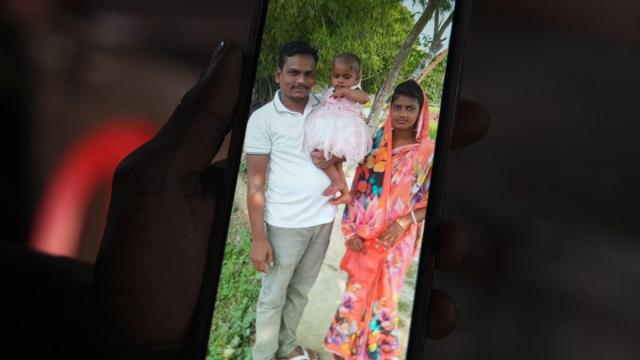

On the morning before his death, Dipu Chandra Das left home at dawn. He left his corrugated iron house in the Bangladeshi town of Maimansingh, overlooking a maze of lanes not far from the motorway from Dhaka.
The 28-year-old man woke his father, said goodbye to his wife and lulled his 18-month-old daughter to sleep. He then boarded a bus that took him to a garment factory where the man worked as a junior quality inspector. He inspected jumpers for global brands such as H&M and Next.
The family never saw him again.
Warning: some of the details below may be shocking. – A mob lynched and burned him after accusations of blasphemy.
He was accused of allegedly insulting the Prophet Muhammad, dragged from his workplace, beaten, carried for more than a kilometre through crowded streets, and tied to a tree on a busy highway. Onlookers.
The murder has rocked the world, and especially neighbouring India. It reignited fears for the safety of minorities that had arisen after student protests in 2024 toppled the government of then Prime Minister Sheikh Hasina.
Religious minorities (predominantly Hindu) make up about 9 per cent of Bangladesh’s 174 million population. Their relations with the Muslim majority have long been accompanied by periodic tensions and a sense of danger. The tide of resentment has subsided, but there is still grief in the house Das left behind. It is one dark room with a clay floor and tin roof, where the family has lived for nearly 15 years.
There are few belongings in the house: a plastic table and chairs, beds, bags of rice, a teddy bear and clothes on a single rack. Only the refrigerator and a small television stand out – Dipu bought them on instalments. These things remained mute and witnesses to the future he was trying to build.
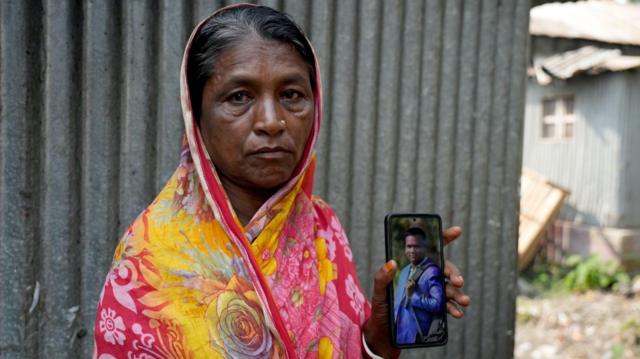
His mother, Shefali Rani Das, starts sobbing as soon as the guests walk in.
“Oh Dip, where is my Dip?” – she shouts, breaking down into a wistful wail.
Dipu was the eldest son of 54-year-old Rabi Das. His father had worked all his life as a loader at the nearby market – hauling sacks of rice, wheat and vegetables for 400-500 taka (3:4) dollars a day. Years of hard labour had drained and exploded his health. Dipu wished his father would finally stop.
“I am the one who works now,” he often told his father. – You rest.”
Dipu gave his salary to his family. He constantly dreamed of building a real house to get his family out of the mud and iron slums for good.
Dipu was born at home and grew up in a mixed Hindu-Muslim neighbourhood where hardship reigned. According to those around him, he was a withdrawn person and had few friends. The young man left college during the pandemic, when lockdowns exploded the family’s financial situation.
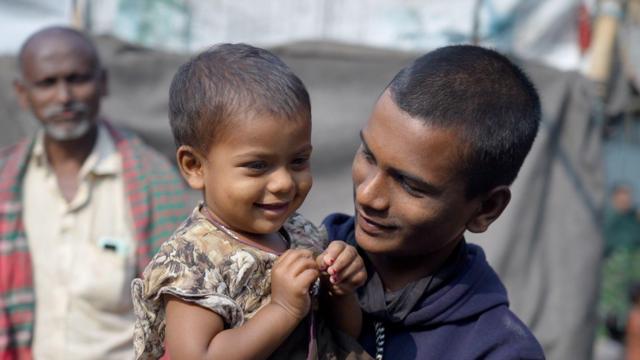
By 2024, he was working in a knitting factory. Dipu sent money home, and when he returned from his hostel, he always brought chocolates for his young daughter and spent his evenings watching cartoons. Ritika.
Author photo, Anahita Sachdev/BBC
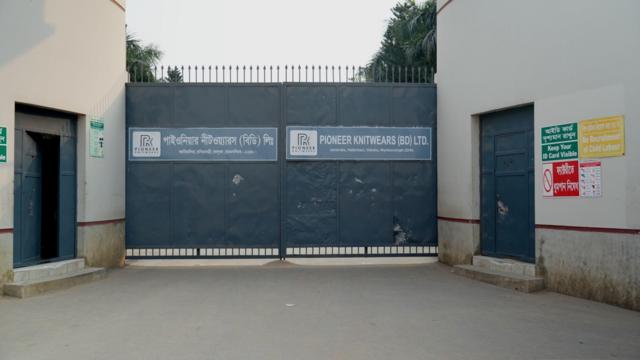
Dipu was just a small cog in the giant machine of Bangladeshi garment exports. For the past 14 months, he has been working at the Pioneer Knitwear factory. This factory employs about 8,500 workers and is part of a group of nine factories that together employ 47,000 people. Dipu earned 13,500 taka (about $110) a month. He checked seams and stitches on one of the factory’s one hundred conveyor lines. Among the staff, he was one of 868 Hindu workers.
It was an ordinary, cautious life – a young man just trying to lift his family out of poverty. Rumours spread instantly at work and outside the workplace as if he had expressed an “atukni” (Mongolian for an insulting remark) about the Prophet Muhammad. At the end of the shift, three colleagues were discussing plans for the weekend. When Dipu joined the conversation, the conversation took on an unpleasant colour.
According to Mohammed Abdullah Al – Mammoon, deputy police chief of Maimansingh, citing testimony from at least three eyewitnesses, Dipu allegedly made a remark that was later seen as an image of the prophet.
 SACHDEV/BBC.
Surveillance cameras at the factory recorded Dipu checking out about 30 minutes after that conversation. However, he later returned to the workshop – according to senior manager Uday Hossain, footage two hours later shows him walking around the area.
Why Dipu returned after completing his shift is still unknown. Blasphemy, quickly spread through the city.
(Bangladesh has no official blasphemy law, but the country criminalises acts “intended to offend religious sentiments”.)
When workers left the building en masse at the end of the day, rumours in the crowded area spread instantly. Tensions rose both inside the factory and on the street.
“What happened next went far beyond the law,” noted Al – Mamoun.
A few hundred people gathered at the gate at first, demanding you. But the crowd quickly grew to more than a thousand people with surrounding X neighbourhoods. Cameras recorded men trying to break down the gate and throwing ropes through it to get inside. Wave.
According to Hossain, the administration notified police of the danger at least 45 minutes beforehand. But even when police and operatives in civilian clothes arrived on the spot, they were unable to wrest the man from the hands of the angry mob. The crowd.
According to Al – Mammoun, the people threatened to break down the gate if they were not given the man. The factory workers did not resist this ultimatum – they opened the gate and let him out. The body was then dragged to a nearby highway, tied with a rope to a tree and set on fire.
“When I arrived at the site, he was already dead,” Al-Mamoun said.
Currently, 22 people have been detained in the case. Half of them are Deepa’s colleagues at the factory, including two managers of the workshop where he worked. Police have also arrested the imam of a local mosque.
Most of the suspects are between 22 and 30 years old. Police estimate that about 150 people were directly involved in the attack, with many more simply watching the massacre. Others involved are still being sought.
Al – Mammoun observed that few of those detained gave the impression of being “particularly religious people”.
“There are students, passers-by, locals among them. Hatred.”
Author photo, ANAHITA SACHDEV/BBC
Since the student uprising of 2024, the scale and nature of attacks on minorities (predominantly Hindus) have been the subject of intense debate in Bangladesh.
The outgoing interim government notes: according to police reports, there were 645 incidents involving minorities between January and December 2025. However, officials insist that nearly 90 per cent of these cases had no religious basis.
Officials say most cases involved ordinary crime – land disputes, theft, extortion or personal discord – that were later filed as religious violence. By their count, only 71 cases had a clear inter-religious component: this included 38 cases of temple vandalism, eight attacks on temples and one murder. (ASK) recorded 42 cases of violence against Hindus in 2025, including dozens of attacks on homes and arson. These events resulted in one death and 15 injuries. These figures are broadly in line with government figures, although slightly narrower.
The Hindu, Buddhist and Christian Unity Council of Bangladesh shows the greatest disagreement. There it claims that violence has risen sharply since August 2024.
Relying mainly on media reports, the organisation has documented 2,711 attacks on minorities since August 2024. These statistics include at least 92 murders, 133 attacks on temples, and 47 cases of land grabbing – figures that far exceed official estimates. Declines as many are fleeing the country or migrating,” Manindra Kumar Nath, a spokesman for the council, told the BBC. And the interim government’s time in office.
Author photo, NurPhoto via Getty Images
The reports are “fake news” by Indian media. In another statement, he said the attacks were “political and not religious in nature”.
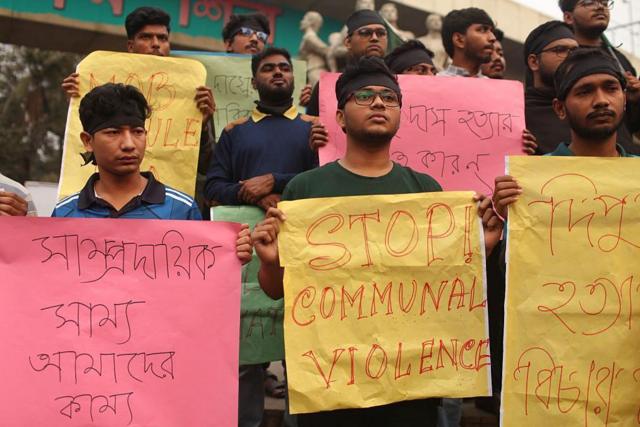
Deepa’s murder sparked protests in the capital Dhaka; his employers have paid all debts and promised to build the house he had dreamed of. The government, which is finalising its work, has allocated $35,000 for a new home and additional compensation for the family.
“If this can happen under the factory walls, none of us are safe.”
This note of solidarity persists despite the general tension. Attacking the Hindu minority, which Islamic State often sees as a fan of its secular Awami League party. At the same time, some Muslim youth groups have stood up in defence of Hindu homes and shrines. Every mother’s dream. A visit to the police station. A father, barely on his feet, comes home to bring the news that has completely destroyed the family.
His parents have lost consciousness. Neighbours later told me that they were unconscious for hours – being brought to consciousness with water and then injected with saline while the house was filled with people and screams.
Nearly two months have passed and Deepu’s mother still breaks down crying every day. His father never returned to work. Sleep had disappeared. Appetite, routine and peace of mind disappeared with it.