

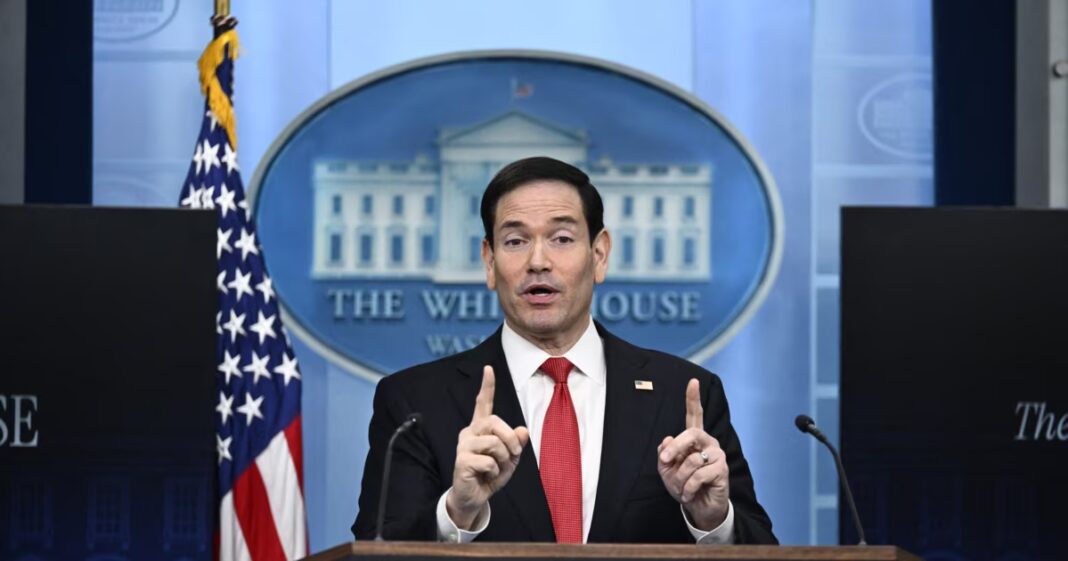

Washington has initiated a UN Security Council resolution to ensure security in the Strait of Hormuz and accuses Iran of threatening world trade, US Secretary of State Marco Rubio said on 5 May.
In comments to reporters, Rubio said Iran “continues to hold the world economy hostage” because of threats to shipping, laying sea mines and attempts to impose a duty.
The draft resolution, backed by Gulf partners, would require Tehran to “cease attacks, mines and duties” as well as disclose the location of mines and support the creation of a humanitarian corridor. The United States expects a vote in favour of the document to take place “in the near future”, Marco Rubio noted.
Among other things, the Secretary of State said that the US will continue to ensure the passage of ships through the Strait of Hormuz to restore freedom of navigation.
US President Donald Trump earlier on Tuesday urged Iran to “act reasonably” and conclude a deal to end the war amid a fragile ceasefire. Speaking in the Oval Office, Trump argued that the Iranian army has already been “completely defeated”, so the country “should raise the white flag of surrender”.
Trump also said he appreciated the US-led blockade of Iranian ports.
Iran’s Islamic Revolutionary Guard Corps (IRGC) naval command, meanwhile, reiterated that the only safe route for ships to pass through the Strait of Hormuz is the corridor previously outlined by the Islamic Republic. Tehran warned ship crews that “any change of route in the strait is dangerous and will result in a harsh response from the quir navy.”
The Iranian warning came a day after the US announced the launch of the Project Liberty mission, which is designed to help ships from neutral countries pass through the Strait of Hormuz. Some of those ships had been in the Persian Gulf for more than two months because of the US-Israeli war with Iran and the blocking of the strait by Iranian forces.
On the first day of the US mission, Quir fighters fired on several ships, and drone attacks attributed to Iran led to a fire at the Fujairah oil port in the United Arab Emirates.
A ceasefire has been in place in the region since early April, but shipping is severely restricted due to naval blockades. Iranian authorities insist that passage through the strait is impossible without its authorisation.