

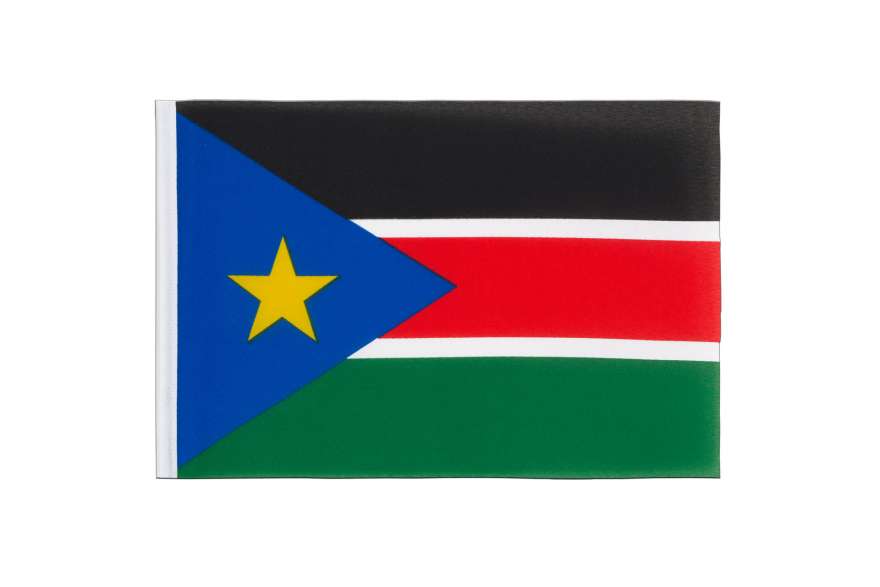

The National Electoral Commission of South Sudan has scheduled the country’s first general election for 22 December 2026.
This was announced by the Commission’s Chair, Abednego Akok Katswol, at a press conference in Juba. He said the date had been announced in accordance with the Elections Act, which requires the polling day to be announced at least six months before the election.
The elections are set to be the first national elections in South Sudan since the country declared independence in 2011. Previously, the vote had been postponed on several occasions due to civil war, political crises, the absence of a permanent constitution, security issues and the incomplete preparation of the electoral infrastructure.
In 2024, the transitional period was extended by a further two years, and the elections were postponed from December 2024 to December 2026. South Sudan is governed by a transitional coalition government, formed following the 2018 peace agreement and the establishment of a government of national unity in 2020.
Despite the announcement of the date, preparations for the vote remain in doubt. Katsuol stated that the commission’s work is being hampered by gaps in legislation, a lack of necessary regulatory frameworks and a funding shortfall.
According to him, the total budget for the elections is estimated at approximately $250 million, whilst the commission has received around $21 million. If additional funding is not allocated in the coming months, the commission may adjust its preparation schedule to reflect more realistic deadlines.
The disputed region of Abyei, on the border between South Sudan and Sudan, remains a separate issue. The Electoral Commission intends to send a delegation there to assess the feasibility of organising a vote.
For South Sudan, the 2026 elections are set to be a key test of the political transition following the Civil War. However, their holding will depend on three factors: the availability of funds, security on the ground, and the authorities’ ability to complete the legal and organisational procedures by December.
Key conclusion: the polling date has been announced, but the elections themselves cannot yet be considered a certainty. South Sudan has formally entered a six-month electoral calendar, but preparations remain vulnerable due to a lack of funding, unresolved legal issues and security risks.
South Sudan became an independent state on 9 July 2011 following years of conflict between North and South Sudan and a referendum on self-determination. The country’s partition was the result of the 2005 Comprehensive Peace Agreement, which brought an end to one of Africa’s longest-running civil wars and paved the way for a vote on the South’s independence.
However, as early as 2013, South Sudan was plunged into its own civil war. The conflict arose between supporters of President Salva Kiir and forces linked to former Vice-President Riek Machar. The conflict was political, ethnic and resource-driven in nature, and its consequences included the collapse of institutions, mass displacement, economic decline and chronic instability.
In 2018, the parties signed a revised peace agreement providing for a ceasefire, the formation of a transitional government of national unity, security sector reform, the drafting of a constitution and the holding of elections. However, implementation of the agreement has been slow, and many key provisions have never been fully implemented.
Today, there are two separate states — Sudan and South Sudan.
Sudan is the largest country in north-eastern Africa, with its capital in Khartoum. It has access to the Red Sea, has historically been linked to the Arab-Muslim North and, following the secession of the South, lost a significant portion of its oil resources. In recent years, Sudan itself has been experiencing a severe internal armed conflict and a crisis of central authority.
South Sudan is a landlocked state with its capital in Juba. It is rich in oil but relies on Sudan’s infrastructure for its export. The country remains one of the youngest and most vulnerable in the world: weak institutions, inter-communal conflicts, a lack of roads, a budget dependent on oil, and humanitarian crises continue to hamper its development.