



Sleep quality assessments, magnesium, white noise generators – what was once the simple process of falling asleep has turned into a veritable maze of recommendations and technologies. The drive to optimise sleep in every possible way has been dubbed ‘sleepmaxxing’. But if you take it too far, you may find yourself suffering from ‘orthosomnia’ – the term experts use to describe an obsessive desire to achieve the perfect night’s sleep.
In the UK, orthosomnia is not officially recognised as a separate disorder. However, doctors have told the BBC that they are increasingly noticing its symptoms in patients. Some come to appointments with data from their fitness trackers and other sleep monitors, convinced – often mistakenly – that they have a sleep disorder.
According to doctors, it is precisely this fixation on metrics and the desire to sleep ‘perfectly’ that may ultimately make sleep problems worse.
How and why has sleep become such a complex challenge? And if ‘sleep-maximising’ doesn’t help, what exactly is the elusive secret to a good night’s sleep?
Sleep quality assessment – a made-up metric
The first commercial fitness tracker with a sleep analysis feature was the Fitbit Classic, released in 2009.
Since then, sleep tracking has appeared in many other devices, including gadgets from Garmin, Whoop and Apple, as well as ‘smart’ rings from Oura, Ultrahuman and RingConn.
The capabilities of these devices vary, but they all provide the user with a report on the previous night’s sleep, breaking it down into distinct phases: wakefulness, light and deep sleep, and the rapid eye movement (REM) phase. Many devices also provide users with a so-called ‘sleep score’.
However, the very concept of such a score is “entirely made up”, claims Dr Alanna Geir, a sleep medicine specialist at the Royal Brompton Hospital in London.
“There is no single, universally recognised metric in sleep science called a ‘sleep score’,” she tells the BBC. “It was simply invented by device manufacturers.”
Geir says she has noticed how data from these trackers is causing anxiety among her patients.
“I’ve been seeing more people coming to me with data from various trackers and lots of questions about sleep, which probably contribute to sleep problems in their own right,” she says.
According to Geir, even if medical examinations show there is no cause for concern, this does not always help patients overcome their anxiety.
“It’s good that sleep is now being given more attention as an important component of health,” she adds. “But sleep is very resistant to attempts to perfect it.”
A class-action lawsuit against Oura, filed last month in San Francisco, alleges that the company’s rings are unable to accurately determine sleep quality and stages. According to the plaintiffs, the company uses AI-generated estimates whose accuracy is comparable to ‘flipping a coin’.
In response, Oura told the BBC that it is “confident in the scientific validity of its research and claims regarding the accuracy” of its devices.
“We strive to clearly explain what metrics Oura actually measures, which ones it estimates, and how users should interpret this information,” the company added.
Impact on well-being throughout the day
Research also shows that sleep trackers can influence a person’s well-being and productivity throughout the day, even if the data is inaccurate.
In one study by the University of Oxford, participants were given trackers that provided them with a sleep quality score every morning.
However, these ratings were generated at random and were in no way dependent on how well the participants had actually slept.

The following day, the participants assessed their mood, levels of tiredness and alertness, before undergoing tests to measure their concentration and reaction times.
The researchers found that people who were told they had slept poorly actually felt more tired and less alert – even though all the sleep quality ratings had been made up.
The vicious circle of anxiety
According to Jess Gill, this is exactly what she noticed in herself after buying a Garmin watch a few years ago.
“I started to treat the watch almost like the Bible, which determined whether I’d slept well or not,” the 32-year-old HR specialist from London told the BBC.
I’d think: ‘I slept terribly, so today is going to be really tough,’ even though, in reality, I’d probably had a perfectly normal night’s sleep. And if the watch showed that I’d slept very well, I’d convince myself that I had to be on top form — and even if I felt tired, I’d still force myself, still force myself.
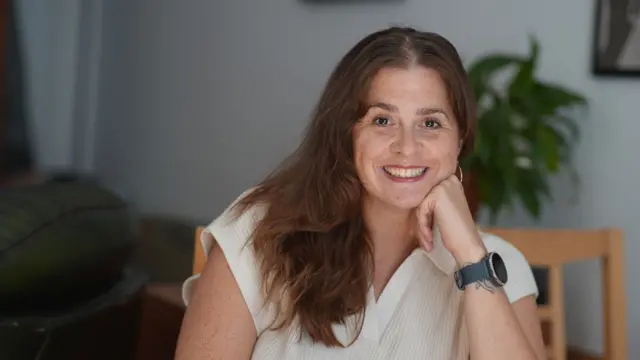
Photo credit: Jess Hill
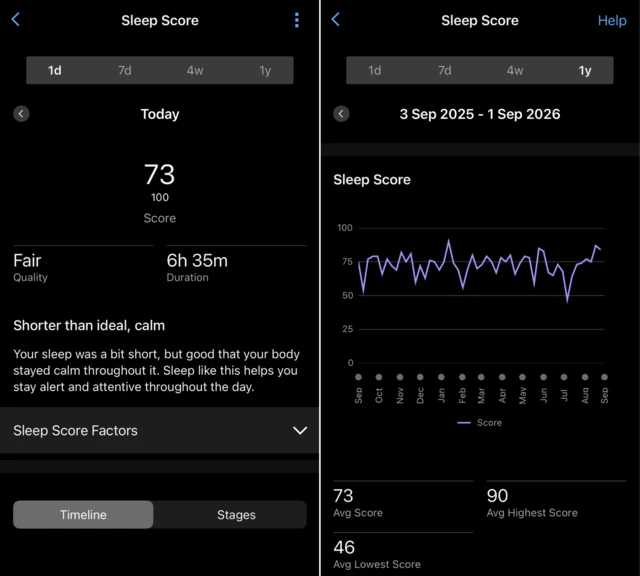
Her ‘obsession’, as she calls it, with striving for a high sleep score lasted three years. Things only changed at the start of this year, when Jess began to notice that the watch’s readings didn’t match how she’d actually slept.
“Recently, I didn’t sleep for four hours one night, but the watch told me something like: ‘Wow, what a brilliant night’s sleep!’ I literally didn’t sleep from one until five in the morning,” she says.
The BBC contacted Garmin for comment.
Dr Neil Stanley, a sleep expert and author of *How to Sleep Well*, believes that turning sleep into a sort of game with metrics and targets only serves to create new problems.
“When you track your sleep, you get a specific figure, which means you have a target,” he tells the BBC. “As a result, you end up in a vicious circle and start worrying about the quality or duration of your sleep, focusing on these metrics.”
According to Stanley, around 40 years ago he was involved in research into actigraphy – a method of tracking sleep using wrist-worn devices.
Modern commercial trackers have become more sophisticated, but the principle behind them has largely remained the same: they analyse a person’s movements. Consequently, the previous limitations remain, says the expert.
“If you want to measure sleep, you need to measure brain activity,” adds Stanley. “If you don’t record brain activity, you aren’t measuring sleep itself.”
So how can you get a good night’s sleep?
Geir recommends:
- Keep your bedroom cool, dark and quiet, but without going to extremes. “This doesn’t mean the room has to be pitch black, exactly 16°C and completely silent,” she says. – It’s enough for it to be relatively cool, dark and quiet.”

- Spend more time in bright light in the morning – this helps regulate your circadian rhythms, that is, your body’s internal biological clock.

- Do some light exercise and follow a ‘healthy, Mediterranean-style diet with a wide variety of plant-based foods’.

- And most importantly – don’t overcomplicate things. “You don’t need anything else.”