

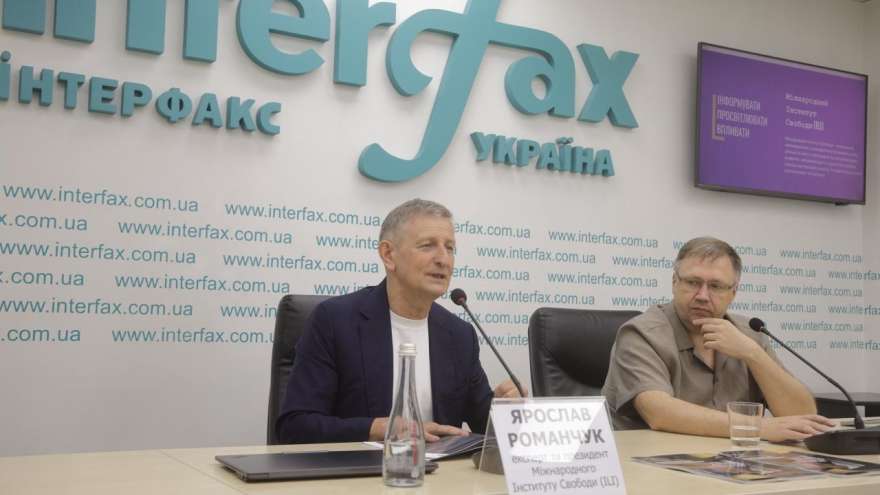

The International Liberty Institute (ILI) has put forward a concept for eradicating corruption in Ukraine, which is based on an analysis of the state’s failures in the economy and in the functioning of the model of entrepreneurial growth, as well as on findings from studies on economic freedom, the institution of private property and the principles of the Small State.
“We want to present a slightly different perspective on how to eradicate corruption in Ukraine. To put it simply, we are proposing an approach to tackle the root causes of corruption, rather than constantly fighting its consequences,” said ILI Director Mykhailo Kamchatnyi at a press conference at the Interfax-Ukraine news agency on Wednesday.
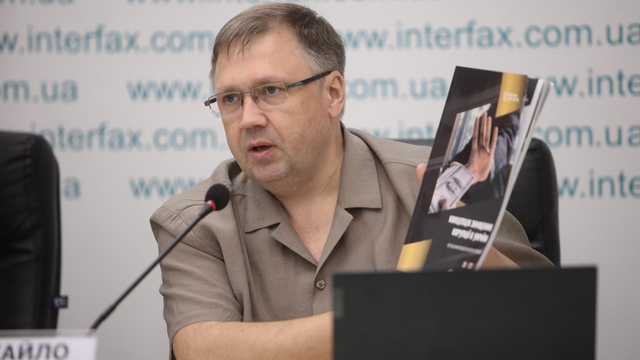
According to him, the concept presented should serve as a guide for government bodies, the anti-corruption infrastructure and civil society, as the current model focuses primarily on responding to individual incidents of corruption, but does not dismantle the conditions under which they arise.
For his part, ILI President Yaroslav Romanchuk emphasised that corruption is, first and foremost, a problem of economic policy, institutions and the theory of public administration.
‘Our approach differs from the traditional one in that we have built it on the foundation of the theory of state failure. Without such an approach, any anti-corruption framework becomes a perpetual, chronic process. Corruption hinders Ukraine’s European integration, investment, the protection of property rights, the country’s defence capabilities and its competitiveness. According to Romanchuk, if Ukraine sets a target of 6–7 per cent annual economic growth over the next 15–20 years, it will be impossible to achieve this without systematically eliminating the sources of corruption,” Romanchuk noted.
The expert emphasised that accession to the European Union does not in itself guarantee the automatic elimination of corruption. In his view, Ukraine must bear in mind that corruption risks also exist in EU countries, particularly in the areas of public procurement, state investment, regulation, the judicial system and business relations with the authorities.
“There is a view that once we become part of the European Union, corruption will automatically disappear. This is not the case. It will not disappear; it may simply take on a new form if Ukraine does not do its own homework. Key factors contributing to corruption include an overly large state, a high share of public expenditure in GDP, the discretionary powers of officials, a complex regulatory environment, tax and customs concessions, unequal conditions for business, state ownership of assets and the centralisation of resources,” added Romanchuk.
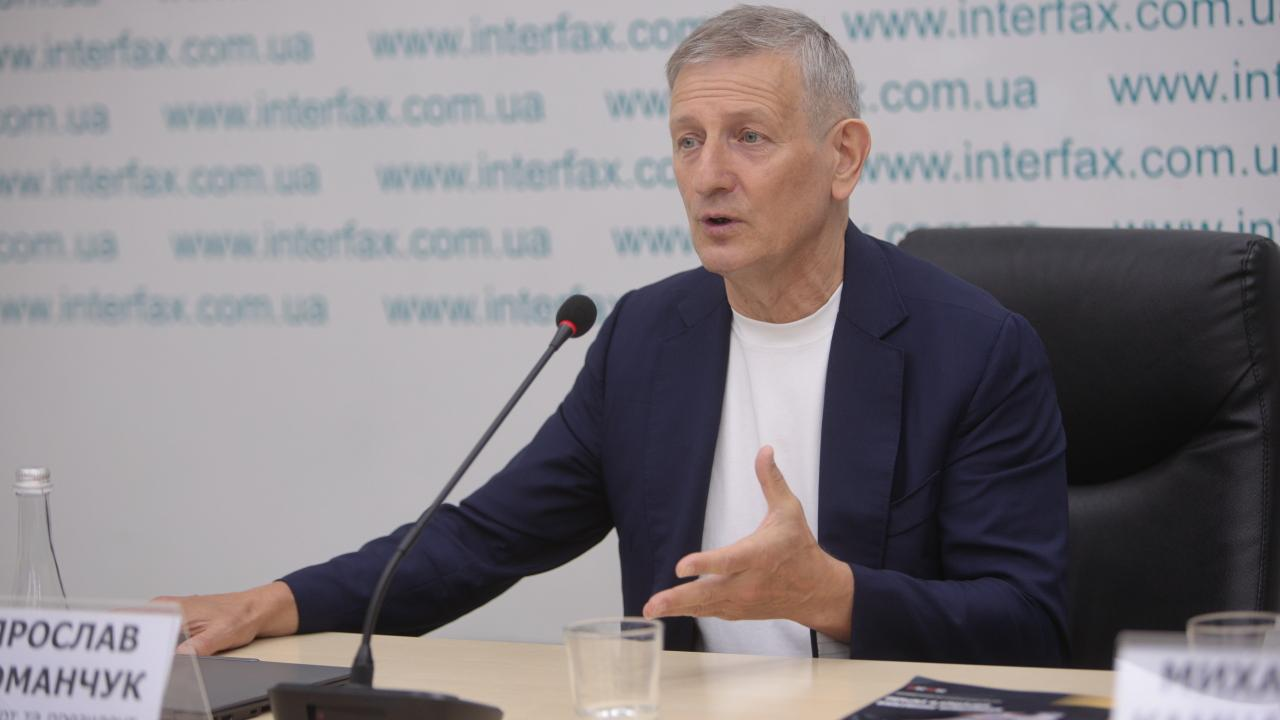
The expert noted that in Ukraine, through military and non-military expenditure, regulatory burdens and transaction costs, the state effectively appropriates an excessively large share of the economy’s resources, which, in turn, encourages businesses and citizens to seek informal ways of survival.
“The sources of corruption are objectively embedded in the model of a state characterised by general interventionism. This is when the state regulates, controls and disposes of resources extensively. It is precisely this discretion that gives rise to sources of corruption. Even if we were to imprison 30 per cent of MPs and 70 per cent of ministers, corruption would not disappear, because its sources would remain. What matters is not who heads a particular body, but the system by which resources are managed within the state,” emphasised Romanchuk.
ILI analysts propose that the Anti-Corruption Strategy be based on far-reaching political, institutional, administrative and legal reform. This involves, in particular, a radical reduction in the state’s functions, limiting its commercial role, strengthening the protection of property rights, demonopolisation, the decriminalisation of the economy, and the creation of universal and neutral rules for all market participants.
“From our point of view, the ‘new state’ means the rule of law, individual and political rights and freedoms, reform of the system of public administration and regulation, as well as the decriminalisation of the economy, underpinned by a radical reduction of the state’s role in the economy. We do not need mere formalities. We need to make real progress, not just go through the motions. Simply copying laws and the regulatory framework from the European Union or OECD countries does not mean they will automatically work in the Ukrainian context,” noted the Institute’s president.
The International Liberty Institute (ILI) has presented a concept for eradicating corruption in Ukraine, which is based on an analysis of the state’s failures in the economy, the functioning of the entrepreneurial growth model, and the findings of research into economic freedom, the institution of private property and the principles of the Small State.
“We wish to present a slightly different perspective on how to eradicate corruption in Ukraine. To put it simply, we are proposing an approach to tackle the root causes of corruption, rather than constantly fighting its consequences.”