

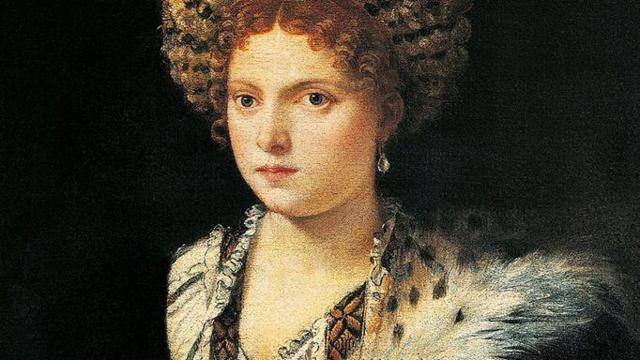

Renaissance Italy gave the world not only brilliant artists, but also a whole host of outstanding women – stylish, intelligent and politically astute. Their attire was not just a fashion fad, but a subtle, sophisticated weapon of influence.
More than five hundred years ago, in an Italy full of rivalry and political tension, they turned luxury, beauty and fashion into a veritable instrument of power. Their flamboyant, demonstrative style became not only a display of individuality, but also a quiet political force – more effective than any army.
Art historian Darnell-Jamal Lisby calls them “the Italian IT girls of the Renaissance”, drawing a parallel with the film icons of the 1920s. And their mark on fashion is still being felt – even in the 21st century.
Simonetta Vespucci – Florence’s celestial muse
In the 15th century, a major Botticelli was so devoted to her image that he demanded to be buried at her feet. And he must have carried it in his heart all his life.
Isabella d’Este is “Machiavelli in a skirt.”
After Simonetta’s death, a generation of women whose lives coincided with the Italian Wars (1494:1559), a series of bloody conflicts between Spain and France for supremacy in the Apennines, came to the fore.
In those days, clothing was not just a piece of jewellery, but a subtle symbol of political alliances. Francesco II Gonzaga’s wife, Isabella d’Este, Marquess of Mantua, went down in history as one of the most influential women of the Renaissance. A patron of the arts, a collector, an unmistakable trendsetter – her style instantly spread throughout Europe.
But fashion for her was not a pastime, but a true diplomatic strategy. One historian called it “Machiavelli in a skirt” – sarah kohram.
In later years Isabella created her own recognisable style: black velvet, rubies, pearls and the famous zazara headdress – a mixture of wigs and hats made of natural and artificial hair, silk and gold.
Only a select few could wear it, to which Isabella gave a special grace. Court women imitated these elements with devotion and loyalty.
Rivalry with Lucrezia Borgia
A dangerous challenge to Isabella’s status was the marriage of her brother Alfonso to the legendary Lucrezia Borgia, daughter of Pope Alexander VI and the owner of incredible wealth.
Lucrezia’s wardrobe was impressive even by the standards of the time: one dress cost as much as a palace on the Grand Canal, and a hat cost as much as half a city. She arrived at the wedding leading 1,700 courtiers.
Isabella and her entourage never surpassed Isabella in matters of style.
“This is partly because Isabella left behind visual sources – her image is recorded in Titian’s portraits and even in Leonardo da Vinci’s drawing. Her fame is transmitted not only through political actions and gifts, but through culture itself,” notes Cockrum.
Eleanor of Toledo – the splendour of the new Florence
Isabella’s other rival was Eleonora of Toledo, a Spanish princess who married Cosimo I de’ Medici.
In the 1530s, amidst the growing power of the Medici and Spanish dominance, she turned fashion into a major instrument of soft power and became one of the most influential figures in Florentine fashion.
At first Florentines treated her coldly because of her foreign style, but Eleonora skilfully combined Spanish styles with Florentine fabrics, turning her image into a living emblem of the city’s political and economic revival.
Her portrait of Bronzino with her son Giovanni was a true manifesto of this new ideology: Spanish cria combined with luxurious fabrics with patterns from the famous Florentine workshops.
It’s not just fashion – it’s a symbol of economic revival. in public, and the outfit became part of Florentine fashion,” Lisby adds.
Renaissance on the 21st century red carpet
While the luxurious style of the Renaissance is hard to visualise in everyday life, its influence on 21st century fashion is huge.
Lisby sees images of Isabella, Simonetta and Lucrezia in Alessandro Michele’s Gucci collections, in MaxMara accessories and in the style of stars such as Chappelle Ron and Florence Welch.
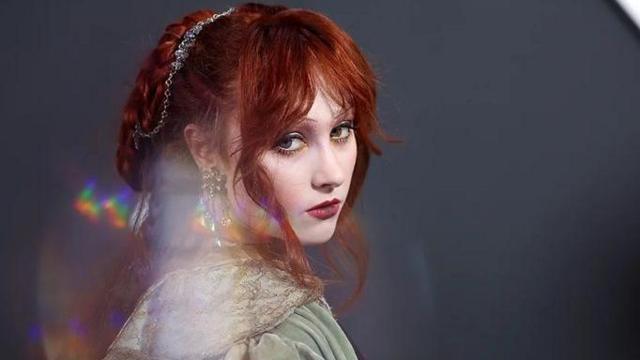
Author photo, Getty Images
Today’s make-up artists and fashion designers create collages of their portraits.
Even the understated looks of Spanish singer Rosalia are reminiscent of Isabella’s laconic gowns during periods of religious vows.
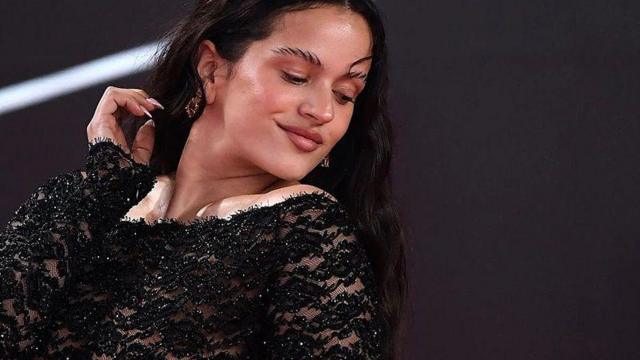
Author of the photos, Reuters
Images of great Renaissance women – bright, bold, intelligent – continue to inspire artists and designers today.