


US President Donald Trump has stated that Washington may launch a new strike against Iran if Tehran does not cease its support for paramilitary groups in Lebanon.
According to Trump on his social media platform Truth Social, Iran must immediately exert influence over the proxy forces it controls in Lebanon, which, he said, are “causing problems”. Should they refuse, Washington is prepared to repeat its strikes on Iranian targets, but on an even larger scale.
“If they do not do so, we will strike Iran very hard again, just as we did last week, only harder,” the US president said.
The threats were made against the backdrop of talks between the US and Iran, which are taking place in Switzerland with Qatar and Pakistan acting as mediators. The parties are attempting to discuss issues relating to Tehran’s nuclear programme and possible steps to reduce tensions in the region.
US Vice-President J.D. Vance arrived in Switzerland on 21 June, where he plans to take part in talks with the Iranian delegation, alongside mediators from Pakistan and Qatar.
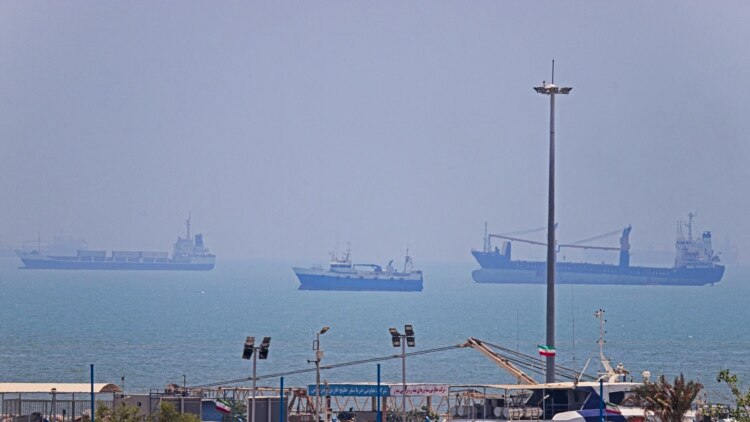
On 20 June, the talks were put at risk after Iran’s military command announced the closure of the Strait of Hormuz in response, as Tehran claims, to Israeli shelling of Lebanon. Before leaving the US, Vance stated that there were as yet no signs that Iran was in fact once again obstructing the passage of ships through the strait.
The Iranian delegation is led by the Speaker of Parliament, Mohammad Galibaf, and also includes Foreign Minister Abbas Araghchi. The US delegation includes President Donald Trump’s special envoys Steve Whitecoff and Jared Kushner, who arrived in Switzerland earlier. Pakistani Prime Minister Shahbaz Sharif and Field Marshal Asim Munir, who are key mediators, have also arrived in Switzerland.
According to Vance, the talks may last more than one day and will focus on two issues – Iran’s nuclear programme and the situation in Lebanon.
The memorandum signed by the parties earlier this week provides for a cessation of hostilities, including in Lebanon, where Israel is confronting the radical group ‘Hezbollah’ (designated as a terrorist organisation by the US and Israel, whilst in the EU only its military wing is designated as terrorist, not the political party). The memorandum also allows 60 days for negotiations on the nuclear programme. During this period, the Strait of Hormuz must remain open.
Iran interprets the agreements to mean that Israel must withdraw its troops from southern Lebanon. Israel states that it is prepared to observe the ceasefire, but not to withdraw the troops which it claims are necessary to protect northern Israel from shelling. US administration officials have criticised Israel over the past few days for continuing the clashes. Israel states that it is carrying out strikes in response to attacks by ‘Hezbollah’.