


Few American politicians remain in office for as long as Hal Rogers, who will be standing for his 24th term in the US House of Representatives in the November mid-term elections.
The 88-year-old Republican has represented Kentucky’s 5th constituency since 1981, making him the longest-serving member of the House of Representatives.
He was first elected on the very same evening that Ronald Reagan won his first presidential election with the slogan ‘Let’s Make America Great Again’, which was later adopted by Donald Trump.
Among those whom Rogers beat in the race for the nomination this year was a man 60 years his junior.
Born in the 1930s, Rogers is by no means the only American politician who continues to serve at such a venerable age.
Among those who have passed their nineties are Donald Trump (aged 80), his predecessor as president, Joe Biden (who stepped down at the age of 82), and Nancy Pelosi (who stepped down as Democratic leader in the House of Representatives at the age of 82).
Chuck Grassley remains a senator for Iowa at the age of 93. He entered politics in 1958, even before Alaska and Hawaii became US states.
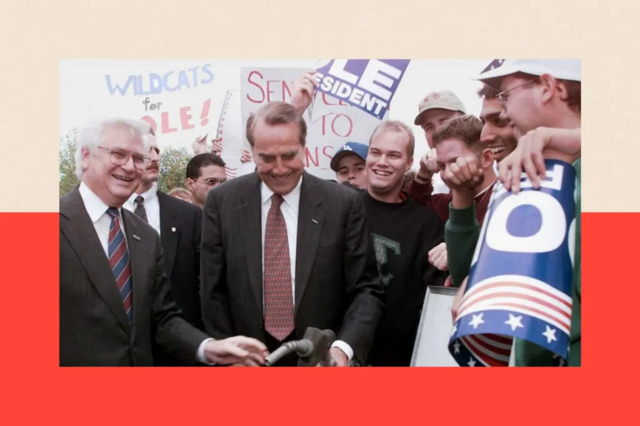
Photo credit: AFP via Getty Images
The age and state of health of some politicians are causing serious concern amongst both Republicans and Democrats.
This raises the question once again: should age limits or compulsory medical examinations be introduced for public figures?
The US is often described as a gerontocracy, that is, a system of government in which power is concentrated in the hands of people whose age significantly exceeds that of the majority of the country’s population.
According to data from the Inter-Parliamentary Union, the US has one of the lowest proportions of legislators under the age of 45 amongst developed democratic countries.
Why do so few young Americans go into politics?
And can those who do decide to pursue a career in politics achieve success in it?
Is there no place for young people here?
27-year-old Republican Riley Owen is one of the few candidates from the ‘Zoomer’ generation standing for the US Congress in the 3 November election.
Owen is standing in a newly created constituency in Utah, which, according to experts, may lean towards supporting the Democrats.
He advocates measures such as paid parental leave, restrictions on share trading by members of Congress and environmental protection – issues that are likely to resonate with Democratic Party supporters.
When he was confirmed as the party’s candidate for the state’s 1st constituency, he took to the stage to the sound of Billy Joel’s song ‘We Didn’t Start the Fire’ ( ‘We Didn’t Start the Fire’ ) and declared that his generation must help revive the ‘American Dream’.
Gerontocracy is “a problem common to both parties”, says Owen.
“We have people who have become professional politicians and spend their entire lives in Congress,” the politician argues.
According to him, this shows that the system is not working in the interests of American citizens.
Owen notes that one of the main difficulties he faces is that, in American politics, money really does rule the roost.
Research shows that campaign donors generally prefer to support those who already hold elected office.
Indeed, the campaign team of his rival, Ben McAdams – a 51-year-old Democrat who previously served in Congress – has now raised significantly more funds than Owen’s team.
According to figures published on the Federal Election Commission’s website, by mid-October McAdams had raised over $2.6 million, whilst Owen had raised $150,000.
Owen argues that his generation has unique opportunities to understand contemporary political issues, such as the challenges associated with technological development.
He also refutes the notion that a young candidate necessarily lacks experience: his CV includes military service and a role as an analyst at the White House.
“I believe that in politics, just as in business, so-called breakthrough innovations are essential,” he says.
The age of leading American politicians has long been a subject of debate.
In 1984, Ronald Reagan, who by then had become the oldest US president at the age of 73, managed to deflect criticism by joking about the ‘youth and inexperience’ of his opponent Walter Mondale, who was 56.
In the US, individual states also have their own legislative bodies, consisting of a senate and a house of representatives; it is here that many politicians begin their professional careers.
Many current members of Congress spent years in state politics before vying for a seat in Washington.
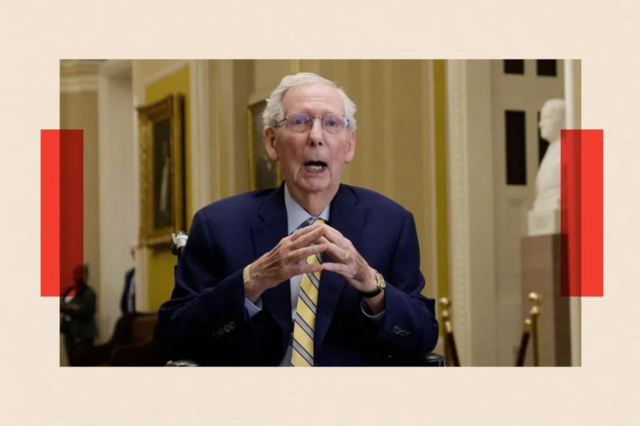
Photo credit: Reuters
However, over time, the median age of members of Congress has gradually risen.
According to Congressional data, the lowest figures for both the House of Representatives and the Senate were recorded in the early 1980s: 48 and 52 years respectively.
According to an analysis by the Pew Research Centre, when the current Congress took office, the average age of a member of the House of Representatives was 58, whilst that of a senator was 65.
By way of comparison, the median age of US citizens is 39.
Today, particular attention is also being paid to the health and cognitive abilities of some of the country’s oldest politicians.
Biden’s age was one of the main topics of discussion during his time as president.
To a lesser extent, questions on this matter have also arisen regarding Trump.
The same is true of 84-year-old Republican Senator Mitch McConnell, who has returned to Congress after a months-long absence due to medical treatment.
Among the Democrats, 88-year-old Maxine Waters faces a challenge in her bid for leadership as the Democratic Party’s lead representative on the influential House Financial Services Committee.
Some see her age as a factor working against her.
Age versus issues
Among the fiercest critics of gerontocracy are candidates who identify as democratic socialists, whose political views lie to the left of those held by the majority of Democratic Party representatives.
In their election campaigns, they emphasise the cost of living and other issues of concern to millennials and Gen Z.
Young people also make up the majority of their supporters.
The demographic composition of the electorate tends to be skewed towards older age groups, as is the case among elected officials themselves.
The Pew Research Centre notes that the proportion of young people aged 18 to 29 among those who do not vote is rising.
According to Pew, in the 2020 US election, 25 per cent of non-voters belonged to this age group.
Four years later, this figure had risen to 30 per cent.
In 2024, voters under the age of 30 were also under-represented.
Although this age group accounted for 20 per cent of eligible voters, it accounted for only 15 per cent of the total number of votes actually cast.
Activists believe that demographic trends are significant, as they mean that certain issues remain under-represented.
“Yes, this may lead to older people being predominantly elected, but, in my view, it also seriously distorts our understanding of which issues are important, what politicians deem necessary to discuss, and which problems they are prepared to tackle,” notes New York-based co-chair Mauser.

Photo credit: Reuters
Mauser was involved in the election campaign of Zohran Mamdani, who last year, at the age of 34, became the youngest mayor of New York since 1892.
Mamdani is often cited as a rare example of a young politician’s success, but Mauser focuses less on his age than on his worldview.
In her view, the mere fact of having been in politics for a long time is not necessarily a problem.
The problem lies rather in the consequences: ‘You become so accustomed to the language and ideas of the political establishment that everything else – any new ideas, whether from young or old people – seems like madness to you.’
She cites the example of the 85-year-old left-leaning Democratic Senator Bernie Sanders, a politician of the older generation who has worked on Capitol Hill for a long time, yet has been able to embrace change and put forward ideas that have resonated with different generations.
Disillusioned young people
According to the results of a Pew survey conducted in the spring of 2025, older people in the US view politicians much more favourably than young people, and this gap is more pronounced than in many other countries.
Around 62 per cent of Americans aged 18–34 tend to believe that only a few, if any, of the elected officials they have chosen are honest, whereas among those aged over 50, this figure stands at 45 per cent.
Of the 25 countries covered by the Pew survey, only in Greece do young people hold an even more pessimistic view of politicians’ honesty.
According to one expert who studies political engagement on both sides of the Atlantic, this disillusionment amongst young people may explain their reluctance to participate in political life.
He says the situation is exacerbated by the fact that there are minimum age limits for members of Congress.
To become a senator, a candidate must be at least 30 years old, whilst to become a member of the House of Representatives, they must be at least 25.
‘One thing leads to another,’ notes James Sloam of King’s College, University of London. ‘If, overall, there are not enough young people involved in politics, then they will not become elected representatives.’
Moreover, as Sloam points out, young people in both the US and the UK realise that power is not limited to politics alone.
They understand that there are many other areas of activity in which they can exert influence, including on elected officials.
Photo credit: EPA-EFE/REX/Shutterstock
Young people in high political office inevitably face the question: can they succeed in their careers without neglecting their family responsibilities at the same time?
This summer, the stories of two well-known young women working in Washington have once again raised the question of how compatible such a career is with motherhood.
Alexandria Ocasio-Cortez, a 37-year-old Democratic Congresswoman who took up her post at the age of 29, announced that she had begun the process of freezing her eggs.
During the same week in August, 29-year-old Caroline Levitt, the youngest press secretary in White House history, announced her resignation from the Trump administration.
She explained her decision by citing a desire to spend more time with her family, including her newborn baby.
“I won’t be able to be the wonderful mum that my two little children deserve if I devote as much time, energy and attention to my job as White House press secretary as it requires,” Levitt said.
Very few women have become mothers whilst serving as members of Congress, and there are only a few dozen people in the legislature with children under the age of 18.
The federal government, like many other employers in the US, does not provide paid parental leave.
42-year-old J.D. Vance is one of the youngest vice-presidents in US history.
He recently admitted that having children could influence his decision to stand for president in 2028: ‘We have four young children.’
The battle between the two parties
The two-party system in America is cited as yet another obstacle preventing young people from participating in politics.
Only a relatively narrow spectrum of views is represented, according to Sloam of King’s College, University of London.
He cites research showing that young people are more active in social movements or campaigns focused on specific issues than in party politics.
With regard to party politics, he cites the example of Mamdani and other figures on the political left who appear to be mobilising support amongst young people beyond the Democratic Party’s core constituencies.
However, he warns that ‘so far, this has been somewhat sporadic’.
Over the past decade, the Republican Party has experienced an internal split linked to the emergence of Donald Trump’s MAGA (‘Make America Great Again’) movement, which garnered the support of a significant proportion of young men in the 2024 presidential election.
Some European democracies demonstrate that a more pluralistic political environment can encourage greater youth participation in public life, Sloam points out.
According to him, the Scandinavian countries, where multi-party systems are generally well-established, provide a striking counter-example, as the ruling parties in these countries ‘engage with these social movements in an attempt to integrate them into the political system’.
The expert suggests that there is a certain cycle whereby higher youth turnout in elections and greater trust in the political system lead to more active participation in political life.
A look to the future
It is true that some legislators need to recognise when it is time to step down, experts believe.
But at the same time, voters should not overlook the advantages that come with age.
Nor should they confuse age with competence.
“Age in itself is a very unreliable indicator of anything,” says Tracy Gendron, a professor of gerontology at the University of Virginia, whose research challenges the assumption that ageing is always accompanied by a decline in physical and cognitive function.
“There may be a 45-year-old who suffers from depression or abuses psychoactive substances and who may not possess the cognitive abilities required for such work,” she says. “Conversely, an 85-year-old might possess exceptional integrity and political acumen.”
Gendron agrees that the composition of American politicians does not reflect the age structure of the country’s population; however, in her view, this merely indicates that Congress has room for improvement in terms of diversity.
“It’s amusing when we call this a gerontocracy and focus exclusively on age,” she says. “If we look at most other aspects of representation – gender, sexual orientation, religion, race – we see a lack of adequate representation there too.”
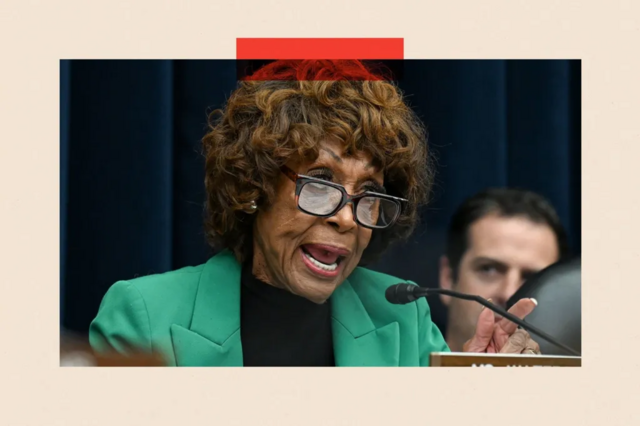
Photo credit: Reuters
Republican Oven is banking on success in Utah, even though his opponent has significantly more campaign funds.
Speaking about what inspires him as a candidate from the ‘Zoomer’ generation, he highlights issues such as the role of technology in public life, immigration and the cost of living.
“I’m on the cusp of starting a family of my own, weighing up the costs and [asking myself]: how am I going to manage this?” he says.
When asked whether he sees any similarities between his campaign and those of young political candidates representing the opposite end of the political spectrum, he replies:
‘I would steer clear of the “us versus them” narrative and, perhaps… a cross-party message that resonates with many Americans on both sides of the political spectrum: Washington isn’t working in their interests.’
Owen shares the view of Mousser, a supporter of democratic socialism from New York: voters do not necessarily have to choose a candidate simply because they are young; what matters most are their ideas.
‘For me, what you stand for and what you fight for is far more important than the year you were born,’ he says.