

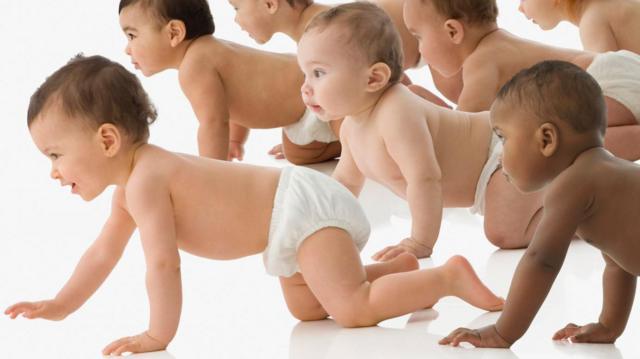

Some men are fathering huge numbers of children thanks to sperm donation. This week, a man whose sperm contained a genetic mutation that dramatically increased the risk of cancer in some of his offspring came to light.
One of the most striking aspects of the investigation was that the man’s sperm was sent to 14 countries and at least 197 babies were born with it. This discovery has led to a better understanding of the scope of the sperm donation industry.
Sperm donation allows women to become mothers when it would otherwise be impossible – if their partner is infertile, if they are in a same-sex relationship or if they are raising a child on their own.
Meeting this need has become big business. By 2033, the market in Europe is estimated to be worth more than $2.7 billion, and one of the main exporters of sperm is Denmark.
So why do some sperm donors give birth to so many babies, what has made Danish, or so-called “Viking sperm,” so popular, and should the industry be more tightly regulated?
Most male sperm is not suitable
If you’re a man reading this, we hate to disappoint you, but your sperm probably isn’t good enough to be a donor – less than five volunteers out of 100 end up being tested.
Firstly, there has to be enough sperm in the sample, then tests are carried out to see how well the sperm move and what their shape is like.
The sperm is also tested to see if it can withstand freezing and storage in a sperm bank.
It’s possible to be perfectly fertile and have six children – and still not be suitable for donation.

Photo courtesy of Getty Images
Age also matters – the rules for this vary around the world, but in the UK, for example, you need to be relatively young – between 18 and 45. You must also be free of infections such as HIV and gonorrhoea, and not have mutations that can cause genetic diseases such as cystic fibrosis, spinal muscular atrophy and sickle cell anaemia.
Ultimately, this means that the pool of people who will eventually become sperm donors is very narrow. In the UK, half of sperm ends up being imported.
This means that a small number of donors can have a huge number of children. It only takes one sperm to fertilise an egg, but tens of millions are produced with each ejaculation.
Men come to the clinic once or twice a week to become donors – and it can take months.
Sarah Norcross, director of the Progress Educational Trust, a fertility and genomics charity, says the shortage of donor sperm has made it a “valuable resource” and “sperm banks and reproductive medicine clinics are making the most of their donors to meet demand”.
Some sperm is more popular than others
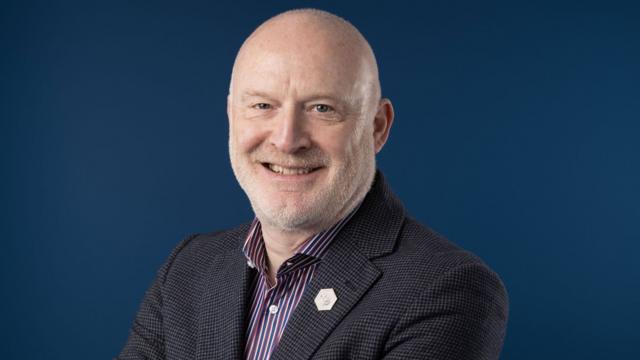
Photo provided by: Allan Pacey
In this small pool of donors, some men’s sperm is simply more popular than others.
Donors aren’t chosen at random. The process is similar to the harsh reality of dating apps, where some men are chosen far more often than others.
Depending on the sperm bank, you can view a potential donor’s photo, listen to his voice, find out what kind of work he does – engineer or artist – as well as check height, weight and more.
“You know, if his name is Sven, he’s got blond hair, he’s 1.93 metres tall, he’s athletic, plays the violin and speaks seven languages, that’s a lot more attractive than a donor who looks like me,” says male fertility expert Professor Allan Pacey, who used to run a sperm bank in Sheffield.
How “Viking sperm” took over the world

Photo provided by: Getty Images
Denmark is home to some of the world’s largest sperm banks and has a reputation for producing “Viking babies”.
Ole Shaw, the 71-year-old founder of sperm bank Cryos International, where a single 0.5ml tube of sperm costs between €100 and more than €1,000, says the culture of sperm donation in Denmark is very different from other countries.
‘The population is like one big family,’ he says. In an altruistic society, many sperm donors also donate blood.
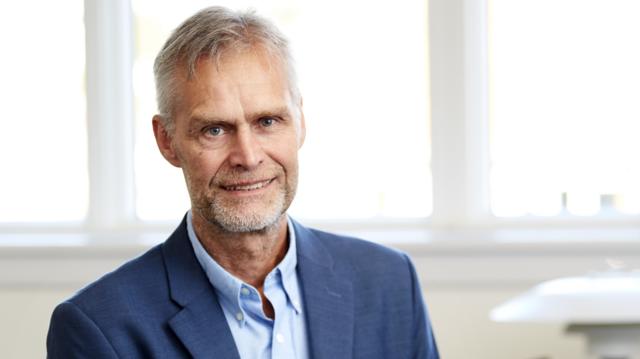
Photo provided by Cryos International
Shaw says this is what has allowed the country to become “one of the few exporters of sperm.”
But he claims that Danish sperm is also popular for genetic reasons. He told the BBC that the Danish “genes for blue eyes and blonde hair” are recessive traits, meaning they must come from both parents to be passed on to the child.
As a result, the mother’s traits, such as dark hair, “can dominate the child”, Shaw explains
Demand for donor sperm comes mainly from “single, highly educated women in their 30s”, he says. They now account for 60 per cent of requests.
Sperm crosses borders
One aspect of the sperm donation investigation published earlier this week was that one man’s sperm was. collected at the European Sperm Bank in Denmark and then sent to 67 reproductive medicine clinics in 14 countries.
Each country has different rules about how many times one man’s sperm can be used. Sometimes it is related to the total number of children, sometimes it is limited to the number of mothers, so that each family can have as many related children as they want to have
. The original idea behind such restrictions was to prevent half-brothers and sisters who did not know they were related . – From dating, relationships and having children
But there is nothing preventing the use of sperm from the same donor in Italy and Spain, and then in the Netherlands and Belgium, as long as the rules are respected in each country
This creates the conditions under which a sperm donor can legally father a large number of children, although the man himself is often unaware of it
“Many recipients as well as donors don’t realise that sperm from one donor can be legal. used in many different countries – this should be explained much better,” says Sarah Norcross, who believes the number of children from one donor should be reduced.
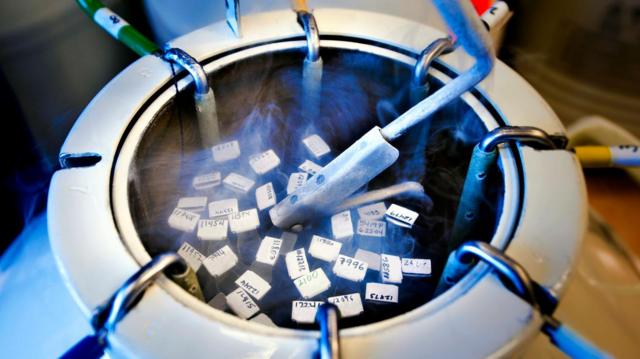
Photo provided by: Getty
In response to an investigation into a sperm donor who passed on a gene that led to cancer in some of the 197 children, Belgian officials have called on the European Commission to set up a Europe-wide register of sperm donors to monitor their movement across borders.
Deputy Prime Minister Frank Vandenbroucke said the industry was reminiscent of the “Wild West” and that “the original mission of enabling people to start a family has given way to the real business of fertility.”
The European Society for Human Reproduction and Embryology has also proposed capping the number of donors at 50 families in the EU. Such a system would still allow one man to father more than 100 children if families want two or more children.
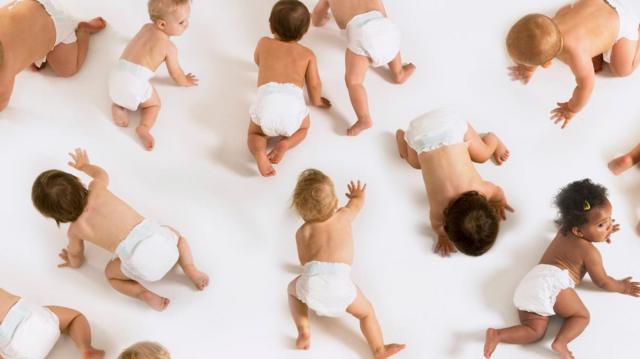
Photo provided by: Getty
There are also concerns about the impact on children conceived using donor sperm. Some will be overjoyed, but for others, discovering donor conception and realising they are one of hundreds of half-siblings can be deeply traumatic.
The same goes for donors, who often have no idea how widely their sperm is distributed.
These risks are exacerbated by the availability of DNA tests and social media where people can. search for their children, siblings or donor. In the UK, the anonymity of sperm donors no longer applies and there is a formal procedure for children to find out the identity of their biological father.
Ole Shaw of Cryos says further restrictions on sperm donation will only force families to “turn to a private, completely unregulated market”.
Dr John Appleby, a medical ethicist at Lancaster University, says the implications of such widespread use of sperm are a “huge” ethical minefield
He says there are issues of identity, privacy, consent, dignity and more, leading to a “delicate balance” between competing needs
Dr Apple B. adds that the reproductive medicine industry is responsible for how many times a single donor’s sperm is used, but agreeing global rules will certainly be “very difficult”.
He also notes that the proposed global sperm donor registry carries its own ethical and legal challenges.